



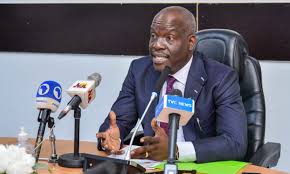
The Nigerian Upstream Petroleum Regulatory Commission(NUPRC) Chief Executive Officer, Gbenga Komolafe, has disclosed that Nigeria’s oil production now1.78 million barrels per day from 1.46 million barrels per day in October 2024, reports thegazellenews.com.
Komolafe stated this while speaking at the 2025 Africa Energies Summit in London, where told energy leaders and investors at the summit that Nigeria’s upstream sector transformation yielding fruitful results

He said NUPRC launched the “Project 1 Million Barrels per Day” initiative aimed at ramping up daily crude oil production by over one million barrels beyond the October 2024 baseline.
“Since the launch of the project, we have achieved a notable increase in daily production, recently reaching 1.78 million barrels per day, up from a baseline of 1.46 million barrels per day in October 2024,” he stated.
Komolafe said Nigeria has moved from eight active rigs in 2021 to 36 today, with projections to reach 50 by the end of 2025. This upward trend also mirrors increases in reserves and production levels.
“New investors, empowered by clarity and quality, have entered our sector; oil and gas reserves and production have increased, while rig counts have surged from 8 in 2021 to 36 currently,” he said.
“With 210.54 trillion cubic feet of natural gas reserves, the largest in Africa, and 37.28 billion barrels of crude oil reserves, Nigeria holds enormous reserves.”
To sustain this progress, the commission, according to Komolafe, is adopting technological tools and streamlined processes to reduce downtime and improve efficiency.
“To sustain momentum, the NUPRC is fast-tracking rig licencing and is set to introduce digital tools aimed at optimising rig utilisation and securing long-term contracts,” Komolafe added.
Despite persisting challenges such as infrastructure and evacuation constraints, Komolafe said Nigeria remains proactive and focused on results. He urged global stakeholders to be part of the country’s unfolding energy story.
“Distinguished investors and partners, our drive to tackle production and evacuation challenges has presented several opportunities in a wide range of upstream activities, including reviving shut-in wells, executing workover campaigns, deploying enhanced oil recovery techniques in mature fields, and advancing new development drilling across both brownfields and underdeveloped assets,” he said.
“These efforts must be supported by robust reservoir management and real-time production optimization,” he said, just as he also identified Nigeria’s youthful population as a key asset in building local capacity, promoting innovation, and adopting cleaner energy solutions.
“Additionally, Nigeria’s youthful population presents a unique opportunity to drive innovation and workforce development in the exploration of frontier basins as well as the advancement of de-carbonisation technologies in the oil and gas sector,” he said.
“Nigeria is not waiting on the sidelines. We are standing boldly at the centre, fully ready, capable, and determined to lead,” Komolafe said.
“In this new energy era, our initiatives and strategic efforts are designed to deepen investor confidence, drive sustainable growth, bridge the gap between resource potential and actual production and unlock the full value of our upstream assets, and deliver tangible results that advance shared prosperity.”
