


By Oluwole Solanke PhD, FCIB
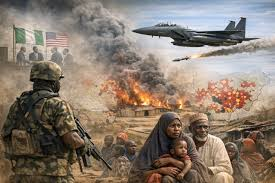
On Christmas Day 2025, the United States conducted airstrikes against Islamic State targets in Sokoto State, northwestern Nigeria, marking a significant escalation in international involvement in Nigeria’s long-running security crisis. The operation, carried out by U.S. Africa Command at the request of Nigerian authorities, killed multiple ISIS terrorists and signals a potentially transformative moment in Nigeria’s approach to combating extremism. As Nigerian Foreign Minister Yusuf Tuggar described it as an “ongoing process,” the implications of this development extend far beyond a single military action.
The Immediate Security Context
The strikes targeted ISIS-affiliated groups operating in Sokoto State, a region bordering Niger that has become increasingly volatile in recent years. While President Trump framed the operation as protecting Christian communities, the reality on the ground is considerably more complex. Nigeria faces a multifaceted security challenge involving several armed groups, including Lakurawa (an offshoot of Boko Haram that emerged prominently in recent years), Ansaru (an al-Qaeda-aligned group), and various Islamic State affiliates operating across the Sahel region.
What makes this development particularly significant is that it represents the first direct U.S. military intervention targeting terrorist groups within Nigeria’s borders with explicit Nigerian government approval. Previous U.S. involvement had been limited to training, intelligence sharing, and equipment provision, including the delivery of Super Tucano warplanes in recent years.
Short-Term Security Implications
Enhanced Operational Capacity
The immediate benefit to Nigeria’s security landscape is the injection of superior U.S. intelligence, surveillance, and reconnaissance capabilities. American forces have been conducting intelligence-gathering flights over large parts of Nigeria since late November, providing a level of surveillance sophistication that Nigeria’s military has struggled to achieve independently. This technological advantage could prove decisive in identifying and neutralizing terrorist camps in remote areas where government presence has been limited.
The coordination demonstrated in this operation suggests a new level of intelligence sharing between the two nations. Nigerian authorities reportedly provided intelligence that helped identify targets, while U.S. capabilities enabled precision strikes that would have been difficult for Nigeria to execute alone.
Psychological Impact on Terrorist Groups
The strikes send a powerful message to extremist organizations operating in Nigeria: their sanctuaries are no longer beyond reach. For groups like Lakurawa, which have grown increasingly bold in attacking security outposts and enforcing Islamic law in remote villages, the demonstration of American willingness to intervene directly introduces a new calculus. The precision and lethality of U.S. strikes, delivered from warships and aircraft, represent a qualitatively different threat than what Nigerian forces have been able to project.
Potential for Tactical Disruption
If sustained, these operations could significantly disrupt terrorist logistics, training, and command structures in northwestern Nigeria. The region has become a safe haven for various extremist groups partly due to challenging terrain and the Nigerian military’s resource constraints. U.S. involvement could help overcome these limitations, at least temporarily.
Medium to Long-Term Strategic Considerations
The Double-Edged Sword of Foreign Intervention
While U.S. strikes may deliver short-term tactical victories, history suggests that foreign military intervention in African conflicts carries significant risks. The presence of American military power could serve as a recruitment tool for extremist groups, who often frame their struggle in anti-Western terms. In regions where local populations already harbor grievances against the Nigerian government, the involvement of a foreign power could complicate the narrative and potentially drive fence-sitters toward extremist groups.
Moreover, the framing of the operation as protecting Christians, despite Nigerian officials’ insistence that violence affects all religious communities, risks exacerbating existing religious and ethnic tensions. Nigeria is roughly evenly divided between Christians (predominantly in the south) and Muslims (mainly in the north), and any perception that the security response is religiously motivated could inflame sectarian divisions.
Addressing Root Causes vs. Treating Symptoms
The fundamental challenge facing Nigeria’s security is that terrorist violence is often a symptom of deeper structural problems: governance failures, economic marginalization, ethnic tensions, and disputes over land and resources between farming and pastoral communities. Airstrikes, however precise, cannot resolve these underlying issues.
The emergence of groups like Lakurawa illustrates this complexity. The group gained initial acceptance in some communities because it offered protection against bandits where government forces failed to do so. This pattern of non-state armed groups filling security vacuums created by government weakness is unlikely to be resolved by external military intervention alone.
Regional Stability and the Sahel Connection
The strikes occur against a backdrop of deteriorating security across the Sahel region. Niger’s military government, which seized power in June 2023, has expelled French forces and U.S. military bases that previously served as crucial monitoring points for extremist activity. Chad is threatening to withdraw from the Multinational Joint Task Force, the regional security cooperation mechanism.
This regional fragmentation makes Nigeria’s security challenge more difficult. Terrorist groups can exploit porous borders and weak state control in neighboring countries. While U.S. strikes might disrupt operations in Nigerian territory, unless there is coordinated regional action, these groups can simply relocate across borders.
Sustainability and Dependency Concerns
A critical question is whether this intervention represents a sustainable security model. Will U.S. involvement be maintained over the long term, or is this a limited operation that could create expectations for continued support that may not materialize? Nigeria’s military has received over $2 billion in U.S. security assistance between 2000 and 2022, yet internal security has deteriorated. This raises important questions about whether external military assistance addresses Nigeria’s fundamental security challenges or creates dependency without building sustainable domestic capacity.
Governance and Sovereignty Questions
Nigerian Sovereignty and Public Perception
While Nigerian officials have emphasized that the strikes were requested and approved by President Bola Tinubu’s government, public reaction will be crucial. Nigerians may view this cooperation differently depending on how effectively it improves security and whether it comes with conditions that infringe on Nigerian sovereignty.
The language used by President Trump, particularly his previous threats to suspend aid and his characterization of the operation despite Nigerian officials’ contradictory assessments, could create perception problems for the Nigerian government domestically. Managing the narrative around foreign military operations on Nigerian soil will be delicate.
The Risk of Civilian Casualties
U.S. airstrikes globally have frequently resulted in civilian casualties, sometimes based on faulty or incomplete intelligence. Nigerian military operations have also been marred by civilian deaths, including a tragic 2017 attack on a displaced persons camp that killed over 160 civilians, many of them children. Local residents in the strike area have already expressed alarm, with some noting that their village had never experienced ISIS attacks before.
If future strikes result in significant civilian casualties, it could undermine the legitimacy of both the Nigerian government and the U.S. partnership, potentially driving local populations toward extremist groups. Ensuring accurate intelligence and minimizing civilian harm will be essential for the operation’s long-term credibility and effectiveness.
What Nigeria Needs Beyond Airstrikes
Strengthening State Presence and Governance
The long-term solution to Nigeria’s security challenges requires strengthening government presence and improving governance in marginalized regions. This means investing in infrastructure, providing economic opportunities, improving justice systems, and ensuring that security forces protect rather than prey upon civilian populations.
Many of the conflicts in Nigeria’s northwestern and north-central regions stem from competition over scarce resources, particularly disputes between farmers and herders over land and water. Climate change is exacerbating these tensions by driving pastoral communities southward in search of grazing land. Addressing these structural issues requires agricultural policies, conflict resolution mechanisms, and economic diversification, not just military force.
Building Sustainable Security Capacity
Rather than becoming dependent on external military intervention, Nigeria needs to build its own sustainable security capacity. This includes not just equipment and training but also reforms to military structure, accountability, intelligence capabilities, and civil-military relations. The Nigerian military has suffered from corruption, poor morale, inadequate equipment, and sometimes counterproductive tactics that alienate civilian populations.
Regional Cooperation
Given the transnational nature of terrorist groups operating across the Sahel, effective security requires regional coordination. The breakdown of cooperation with Niger and the potential withdrawal of Chad from joint security arrangements represents a significant setback. Nigeria should prioritize rebuilding these regional security partnerships, even as the political landscape becomes more challenging.
Addressing the Religious and Ethnic Dimensions
The framing of Nigeria’s security crisis as “Christian persecution” by some U.S. officials, while disputed by Nigerian authorities and security analysts, highlights the need for careful management of religious and ethnic dimensions. Security strategies must be seen as protecting all Nigerians, regardless of religion or ethnicity. Policies perceived as favoring one group over another risk exacerbating the very divisions that extremist groups exploit.
Conclusion: A Pivotal Moment with Uncertain Outcomes
The U.S. airstrikes in northwestern Nigeria represent a significant escalation in international involvement in Nigeria’s security challenges. In the short term, this cooperation offers Nigeria access to capabilities it lacks and could disrupt terrorist operations. The psychological impact on extremist groups and the demonstration of Nigerian government resolve could yield tactical advantages.
However, the long-term implications remain deeply uncertain. Military force alone has never resolved Nigeria’s security challenges, which are rooted in governance failures, economic marginalization, ethnic tensions, and resource competition. Foreign military intervention carries risks of backlash, civilian casualties, and sovereignty concerns that could ultimately undermine security rather than enhance it.
For this partnership to contribute meaningfully to Nigeria’s security, several conditions must be met: strikes must be precise and avoid civilian casualties; operations must be part of a broader strategy addressing root causes; the partnership must respect Nigerian sovereignty and be seen as legitimate by Nigerian citizens; and there must be sustained commitment rather than episodic intervention.
Most importantly, Nigeria must use whatever breathing room military operations provide to address the underlying governance and development challenges that allow extremism to flourish. Airstrikes can disrupt terrorist organizations, but only good governance, economic opportunity, effective justice systems, and inclusive politics can prevent new recruits from replacing those killed.
The coming months will reveal whether this marks the beginning of a more effective approach to Nigeria’s security crisis or simply another chapter in a long struggle that has proven resistant to purely military solutions. Nigerian officials have indicated that this is an “ongoing process” with potentially more strikes to come. The true measure of success will not be how many terrorists are killed, but whether ordinary Nigerians in affected regions become safer, more prosperous, and more confident in their government’s ability to protect them.
As Africa’s most populous nation and largest economy, Nigeria’s stability has implications far beyond its borders. The international community has a stake in Nigeria’s success, but ultimately, sustainable security must be built by Nigerians, for Nigerians, addressing the complex realities of their diverse nation rather than simplified narratives imported from abroad.
