


By Segun Adewale in Bauchi
Nigerian Association of Evaluators (NAE), has emphasized the critical role of monitoring and evaluation in driving national development and strengthening governance systems.
It therefore advocated for the passage of a Monitoring and Evaluation Bill to institutionalize the M&E cadre across Ministries, Departments, and Agencies (MDAs) in the country.
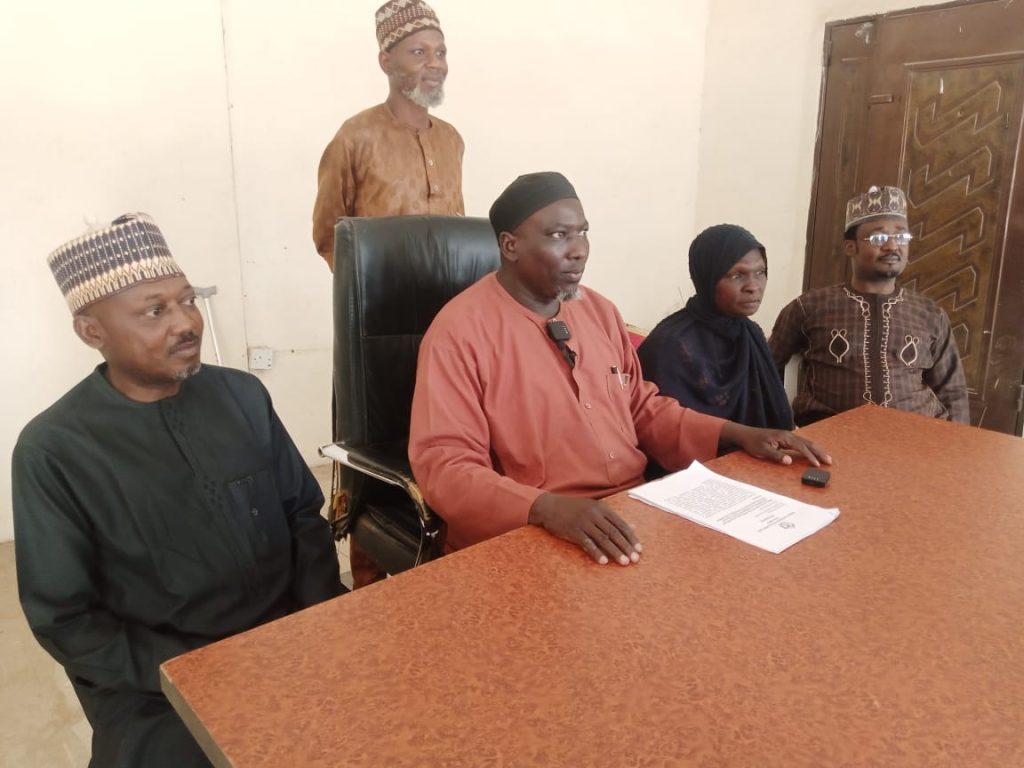
The advocacy was made by the President of the Association, umar Ibrahim, while briefing Journalists in Bauchi on Thursday, highlighting the roles and functions of the Association.
According to him, “The proposed legislation is expected to enhance performance tracking, curb waste, reduce corruption risks, and drive sustainable development outcomes nationwide.”
He stressed that, “Nigeria already demonstrates promising examples. The Sector-Wide Approach (SWAp) in the Federal Ministry of Health has strengthened coordinated planning and accountability in health interventions. The Performance Management System (PMS) under the Office of the Head of the Civil Service of the Federation reinforces results-based management across ministries.”
He added that,”The Renewed Hope Agenda of the current administration, anchored on M&E principles, underscores performance tracking and measurable impact as central governance priorities. Additionally, recent remarks by the Chairman of the Independent Corrupt Practices Commission (ICPC) emphasized that credible monitoring systems serve as safeguards against mismanagement and weak policy implementation.”
The NAE President further stressed that, “Recognition of M&E professionals by the Chairman of the Federal Civil Service Commission during the recent past M&E national symposium further signals growing institutional acceptance of evaluation as a strategic governance tool.”
According to him, “Across Africa and other regions, countries that have embedded evaluation frameworks into public policy cycles have recorded improved budget efficiency, stronger public trust, and better development outcomes. Nigeria stands at a pivotal moment to consolidate similar gains through legislative backing and professional standards.”
The Association called on policymakers, decision makers, development partners, legislators, and the media to embrace professional M&E practice as a cornerstone of effective project implementation and public accountability.
According to him, “In collaboration with journalists and experts from public, private, academic, and civil society sectors, NAE highlighted that robust M&E systems improve project outcomes, reduce inefficiencies, and promote transparency in resource utilization.”
He however stressed that,”Despite progress, two key challenges persist. First, limited trans-sectoral coordination often leads to fragmented data systems and duplication of efforts across institutions. Second, inadequate technical capacity and insufficient professional training in M&E constrain effective implementation. Many agencies lack skilled evaluators, standardized tools, and digital systems necessary for real-time performance tracking and impact assessment.”
NAE therefore recommended the swift passage of the M&E Bill to provide legal backing for standardized evaluation practice in Nigeria, just as it called for sustained capacity-building programmes, integration of digital data systems across sectors, and strengthened collaboration between government, academia, and civil society.
The Association also urged the institutionalization of performance audits and independent evaluations for major public projects.
Furthermore, embedding M&E principles in policy design stages will ensure that programs are measurable, adaptive, and outcome-oriented from inception.
NAE recognized the efforts of Senator Anieken Bassey and the International IDEAs Project, through Mr. Edem, in advancing the introduction of the M&E Bill at the National Assembly, stating that, “Their leadership reflects a shared commitment to professionalizing evaluation practice in Nigeria.”
NAE President added that, “As Nigeria pursues sustainable growth, fiscal responsibility, and improved service delivery, institutionalizing monitoring and evaluation is both timely and strategic. A legally backed, professionally driven M&E system will strengthen governance, reinforce public trust, and ensure that development initiatives produce measurable and lasting impact.”
He added that,”The Nigeria Association of Evaluators remains committed to partnering with government, development partners, and civil society to entrench a results-oriented culture that advances national progress and prosperity.”
The Nigeria Association of Evaluators (NAE) is the professional body committed to advancing the theory and practice of monitoring and evaluation (M&E) in Nigeria.
Established to promote evidence-based decision-making, accountability, and institutional learning across public and private sectors, NAE brings together evaluators, researchers, policymakers, and development practitioners dedicated to strengthening governance and development effectiveness.
The Association continues to contribute to national conversations on performance management, public sector reform, and sustainable development. As Nigeria deepens reforms aimed at economic recovery and improved service delivery, NAE reaffirms its commitment to positioning M&E as a strategic tool for transparency, results-based management, and national transformation.
The current National Executive Council (NEC) comprises: Dr. Umar Ibrahim, National President; Ms. Adegoke Oluwakemi Yetunde, National Vice President; Mr. Kwarkas Rinji, Secretary General; Mr. Muhammad Nuradeen, Assistant Secretary General; Mr. Sikiru Taoheed Oladehinde, Financial Secretary; Mrs. Ruth Edward Baka, Treasurer; and Mr. Paul Omoruyi, Publicity Secretary.
