



By Daniel Oluwatobiloba Popoola
The Presidency has explained why President Bola Tinubu met victims of recent attacks in Plateau State at the airport in Jos, citing logistical constraints and competing high-level engagements.
In a statement issued on Friday, 3 April 2026, by the Special Adviser to the President on Information and Strategy, Bayo Onanuga.
He disclosed that the President had initially scheduled two major engagements on Thursday, 2 April, 2026, receiving the President of Chad, Mahamat Idriss Déby Itno, at the Presidential Villa, and travelling to Iperu, Ogun State before altering his plans following a security briefing on Plateau.
According to the statement, Tinubu suspended his planned trip to Ogun after being briefed by Plateau State Governor Caleb Mutfwang on the deteriorating security situation, prompting urgent arrangements for a visit to Jos.
However, the President’s schedule was further impacted by the bilateral meeting with the Chadian leader, which focused on strengthening security cooperation between both countries and extended beyond its expected duration, thereby delaying his departure.
“President Tinubu’s itinerary for Thursday included two main engagements: receiving the Chadian President and proceeding to Iperu, Ogun State. After Governor Caleb Mutfwang’s briefing, the President suspended the trip to Ogun,” the statement read.
Upon arrival in Jos, the Presidency said additional logistical challenges made it impractical for the President to travel into the city to meet victims directly at affected communities.
It explained that although the journey from the airport to Jos metropolis takes about 40 minutes by road, the absence of navigational aids at the airport runway prevents night operations, making it necessary to conclude all movements before dusk.
Consequently, officials opted to bring representatives of affected communities to a hall near the airport to enable the President engage them promptly while complying with flight safety restrictions.
“The constraints made it unfeasible to drive into town, meet victims for on-the-spot assessment and return to the airport before dusk,” the statement noted.
It further revealed that senior security officials, including the Minister of Defence, the Chief of Army Staff and the Inspector-General of Police, had earlier visited Rukuba, the epicentre of the violence as part of preliminary security assessments ahead of the President’s arrival.
Tinubu was also said to have deployed a high-level delegation, including his Senior Special Assistant on Community Engagement, to carry out groundwork aimed at stabilising the area and facilitating dialogue.
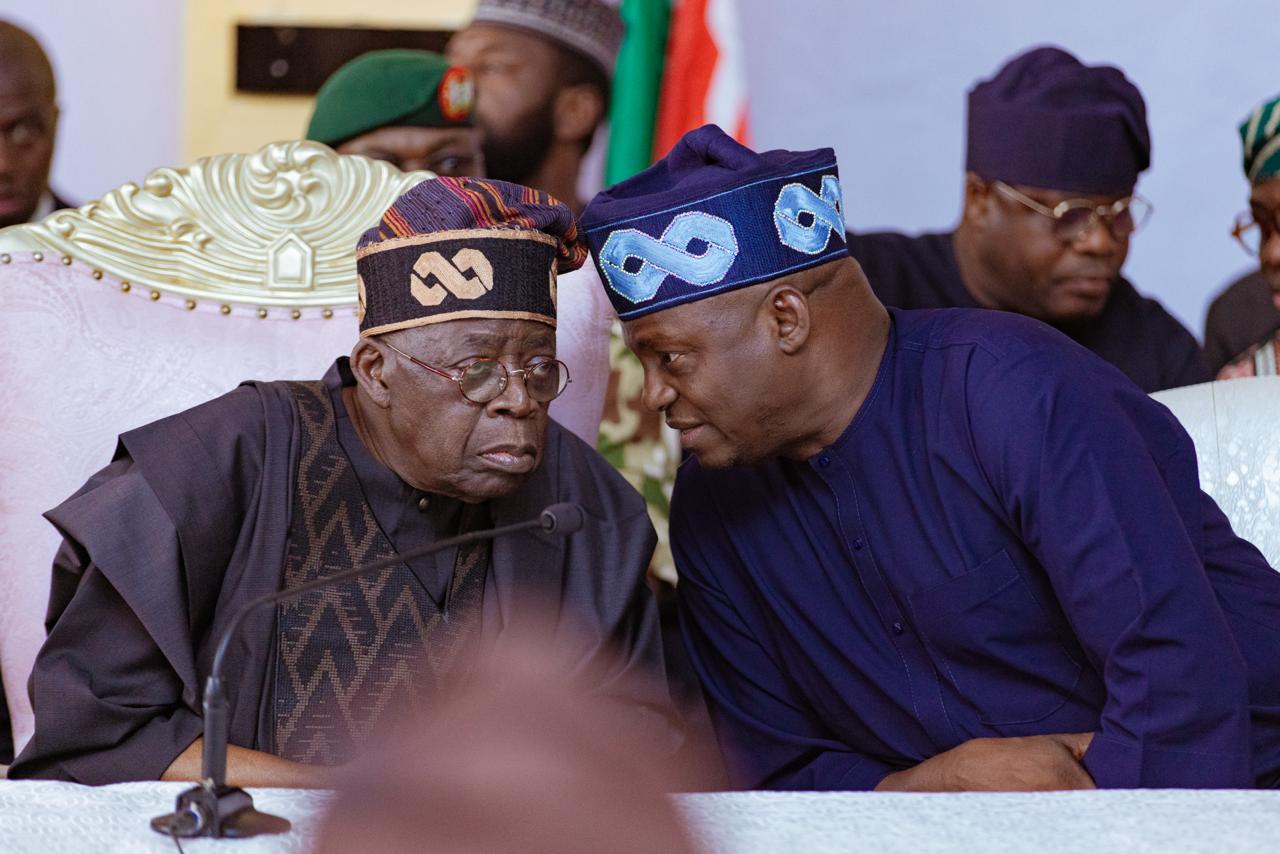
Beyond offering condolences, the President used the meeting to engage stakeholders on ending the protracted conflict in Plateau State, which the Presidency described as a decades-long crisis marked by recurring violence and loss of lives.
He interacted with victims, listened to their concerns and assured them of the Federal Government’s commitment to restoring peace and ensuring justice.
“He also listened to local leaders and assured them that the Federal Government would deliver justice and end the cycle of violence,” the statement said.
As part of measures to strengthen security, Tinubu announced plans to deploy 5,000 artificial intelligence-enabled cameras across the state to enhance surveillance and aid in identifying perpetrators of violence.
Furthermore, he invited community leaders to Abuja for continued dialogue aimed at finding a lasting solution to the crisis.
The Presidency maintained that the Jos visit was not symbolic but a deliberate effort to foster inclusive engagement and address the root causes of insecurity in the state.
“The meeting, televised live, was solemn and reassuring, boosting residents’ confidence,” the statement added, stressing that the President’s message was clear: “Sustainable peace must be built with the people, not imposed on them.”
