



By Simbo Olorunfemi
A few days back, I shared my 2021 post which dwelt on the failure of thought as the trigger for the lack of capacity on the part of the Nigerian elite to achieve consensus, especially on governance.
On the back of the rancour that we routinely see within Elite associations and professional bodies, my conclusion was that, indeed,
we have an Elite Problem.
There is that obvious lack of capacity to die to self and keep the Kajola spirit aloft for the good of all. Rather than work on forging consensus, there is the unending predilection towards dissensus, leading us to never being able to collectively move forward, either in the little things or the big ones.
It has been reading one lawyer after the other complaining about the NBA election. I just finished reading a respected Senior Advocate lament about what has become of the NBA on the back of this election.
I have also read the statements by the two candidates who lost in the Presidential election. They read like the statements by some of the candidates who lost out in the previous elections, including the one which ushered in the current President, Afam Osigwe, SAN.
As it is, rancour has now become the defining feature of the NBA election. I can’t recall which of the last 4 elections has not been a subject of hot dispute, with allegations of manipulation and irregularities renting the air.
It is an irony that the adoption of technological tools, which one would have thought would foster fairplay and transparency in the system and enhance trust in the process has become the albatross fuelling mistrust and loss of confidence among stakeholders, which is sad.
It is interesting that the NBA has written a zoning arrangement into its constitution, which even though some disagree with, I believe must have been carefully considered before adoption.
I believe the essence must have been to enhance inclusivity and promote equity, which is fair and just.
But it is an irony that even in the face of such thoughtfulness and the recognition of the need to build consensus, stakeholders are struggling to arrive at a consensus in their zones to smoothen the process through which the national leadership eventually emerges.
It is intriguing to me that this election, having been zoned to the Western region, not a stranger to the philosophy of consensus, has ended up as perhaps the most contentious, with an obvious threat to the continued existence of the national body as one unit noticeable.
If, as reported, all the candidates had submitted themselves to the process put in place by ‘Egbe Amofin’ with the objective of a consensus candidate emerging, it is rather unfortunate that the Egbe could not get other participants to respect and abide by its decision and endorsement of Are Olumuyiwa Akinboro, SAN.
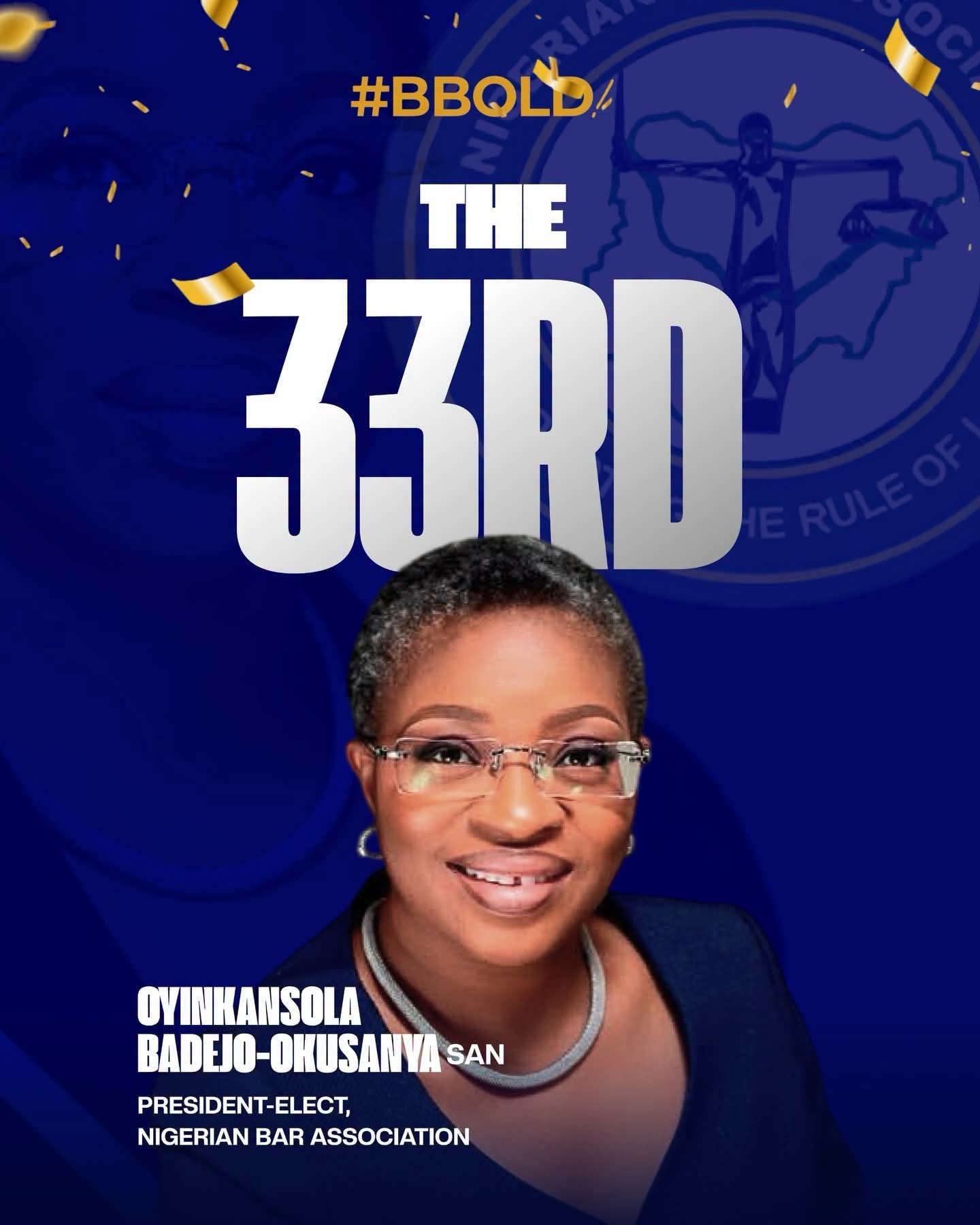
It is instructive that Mrs Badejo-Okusanya, SAN, had, early enough, challenged the Egbe’s attempt to act as a “selectorate” that could unilaterally determine who should lead the Bar. She maintained that a regional group did not have the constitutional authority to force an aspirant out of a democratic race.
That position enjoyed the backing of the national leadership, especially the National President, Afam Osigwe, whose body language suggested support for a particular candidate.
That the Egbe could not achieve a buy-in of all the candidates was in itself a suggestion that its moral authority and influence was not as strong as it might have assumed it to be.
That, to me, should have been the point at which it should have back-tracked, lest it loses face and be demystified, especially since its last attempt in 2020 to gatekeep the process had also failed, with the candidate it endorsed losing out in the election.
But Egbe Amofin didn’t back down. Well, having assumed the role of a pressure group, it might have thought it a good idea to build cross-regional alliances by presenting Akinboro to other influential blocs, such as the Eastern Bar Forum (EBF). But that might have even backfired on its preferred candidate.
Definitely, taking to the Oyo State High Court to secure recognition for Akinboro, appears to having not been well thought-out. A move of that nature can only be made with victory assured. To move and fail can only further erode whatever influence that it has.
But the most confounding bit in all that ensued was the role played by the National President, Afam Osigwe.
He, it was, who called on the Attorney General of the Federation, as the ‘Father of the Bar’ to intervene. That the outcome of that intervention, following the meeting held with the parties involved, including the NBA President, didn’t sit well with the President shouldn’t have been a reason for the AGF to be thrown under the bus, with the impression created that he was a meddlesome interloper issuing directives rather than acting as an arbiter, whereas he had only acted in the spirit of an arbiter that he had been asked to be.
Now that the election has been held in defiance of his advisory, with the concerns he had sought to address, coming to dominate the exercise, perhaps those who took the hard stance are now able to reflect and see the wisdom in the exercise of caution, especially when there wasn’t that much to lose in doing so.
One would have thought that, with learning and exposure, it would be easier to forge consensus, but as we have seen repeatedly among our elite, the more learned they are, the more unwilling they are to die to self, think long-term, see the big picture and prioritise the group interest.
Indeed, it is not that people necessarily have an issue with consensus. They are usually willing and ready to be a part of the process, until they perceive that the outcome might not favour them. More often than not, it is when they do not emerge as the consensus candidate that the problem begins, and the idea of consensus is then seen as anti-democratic.
I only hope that even with what has happened, Egbe Amofin and Leaders from other zones can find a way to appease those who lost out, forge a consensus of support around Mrs Oyinkan Badejo-Okusanya as President and work with he to rebuild trust and confidence among members.
