


By Daniel Oluwatobiloba Popoola
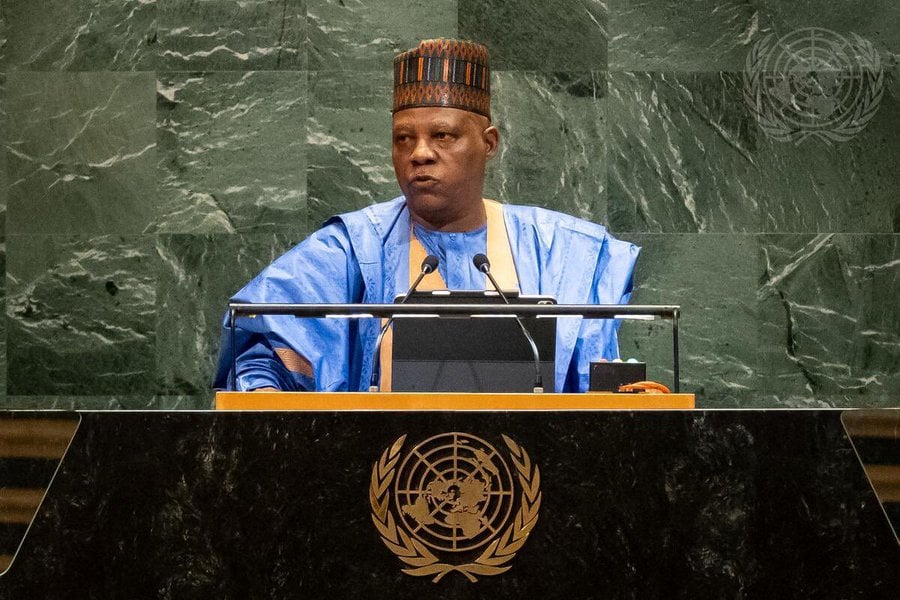
Vice-President Kashim Shettima has urged African countries to take greater control of their natural resources by ending the export of raw materials and prioritising local processing and manufacturing to create jobs, increase economic opportunities and accelerate industrial development across the continent.
Shettima made the call on Friday, 24 July, 2026 in Cotonou, Benin Republic, during a tour of the Glo-Djigbé Industrial Zone (GDIZ), where he inspected integrated cotton, textile and agro-processing facilities as part of Nigeria’s efforts to draw practical lessons from Benin’s industrialisation model and strengthen its own agro-industrial value chains.
The Vice-President said Africa could no longer afford the contradiction of exporting its raw materials to industries outside the continent only to import finished products manufactured from those same resources.
He maintained that the continent must begin to maximise its abundant natural resources by building industries capable of transforming them into higher-value products, thereby generating employment, strengthening local economies and expanding non-oil exports.
Shettima said Nigeria’s renewed industrialisation drive would ensure that no region was excluded from the country’s economic transformation, noting that the Federal Government was working with state governments to develop agro-industrial value chains.
He expressed satisfaction with Benin’s efforts to achieve mass production and export of locally sourced commodities, describing the GDIZ as an example of how African countries could transform agriculture from a largely raw-material-based sector into a major driver of industrial growth.
The Vice-President particularly expressed concern that Africa currently accounts for only about one per cent of the global cotton industry, despite the continent’s significant production potential, while the global cotton industry is valued at about $370 billion.
He said the revival of Nigeria’s textile value chain could create millions of jobs, increase non-oil exports and stimulate economic activities across different parts of the country.
During the inspection, Shettima examined facilities dedicated to the production and processing of cotton, textiles, cashew and soya bean oil, allowing the Nigerian delegation to assess how locally sourced agricultural commodities could be integrated into industrial production.
He said the visit was undertaken at the instance of President Bola Tinubu under the Renewed Hope Agenda to enable Nigeria to examine and learn from global best practices in industrial development.
The Vice-President explained that Nigeria was already working towards establishing eight agro-industrial zones in eight states, adding that the experience gained from the GDIZ would provide practical lessons for the country’s own industrialisation efforts.
He described the GDIZ as an African success story because of its integrated approach to adding value across the cotton, cashew and soya bean value chains.
Shettima assured that lessons gathered during the visit would be applied to Nigeria’s agro-industrial development strategy as the Federal Government seeks to position the country among the world’s leading industrialised economies under the Renewed Hope Agenda.
During the tour, the Vice-President was briefed by Benin’s Minister of Tourism and Foreign Trade on the structure, production capacity and investment potential of the industrial zone.
The Nigerian delegation subsequently inspected integrated textile and agro-processing facilities where locally produced cotton is transformed into yarn, fabric and finished garments.
The team also toured facilities processing cashew and other agricultural commodities for both domestic consumption and export, further exposing the delegation to the industrial model through which agricultural production is linked directly to manufacturing and international trade.
The visit formed part of Nigeria’s broader efforts to study Benin’s experience in connecting agriculture with manufacturing, attracting private-sector investment and transforming raw materials into higher-value products before export.
Shettima was accompanied on the tour by the governors of Kwara, Imo, Katsina, Plateau, Zamfara and Jigawa states.
