


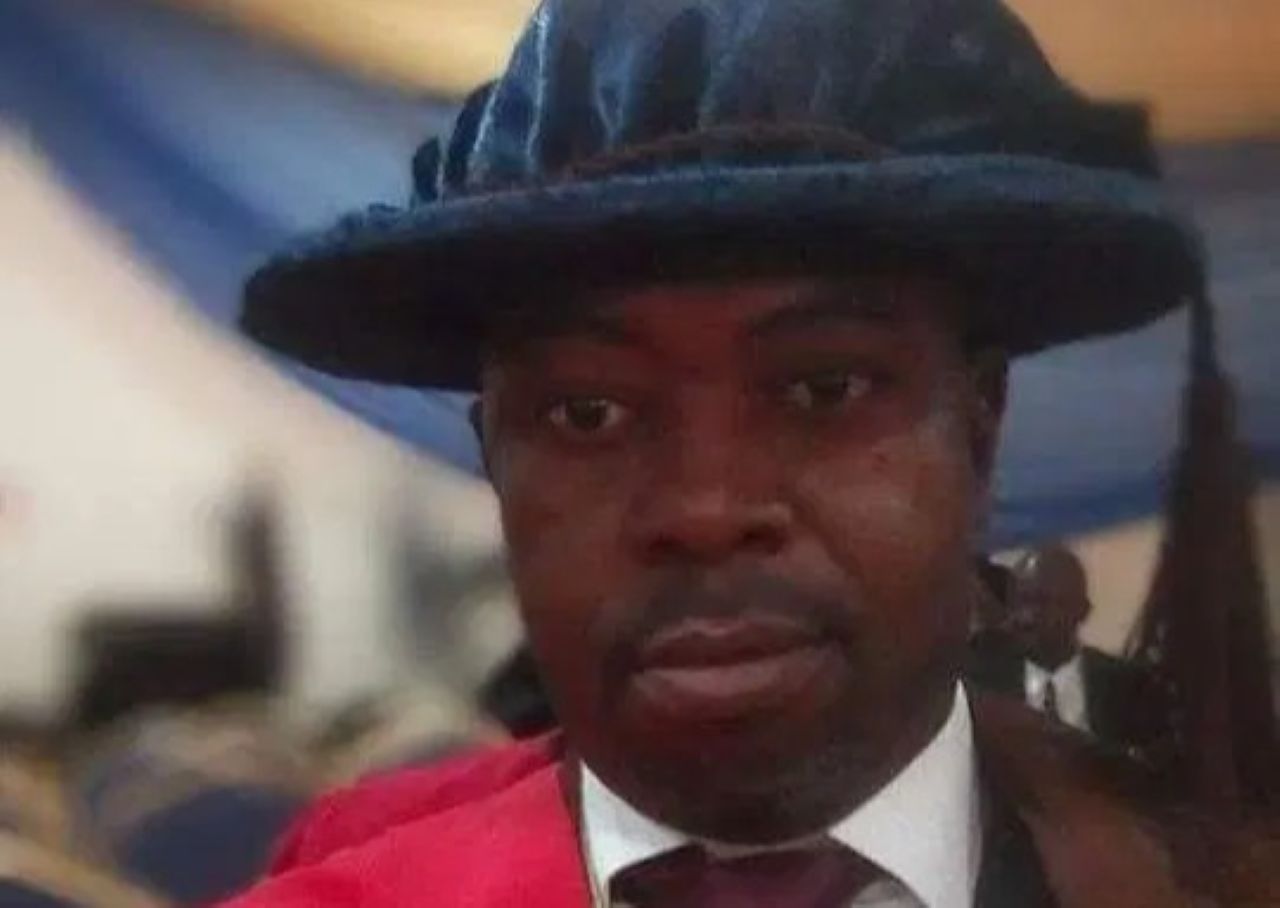
By Tunde Akanni, PhD
Inclusivity which contrasts sharply with discrimination in whatever form is as fundamental to democracy as the rule of law as well as free press. Beyond media professionals, everyone who treasured democratic values in Nigeria invested efforts and emotions in the struggle to chase away the military. But joy, like Ola Rotimi, once cautioned, has a slender body.
From all stakeholders, state actors and non state actors, there is no perfection yet. Not yet uhuru, as they say. However, media’s insensitivity to diversity should never be dismissed as a minor professional lapse. It is fundamentally an ethical, democratic and peacebuilding concern.
My interest in this subject derives from several intersecting experiences. I write as a journalist who has spent decades in professional practice coupled with being a development enthusiast with interests running virtually through multiple dimensions ranging from human rights to environmental rights including being a scholar of media and conflict, and now as a consumer rights advocate working within Nigeria’s consumer protection ecosystem. These experiences converge on one undeniable conclusion: media content is a public good whose quality affects not merely information but social harmony itself.
The significance of the media within conflict prevention has been richly articulated by media and peace scholars. Beyond the traditional watchdog role, conflict scholarship treasures the media for occupying a strategic position within the framework of Multi-Track Diplomacy. In the widely acknowledged nine-track model, communication institutions and allied facilities facilitate dialogue, shape public perceptions, influence policy environments and nurture cultures of tolerance. The media are therefore not passive observers of social processes; they are active participants in either conflict transformation or conflict escalation.
That reality makes recent developments within the Nigerian media particularly disturbing.
The controversy surrounding the coverage of Nigeria’s 2026 Spelling Bee champion during the international competition in China presents an unfortunate illustration of professional insensitivity. The young Nigerian represented the nation confidently while wearing her niqab, an expression of her religious identity that neither diminished her intellectual accomplishment nor detracted from her patriotic representation of Nigeria.
Yet, instead of faithfully reproducing her authentic image, some newspaper published an altered version that replaced her actual appearance with a fabricated representation. Whether this was motivated by ignorance, editorial carelessness or deliberate bias remains open to interpretation. Whatever explanation they had, the ethical question remains unchanged: why should any newspaper substitute a genuine photograph with an artificial one?
Journalism’s first obligation is fidelity to truth. That fidelity extends beyond words to images. Photographs are not decorative accessories to news stories. Rather, they are documentary evidence the equivalent of what broadcast media professionals label actualities. Altering a person’s appearance without justification fundamentally compromises journalistic credibility.
More troubling was the newspaper’s response. Rather than immediately acknowledging the error and restoring the authentic image, the correction reportedly came only after legal practitioners threatened litigation. Such reluctant compliance weakens public confidence in editorial accountability. Even more disappointing is the absence of an unequivocal public apology that recognises not merely the technical mistake but also the emotional and symbolic injury inflicted upon the young champion and the wider community she represents.
The incident also raises broader questions regarding diversity literacy within Nigerian newsrooms. Diversity is far more than ethnicity, religion or gender. It encompasses culture, language, disability, dress, beliefs, age and numerous other identities that coexist within modern societies. Professional journalism requires reporters and editors to understand these differences sufficiently to avoid stereotypes, exclusion and symbolic marginalisation.
Nigeria’s constitutional diversity is one of its defining strengths. Unfortunately, sections of the media sometimes mirror societal prejudices instead of rising above them. Editorial judgments occasionally reflect unconscious biases that inadvertently portray certain communities as less legitimate participants in the national conversation.
Equally disappointing has been the apparent silence of the Nigerian Media Complaints Commission. Self-regulation remains one of journalism’s greatest strengths. However, self-regulatory institutions derive legitimacy from visible responsiveness. When media consumers perceive indifference toward serious complaints, confidence in the industry’s accountability mechanisms inevitably declines. Ironically, no fewer than two newspapers, Leadership and Telegraph did well to recognize the operations with touch of excellence of the Tunji Bello-led Federal Competition and Consumer Protection Commission, FCCPC
Media contents consumers also deserve reassurance that ethical standards remain alive and enforceable.
This concern resonates strongly with the philosophy underpinning consumer protection. Information itself constitutes a consumer product. Citizens consume news just as they consume goods and services. Misrepresentation, manipulation and distortion therefore possess implications extending beyond journalism into consumer rights. Accuracy, fairness and transparency should be recognised as legitimate consumer expectations within the information marketplace.
I had argued in a different piece titled “Multitracking Nigeria Has Become a Compelling Project.” that Nigeria’s development can only derive from multiple actors working simultaneously to strengthen peace, justice and social cohesion. Civil society, academia, business, religious organisations and especially the media all possess indispensable responsibilities. The bourgeoning Society for Peace Scholars and Practitioners, SPSP, now with continental presence readily presents a good organ to cultivate and sustain this.
In particular, SPSP should seize this moment to establish a specialised Media Monitoring and Evaluation Mechanism dedicated to diversity, inclusion and conflict sensitive journalism. Such a platform could systematically monitor media content, identify emerging patterns of exclusion, publish periodic scorecards, engage editors constructively and recommend corrective interventions before isolated incidents develop into wider societal grievances. Collaborating with the Nigerian Guild of Editors on this should be ingenious.
The timing is equally favourable. The forthcoming MacArthur peace programme presents an important opportunity for SPSP to institutionalise evidence-based monitoring of media diversity practices. Rather than reacting episodically to controversies, Nigeria requires a sustainable framework capable of generating data, encouraging dialogue and promoting preventive interventions. Prevention invariably costs less than conflict management.
Ultimately, diversity is not a concession extended to minorities. It is a democratic obligation owed every citizen.
The Nigerian media have earned deserved recognition for defending democracy during difficult periods of our national history. They have challenged authoritarianism, exposed corruption and amplified citizens’ voices. Those achievements should be celebrated. Yet the same institutions must also demonstrate equal commitment to representing Nigeria’s extraordinary diversity with accuracy, dignity and fairness.
The young Nigerian champion who proudly wore her niqab while representing her country deserved nothing less than faithful journalism. So too do millions of Nigerians whose identities enrich the nation’s social fabric every day.
If journalism is indeed the marketplace of ideas, then every citizen must enter that marketplace without fear of invisibility, distortion or prejudice. A genuinely inclusive media are not merely desirable; they are indispensable to national peace, democratic consolidation and sustainable development.
Nigeria’s diversity is not a problem to be edited away. It is a national asset to be faithfully reported, responsibly represented and proudly celebrated.
Tunde Akanni, LASU’s first Professor of Development Communications is currently on sabbatical with the FCCPC, Abuja.
