


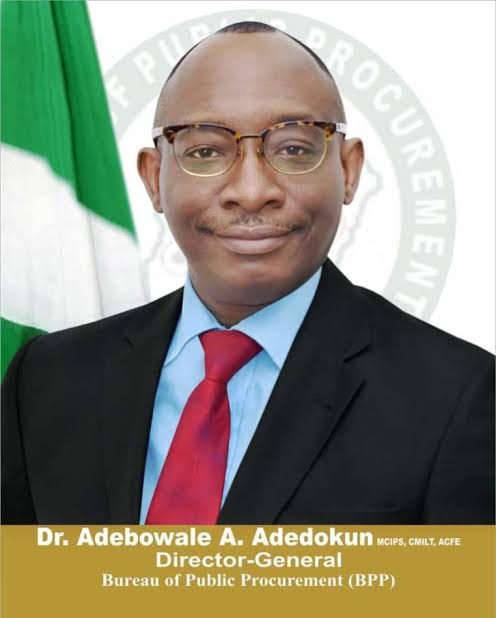
By Daniel Oluwatobiloba Popoola
The Director-General of Bureau Public Procurement,Dr Adebowale Adedokun said The Federal Government has saved about N1.4 trillion in 18 months by blocking inflated contract prices through the introduction of price intelligence and benchmarking.
Adedokun disclosed this on Friday, 21 August, 2026 in Lagos during a media interaction on the sidelines of a public procurement capacity-building workshop for senior management and executive staff organised by the Nigeria Deposit Insurance Corporation in collaboration with the BPP.
He said the procurement reforms introduced about two years ago had significantly improved price verification across government agencies, compelling contractors to seek the bureau’s benchmarks before submitting bids to avoid having their proposals rejected for excessive pricing.
According to him, the BPP established its price intelligence and benchmarking mechanism to verify the cost of government projects against prevailing fair-pricing standards, with trained professionals assessing project costs before approvals are granted.
He said the system had begun to promote fair pricing across government agencies, as contractors had become increasingly aware that the bureau would not approve bids containing inflated costs.
Adedokun explained that contractors who previously submitted excessive prices had changed their approach after repeated refusals by the BPP, with many now seeking guidance on acceptable price ranges before submitting their bids.
He said the shift had become evident in recent bids received by the bureau, as contractors increasingly avoided arbitrary pricing because they understood that inflated costs would not secure approval.
The BPP director-general said the resulting savings remained available to government for deployment to other developmental projects, since only the amount approved by the bureau could be utilised for the project concerned.
He disclosed that the price intelligence mechanism had generated about N400 billion in savings within the first six or seven months of the current year, while N1.1 trillion was saved in the preceding year.
The cumulative savings, he said, amounted to about N1.4 trillion within 18 months, underscoring the financial impact of the procurement reforms on public expenditure.
Beyond the financial savings, Adedokun said the reforms were strengthening accountability, technical prudence and the quality of government projects.
He maintained that the growing awareness within the procurement system was encouraging government agencies to scrutinise project costs more carefully and demand better value from contractors.
According to him, the reforms were not only reducing waste in public expenditure but were also improving the government’s ability to ensure that contractors deliver projects to the required standards.
The BPP chief stressed that the objective of the price intelligence and benchmarking system was to ensure that public funds were deployed efficiently while preventing excessive contract pricing from undermining government’s development programmes.
