


By Daniel Oluwatobiloba Popoola
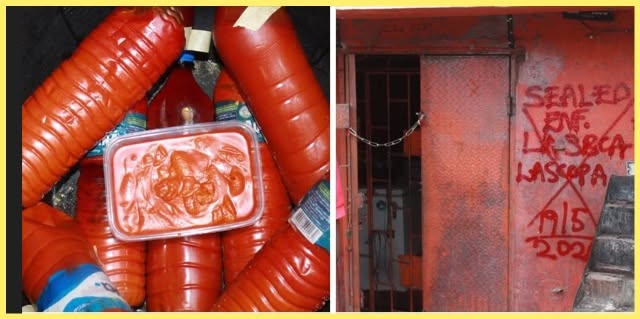
Nigerians risk consuming carcinogenic dyes and recycled cooking oil disguised as fresh palm oil, the Lagos State Government has warned, as it intensifies surveillance across markets in the state.
The warning was issued through the Lagos State Consumer Protection Agency (LASCOPA) following a technical presentation at the Lagos State Food Safety Conference and Exhibition 2026, held on Monday, 22 September, 2026.
The presentation, titled “Palm Oil Adulteration: Emerging Risks, Detection Strategies and Regulatory Control,” was delivered by a Senior Lecturer in the Department of Food Technology at Auchi Polytechnic, Dr Nurah Oseni.
Oseni explained that palm oil remained particularly vulnerable to adulteration because of its high trading volume, consumers’ preference for a deep-red colour as an indicator of quality, price differences and informal market practices.
She identified the use of potentially carcinogenic Sudan and Azo dyes to enhance the colour of palm oil as one of the emerging risks facing consumers.
Beyond colour manipulation, she raised concerns over the blending of palm oil with recovered or recycled oils, including spent cooking oil, as well as the use of multiple adulterants designed to evade basic quality checks.
She further flagged digital and traceability fraud, including falsified labels and batch records, calling for stronger surveillance and improved detection mechanisms across the supply chain.
To help consumers protect themselves, Oseni advised the use of visual checks as an initial precaution, explaining that authentic palm oil may separate into layers, with the lower layer appearing orange to red-yellowish rather than uniformly deep red.
She, however, cautioned that visual inspection alone could not conclusively confirm whether palm oil had been adulterated.
The food technology expert recommended a tiered detection system involving risk-based screening, rapid physicochemical and spectroscopic tests, as well as confirmatory laboratory analysis based on proper sampling and chain-of-custody procedures.
She proposed a five-step surveillance framework for Lagos, described as “Risk Map, Sample, Screen, Confirm and Act,” stressing that the framework should be supported by an adulteration intelligence database and coordinated efforts involving processors, traders, laboratories, regulators, researchers and consumers.
Reacting to the presentation, the General Manager of LASCOPA, Afolabi Solebo, reaffirmed the agency’s commitment to protecting Lagos residents from unsafe and substandard products.
He urged residents to remain vigilant and report suspected cases of adulterated palm oil and unscrupulous traders through the agency’s official channels.
Solebo disclosed that LASCOPA had intensified surveillance operations in markets across the state and would take appropriate action against offenders, warning that suspects found dealing in adulterated products would be arrested and prosecuted in accordance with relevant laws.
