


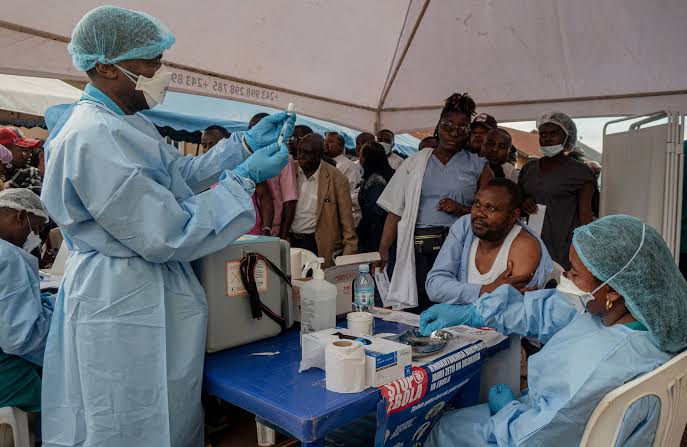
Ebola has returned to Nigeria, with the Federal Government confirming a case in the Federal Capital Territory, Abuja, and health authorities identifying 44 contacts for follow-up as they move to prevent further transmission.
The Minister of Health and Social Welfare, Professor Muhammad Ali Pate, announced the confirmation on Tuesday, 20 October, 2026, following laboratory tests that detected the infection in a woman who recently arrived in Nigeria from Uganda.
The patient had reportedly been admitted to a private hospital in the FCT, where she received treatment before the infection was confirmed. She is now in isolation and receiving medical care.
The government has activated a public health response involving the Federal Ministry of Health and Social Welfare, the Nigeria Centre for Disease Control and Prevention (NCDC) and the FCT Health Services Secretariat.
The identification of 44 contacts has triggered a tracing exercise to determine who may have been exposed to the patient and ensure that anyone who develops symptoms receives prompt medical attention.
Health authorities are also investigating possible exposures involving healthcare workers, caregivers, other patients and people who may have travelled with her.
The government is strengthening surveillance and infection-prevention measures at the hospital where the patient was treated.
Healthcare facilities across the country have also been directed to remain alert for suspected cases, isolate patients promptly where necessary and report suspected infections to public health authorities.
The confirmation represents a significant development in Nigeria’s Ebola preparedness efforts, particularly following warnings about the risk of imported infections linked to outbreaks elsewhere in Africa.
On October 6, the NCDC issued an advisory following an Ebola case in Kenya involving a traveller linked to the Democratic Republic of the Congo who had travelled through Uganda. The patient tested positive for the Bundibugyo strain of the virus and subsequently died.
At the time, the NCDC said Nigeria had no confirmed case but was strengthening surveillance, laboratory capacity, contact tracing and infection-control measures.Buy Maps
Ebola is a severe disease caused by the Ebola virus. It spreads through direct contact with the blood or other bodily fluids of an infected person who is symptomatic, or through contact with contaminated objects and surfaces.
The incubation period ranges from two to 21 days. Symptoms can include fever, severe weakness, headache, vomiting and diarrhoea. People do not transmit the virus before symptoms begin.
The government has urged Nigerians to maintain good hand hygiene and avoid direct contact with the blood or bodily fluids of anyone suspected of having Ebola. Anyone who develops compatible symptoms after a possible exposure should contact public health authorities promptly and follow their instructions before visiting a healthcare facility.
People contacted by public health teams have also been urged to cooperate with the tracing exercise and provide accurate information to help officials assess potential exposure.
Nigeria has experience responding to Ebola. During the 2014 outbreak, an infected traveller introduced the virus into the country, but coordinated surveillance, isolation and contact tracing helped contain its spread.
The Federal Government said investigations and public health response activities were continuing, with further updates expected from the relevant authorities.
