


By: Dr James Bwala
As Nigeria approaches the 2027 general election, political conversations are already gathering momentum. Former Vice President Atiku Abubakar remains one of the country’s most experienced opposition figures and a familiar name in presidential politics. Yet experience, recognition, and persistence do not always guarantee victory. At a certain point, every political leader must confront an important question: Is continued participation an expression of courage, or has it become an unwillingness to accept political reality?
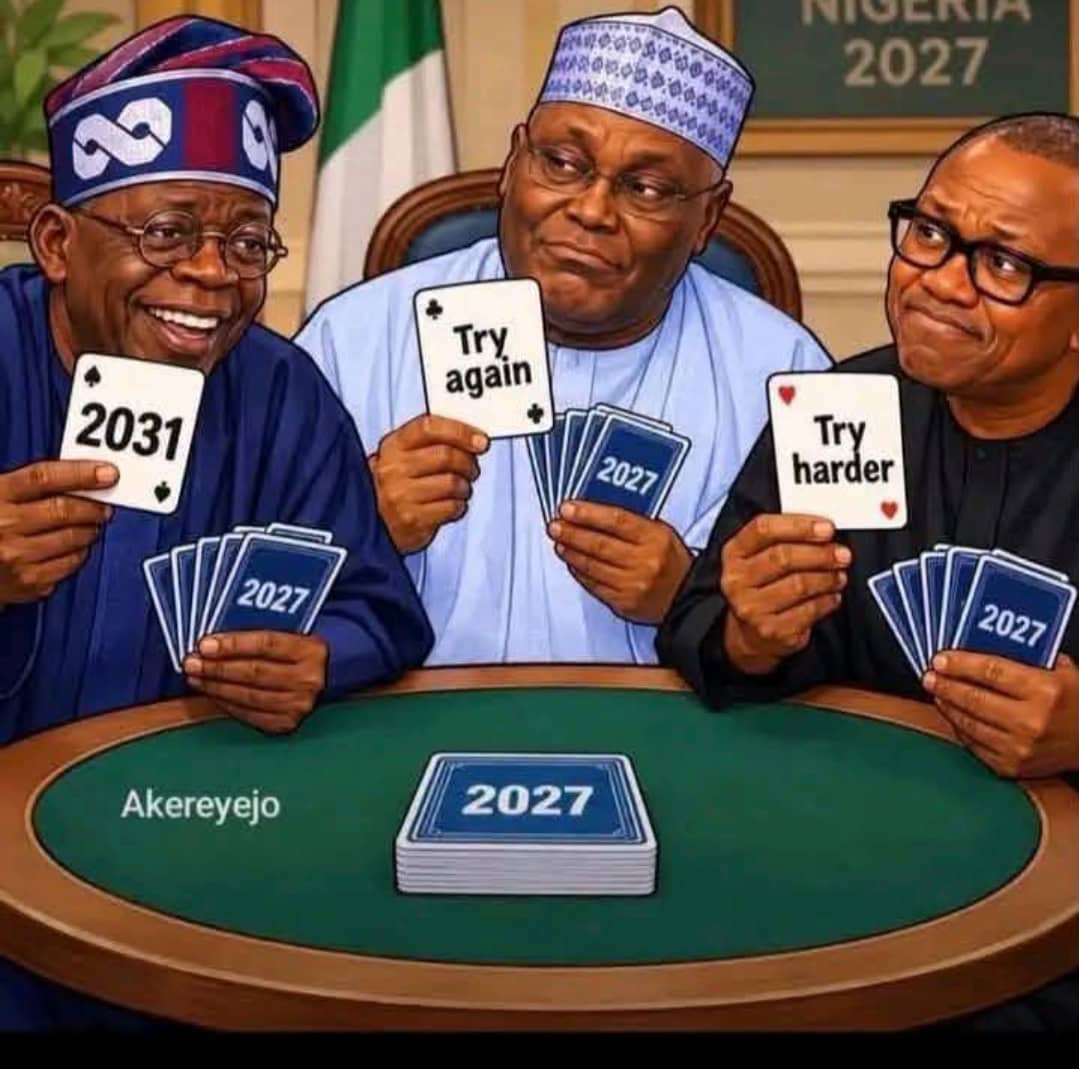
For Atiku Abubakar, the 2027 election may represent another opportunity to contest for the presidency, but it may also become the moment when he must decide whether to withdraw from the race and preserve his legacy. Continuing without a realistic path to victory could expose him to another painful defeat, deepen divisions within the opposition, and leave him with regrets about refusing to recognise changing political circumstances. There is no shame in surrendering when the political environment no longer favours a candidate. In some cases, withdrawal is not weakness; it is wisdom.
The central argument is not that Atiku lacks ability or experience. On the contrary, he has demonstrated remarkable resilience. He has contested presidential elections several times, built a national political network, and remained influential in Nigeria’s democratic development. However, politics is not merely a contest of personal ambition. It is also an exercise in timing, coalition-building, public confidence, strategic calculation, and the ability to recognise when a different generation or political arrangement is better positioned to succeed.
The signs surrounding the 2027 race suggest that Atiku may face a difficult and frustrating contest. A political image of Atiku struggling to wear a new pair of shoes, while Rotimi Amaechi attempts to assist him, offers a powerful metaphor. The shoes may represent a political arrangement, a coalition, or a new strategy that does not fit comfortably. Despite assistance, the effort ends in frustration, with the shoes thrown away. Whether viewed as symbolism, intuition, or political interpretation, the image reflects the difficulties that may confront Atiku as he attempts to build another presidential campaign.
A presidential campaign requires more than determination. It requires a structure capable of carrying the candidate to victory. Such a structure must include a broad and united coalition, strong party machinery, financial capacity, effective communication, popular enthusiasm, and a message capable of connecting with voters across Nigeria’s diverse regions. It must also persuade voters that the candidate represents a credible change from the existing administration. If any of these elements is missing, even an experienced politician can struggle.
Atiku’s previous campaigns demonstrate both his strengths and his limitations. He has consistently enjoyed national recognition and has been able to attract supporters across different parts of the country. However, his repeated attempts have not produced victory. Each failed campaign carries lessons, but it also creates political fatigue. Some voters may begin to question whether a candidate who has contested several times can offer a genuinely new direction. Others may prefer a younger or less familiar figure who symbolises generational change.
The issue of age and political renewal will likely be central in 2027. Nigerian voters, especially younger citizens, are increasingly demanding leaders who understand their economic realities, technological environment, and aspirations. They want employment, security, affordable education, reliable electricity, healthcare, and opportunities to participate meaningfully in national development. A campaign built primarily around past experience may not be sufficient. The opposition must present not only a candidate but also a convincing future.
Atiku’s greatest challenge may therefore be the changing political mood. A candidate who was once viewed as a strong alternative may find it more difficult to inspire the same level of enthusiasm after multiple contests. Political parties and alliances also change. Individuals who were once allies may pursue their own ambitions, while former supporters may move to different political platforms. In such circumstances, a campaign can become an exhausting struggle to recreate a coalition that no longer exists in its previous form.
The emerging political landscape could also favour the incumbent. President Bola Ahmed Tinubu and Vice President Kashim Shettima possess the advantages associated with incumbency: access to national visibility, established party structures, government influence, and the ability to present themselves as the centre of political attention. If the administration succeeds in improving economic conditions, strengthening security, and demonstrating measurable development before 2027, it may enter the election with a stronger position than the opposition expects.
A scene of Tinubu and Shettima dancing on a stage while Peter Obi and Rabiu Kwankwaso watch in shock can be understood as a metaphor for opposition fragmentation. It suggests a situation in which opposition leaders remain divided while the ruling party consolidates its position. Such division could be decisive. If major opposition figures compete against one another rather than forming a united front, they may divide the anti-government vote and make victory easier for the incumbent.
Nigeria’s electoral history shows that opposition parties rarely succeed when their leaders are unwilling to compromise. Presidential victory requires broad support beyond a candidate’s traditional base. It requires strategic partnerships and, in many cases, difficult personal sacrifices. If Atiku, Obi, Kwankwaso, Amaechi, and other influential figures all pursue separate ambitions, the opposition may repeat the mistakes of previous elections. Their supporters may be passionate, but passion without coordination can produce defeat.
This is why Atiku should seriously consider whether withdrawal could serve a larger national purpose. By stepping aside, he could help create space for a new opposition arrangement. He could support a younger candidate, negotiate a stronger coalition, or become a respected elder statesman whose influence extends beyond personal ambition. Withdrawal would not erase his political contributions. Instead, it could demonstrate that he places the stability and future of Nigeria above the desire to occupy the presidency.
Some may argue that withdrawing would amount to surrendering his dream. But a political dream must be assessed against reality. Persistence is admirable when it advances a meaningful objective; it becomes counterproductive when it ignores evidence. A leader who continues indefinitely despite declining prospects may eventually be remembered less for his accomplishments than for his refusal to recognise when it was time to step aside.
There is also a personal dimension to the decision. Presidential campaigns are demanding, expensive, and emotionally draining. They expose candidates to criticism, betrayal, public disappointment, and intense political pressure. A candidate who enters another race without a strong likelihood of success risks subjecting himself and his supporters to another cycle of anxiety and frustration. If the outcome is another major defeat, the political consequences may be more damaging than those of a voluntary withdrawal.
Atiku’s legacy should not be defined only by whether he eventually became president. His career includes important contributions to public service, democratic politics, and the development of political institutions. He has played significant roles in national debates and has remained an important figure in Nigeria’s political history. He can preserve that legacy by making a decision that reflects maturity and foresight.
However, withdrawal alone is not enough. If Atiku decides not to contest, he should use his influence to promote a credible democratic alternative. He could encourage opposition leaders to establish transparent rules for selecting a candidate, resolve regional and ideological disputes, and produce a common programme focused on economic recovery, security, social welfare, and institutional reform. He could also mentor younger politicians and support internal party democracy.
The greatest danger to the opposition is not necessarily the strength of the ruling party; it is the opposition’s inability to organise itself. A divided opposition can turn every leader into a candidate but no one into a winner. The lesson of 2027 should therefore be that personal ambition must not overwhelm collective responsibility. Political leaders must understand that the ultimate objective is not simply to appear on the ballot. It is to offer Nigerians a realistic, competent, and united alternative.
Atiku may still decide to contest, and he has every constitutional right to do so. No political interpretation or personal vision should be treated as an unquestionable fact. Elections are determined by voters, organisations, campaign quality, public sentiment, and verifiable political developments. Predictions can stimulate debate, but they cannot replace evidence or democratic choice. The final decision must be based on careful polling, grassroots feedback, coalition strength, and a realistic assessment of the electoral environment.
Nevertheless, the warning remains relevant. If the political cloud does not favour Atiku, continuing may bring more frustration than fulfilment. The image of struggling with shoes that do not fit captures the danger of forcing a political journey under unfavourable conditions. Sometimes the most courageous decision is not to continue walking at all costs but to stop, reassess, and choose a more meaningful path.
Atiku should therefore consider withdrawing from the 2027 presidential race—not as an admission of personal failure, but as an act of political wisdom. He could find peace in knowing that he served his country, contributed to democracy, and helped prepare the way for a stronger generation of leaders. If he continues without a viable route to victory, he may win admiration for his persistence but eventually live with the regret of having ignored the signs around him.
There is no shame in surrendering when surrender prevents greater damage. In politics, as in life, timing matters. A leader’s greatness is measured not only by the battles he fights but also by the battles he chooses to avoid. By withdrawing, Atiku may lose a place on the ballot, but he could gain something more enduring: respect, influence, peace, and a legacy of putting Nigeria’s future above his personal ambition.
James Bwala, PhD, writes from Abuja
