


It was an unusual post on Facebook. It is not often that Nigerians have charitable or commendable things to say about occupants of public office. They are seen more as masters rather than servant leaders; more preoccupied with the pomp and grandeur of office as wealth acquisition rather than the opportunity it provides to add value to society and promote national development. There is a linkage between deficient leadership at all levels and an otherwise richly endowed country’s continued inexplicable romance with dehumanising underdevelopment. But on the 5th of July, 2025, Engineer S. O. Yusuf, from Kaduna, had a post online tagged ‘Leadership by Example’.
In his words, “This morning at about 7:46 a.m. inside a train from Rigasa to Idu, Abuja, I had a remarkable encounter that left a lasting impression on me about leadership in Nigeria. While seated in Coach 20 of the Nigeria Railway Corporation train, I met a humble and well-spoken gentleman who joined us on a three-seat bench. After exchanging pleasantries, he engaged me and my friend in a thoughtful conversation about Railway transportation in Nigeria, particularly our experiences along the Abuja-Kaduna route. We spoke openly, highlighting both the positive aspects and areas where we believed improvements were needed”.
Engineer Yusuf continued, “Throughout the discussion, he listened with genuine interest, asked insightful questions, and responded thoughtfully. His calm, respectful, and unassuming manner stood out. To our surprise, it was only after we introduced ourselves that we discovered he was the Managing Director of the Nigerian Railway Corporation. What struck me most was how approachable and down-to-earth he was. There was no air of superiority or entitlement. He embodied what true leadership should be, listening to honest feedback, and leading by example”. But what did Engineer Yusuf find even more fascinating? Hear him: “Upon arrival at Idu Station, he quickly got down and ensured the elevator was operational. For the first time in years of using the train, I was able to use both the elevator and the escalator; an immediate and visible impact of proactive leadership”.
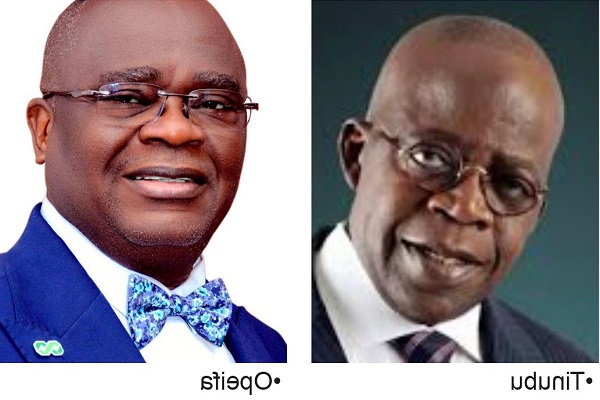
Incidentally, the current Managing Director of the Nigeria Railway Corporation (NRC), Dr Isiak Kayode Opeifa, who was appointed by President Bola Tinubu on 22nd January, stressed on an appearance on TVC’s breakfast show that the restoration of dignified and satisfactory customer service, which he described as a constituent key soul of Railway operations, is a cardinal goal of the organization under his leadership. The correspondence shared above by an impressed customer confirms that he is indeed walking his talk. Other components of the soul of this mode of transportation, very critical to the management he leads, Opeifa avers, are affordable cost, comfort, connectivity and pride arising from the customer’s sense of fulfilment and safety.
In articulating his goal at the NRC within the context of President Tinubu’s Renewed Hope Agenda, Opeifa situates one of Nigeria’s oldest public institutions at the very core of the country’s pursuit of economic growth and development, prosperity and national integration. Tracing the historical trajectory of the NRC, he notes that it had been at the centre of national economic development and integration as far back as 1898, up to 1912, even before Nigeria was formally christened with the famous name it bears today. Although he never used the then functional trains before he was born on 21 May, 1965, he recalls with nostalgia tales he was told of how the train service moved people and goods from Lagos to Kafanchan, Kutuwenji, Kaura Namoda, Zungeru, Enugu, Aba, Port Harcourt and all over Nigeria. Historians surely have a duty to document for popular readership the role of the NRC over time in the emergence of a popular national consciousness.
However, Opeifa laments that the NRC was allowed by successive regimes to become one of the foremost symbols of the abysmal decline of the country’s fortunes for a period of no less than six decades. Steps to reverse this decline, he states, started about a decade ago with the late President Muhammadu Buhari administration that jump-started the actualisation of modernising the country’s rail system. There are those who can see no positive gains of the PMB years in power. But even the blind can see the various rail projects either initiated or completed by the administration in eight years of frenetic activity in the sector. These include the Kaduna-Kano railway project; the Abuja-Kaduna railway route; the Port Harcourt – Aba railway rehabilitation; the Lagos-Ibadan standard gauge railway and the Kano- Daura section of the Kano- Maradi rail project to name a few.
