


By Oluwole Solanke (PhD, FCIB)
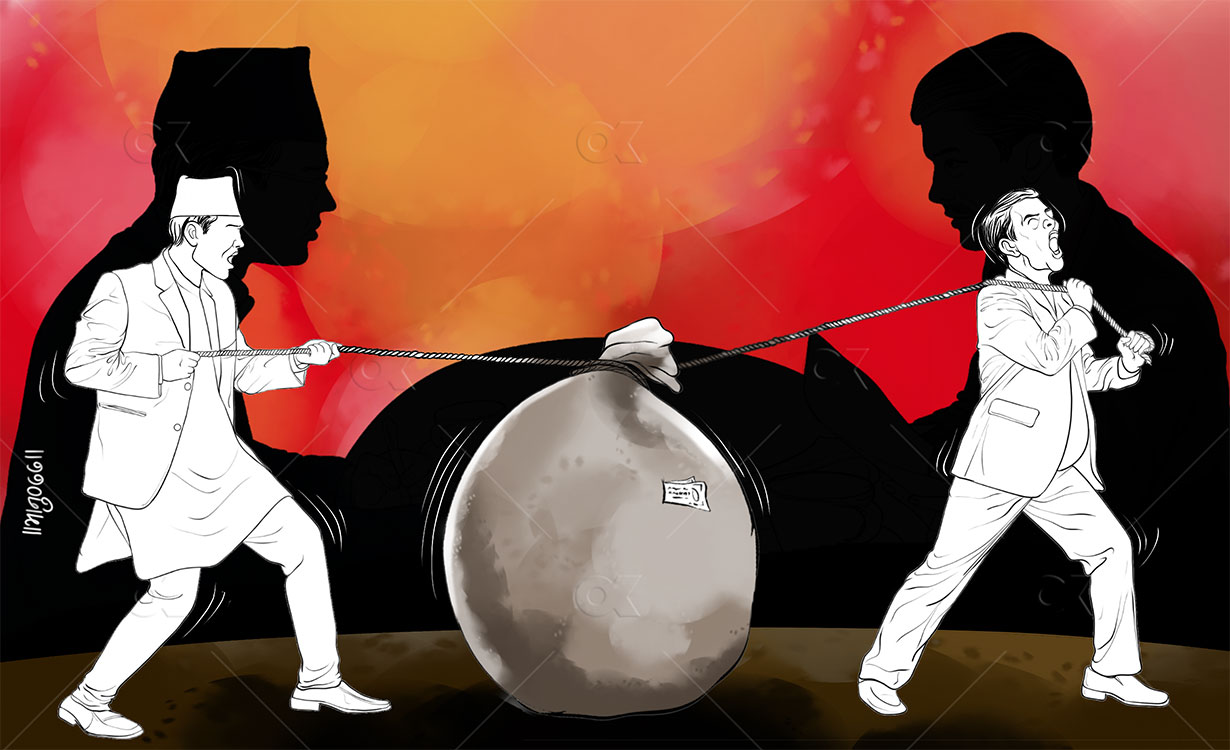
In the shadow of the Himalayas, where ancient kingdoms once thrived and modern democracy struggles to take root, Nepal stands as a poignant case study in the eternal battle between corruption and good governance. Picture this: It’s September 2025, and the streets of Kathmandu erupt in fury. Thousands of young protesters, fueled by Generation Z’s unyielding demand for justice, clash with authorities amid chants of “Nepal belongs to us, not the corrupt!” A hastily imposed social media ban—meant to silence the digital drumbeat of dissent—backfires spectacularly, igniting nationwide unrest that claims over 20 lives and forces Prime Minister K.P. Sharma Oli to resign. This isn’t just a flashpoint; it’s the culmination of decades of systemic rot, where power brokers siphon public wealth while the nation grapples with poverty, unemployment, and political instability. Nepal’s story is one of resilience amid despair, a vivid illustration of how unchecked corruption erodes the foundations of good governance, yet also a testament to the power of collective action to demand change.
Corruption, broadly defined as the abuse of entrusted power for private gain, isn’t merely a moral failing—it’s a thief in the night, stealing opportunities from the masses and perpetuating inequality. Good governance, on the other hand, is the antidote: a framework emphasizing transparency, accountability, participation, rule of law, and responsiveness to citizens’ needs. In theory, it’s the blueprint for equitable development. In practice, especially in fragile states like Nepal, it’s an elusive ideal battered by entrenched elites and institutional weaknesses. As we delve into Nepal’s saga, we’ll explore the depths of its corruption crisis, the pillars of good governance, and the flickering hope of reform—drawing on recent upheavals to paint a comprehensive picture of a nation at a crossroads.
The Entrenched Grip of Corruption: Nepal’s Long Shadow
Nepal’s tryst with corruption dates back to its monarchical era but exploded in the post-1990 democratic transition and the 2006 people’s movement that abolished the monarchy. The 2015 constitution promised federalism and inclusivity, yet it also opened floodgates for patronage politics. Fast-forward to 2024: Transparency International’s Corruption Perceptions Index (CPI) ranked Nepal 107th out of 180 countries, with a dismal score of 34 out of 100—indicating “significant corruption” in the public sector. This marked a slight dip from 35 in 2023, underscoring a stagnation that experts attribute to weak enforcement and political interference.
The scandals are legion, each a grotesque tableau of greed. The Lalita Niwas land scam, one of the largest, involved the illegal sale of government land in Kathmandu, implicating politicians, bureaucrats, and even human rights activists in a web of forgery and bribery worth billions of Nepalese rupees (NPR). In 2023, it led to arrests, including a former health minister, but prosecutions have dragged on, emblematic of judicial lethargy. Then there’s the wide-body aircraft purchase debacle of 2017-2018, where Nepal Airlines splurged over $200 million on two Airbus A330s at inflated prices, with kickbacks allegedly funneled to top officials. Investigations revealed procurement irregularities, yet few convictions followed, fueling public cynicism.
More recently, the cooperative savings scam rocked rural Nepal, defrauding over a million depositors of NPR 200 billion through fraudulent microfinance schemes backed by politicians. The Bhutanese refugee scam and gold smuggling rings further highlight how corruption permeates borders and institutions, from tax stamps forged to evade billions in revenue to the Tax Settlement Commission scandal that cost the treasury NPR 10 billion. These aren’t isolated incidents; they’re symptoms of a kleptocratic culture where “nepo kids”—children of the elite—secure plum jobs and contracts, exacerbating youth unemployment at 19% and stunting economic growth. As one protester scrawled on a placard during the 2025 uprising: “Corruption kills dreams before they begin.” The human cost is staggering—stunted infrastructure, diverted disaster relief (recall the 2015 earthquake funds that vanished), and a brain drain of talented youth seeking fortunes abroad.
This miasma of corruption doesn’t just drain coffers; it undermines trust. In a country where 25% live below the poverty line, every misappropriated rupee is a betrayal of the social contract. Nepal’s federal structure, meant to empower local governance, has instead devolved into a patchwork of fiefdoms, with provincial leaders accused of siphoning development funds. The 2024 headlines screamed of political instability and geopolitical maneuvering, but beneath it all lurked corruption as the defining crisis.
Pillars of Good Governance: The Ideal Nepal Aspires To
Good governance isn’t a buzzword; it’s the engine of sustainable progress. Coined by the United Nations in the 1990s, it rests on eight core principles: participatory decision-making, consensus-oriented policies, effectiveness and efficiency, equity and inclusivity, accountability, transparency, rule of law, and responsiveness. In essence, it’s governance that serves the people, not the powerful.
For Nepal, embodying these would transform its trajectory. Transparency, for instance, could be achieved through open budgets and e-governance portals, allowing citizens to track public spending. Accountability mechanisms—like independent audits and whistleblower protections—would deter the impunity that shields corrupt officials. The rule of law demands swift, impartial justice, free from political meddling, while participation ensures marginalized groups—women, Dalits, indigenous communities—have a voice in federal assemblies.
Globally, nations like Singapore and Estonia showcase success: robust anti-corruption agencies, digital transparency, and merit-based civil services propel them to CPI tops. Nepal, with its diverse ethnic tapestry and post-conflict scars from the 1996-2006 Maoist insurgency, needs tailored good governance to heal divisions and foster unity. Imagine local municipalities empowered by citizen-led accountability, as promoted by organizations like Helvetas Nepal, where communities co-design projects to ensure funds reach intended beneficiaries. Or youth champions in community forests, trained by WWF’s Targeting Natural Resource Corruption initiative, safeguarding biodiversity while modeling ethical stewardship.
Yet, theory collides with Nepal’s reality. The 2015 constitution enshrines good governance in Article 27, mandating transparency and anti-corruption, but implementation falters. The Good Governance Protection Forum (GGPF) and United Mission to Nepal advocate for right-to-information laws and civic education, yet bureaucratic inertia persists. Economic development hinges on this: As a 2025 study notes, curbing corruption could boost Nepal’s GDP by 2-3% annually, channeling resources into hydropower, tourism, and agriculture—sectors crippled by graft.
Nepal’s Reform Odyssey: From Institutions to Uprisings
Nepal isn’t passive in this fight. The Commission for the Investigation of Abuse of Authority (CIAA), established in 1991, is the frontline warrior, filing 114 corruption cases in 2021-2022 alone. The Prevention of Corruption Act 2002 criminalizes bribery and money laundering, with amendments in 2025 strengthening asset declaration for officials. International partners like the World Bank support the Program for Accountability in Nepal (PRAN), training auditors and promoting e-procurement to minimize leaks.
But true momentum surged in 2025’s Gen Z protests. Sparked by the social media blackout—perceived as a ploy to muzzle exposés on “nepo kids” and scandals—the movement transcended platforms, demanding systemic overhaul. Protesters torched parliament, forcing Oli’s ouster and the ban’s repeal, signaling a youth-led push for good governance. Civil society, including the Good Governance (Act Nepal) Act, amplifies this with campaigns for judicial independence and electoral reforms. Multifaceted strategies—legal tweaks, institutional fortification, and civil society vigor—are gaining traction, as a 2025 analysis urges.
Persistent Challenges: The Roadblocks to Renewal
Despite glimmers, hurdles loom large. Political instability—eight governments since 2008—breeds short-termism, with coalitions shielding allies from probes. An entrenched elite, often tied to India and China via geopolitics, resists change. Judicial backlog means cases like Madhav Nepal’s 2025 corruption trial drag, eroding faith. Rural-urban divides exacerbate inequities, with federalism’s promise unfulfilled amid capacity gaps.
Moreover, external factors like climate vulnerability and post-COVID debt amplify corruption’s toll. Without holistic reforms—digital tracking, whistleblower incentives, and education on ethics—Nepal risks perpetual cycles.
A Beacon of Hope: Toward an Uncertain Dawn
Nepal’s narrative isn’t one of defeat but defiance. The 2025 protests, echoing the 2006 revolution, remind us that good governance isn’t bestowed—it’s seized. As the dust settles on Oli’s resignation, a new government must prioritize: Strengthen CIAA independence, digitize services, and empower locals via initiatives like GGPF’s peace-building. Youth, armed with smartphones and unquenchable zeal, are the vanguard, turning “corruption kills” into a rallying cry for accountability.
In the words of a Kathmandu demonstrator amid the chaos: “We are not just protesting; we are building tomorrow.” Nepal’s case study urges the world: Corruption thrives in shadows, but good governance blooms in the light of vigilant citizens. If this Himalayan heartbeat can pulse toward transparency, it offers inspiration for every struggling democracy. The path is arduous, but as history shows, the people’s will is mightier than the mightiest graft.
