



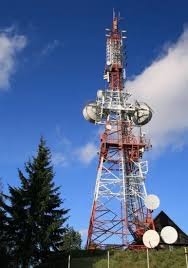
Across Nigeria, millions of mobile subscribers have recently been met with a “service unavailable” message when trying to use the popular “Borrow Me Airtime” feature. The disruption has sparked a heated legal and regulatory battle between the Federal Competition and Consumer Protection Commission (FCCPC), telecommunications giants, and value-added service providers.
Here are 10 things to know about the airtime lending shutdown:
1. The Root of the Conflict: DEON Regulations
The crisis stems from the Digital, Electronic, Online or Non-Traditional (DEON) Consumer Lending Regulations introduced by the FCCPC in July 2025. These rules aim to bring all forms of digital credit—including airtime and data advances—under the commission’s direct oversight to curb “predatory practices.”
2. The N400 Billion Industry at Stake
Airtime lending in Nigeria is no longer a fringe service; it is a massive financial sub-sector estimated to be worth over N400 billion. For many Nigerians, it serves as a critical micro-credit lifeline used to stay connected when out of cash, making any disruption a significant economic event.
3. Allegations of Regulatory Overreach
Stakeholders, particularly the Wireless Application Service Providers Association of Nigeria (WASPAN), argue that the FCCPC is overstepping its bounds. They contend that the commission is attempting to regulate the telecommunications space—a domain traditionally and legally reserved for the Nigerian Communications Commission (NCC).
4. The “Silent” Regulator: Where is the NCC?
Despite the turmoil affecting millions of telecom subscribers, the NCC has remained notably silent. Industry experts point to this silence as a source of confusion, as the NCC’s Value Added Services (VAS) framework already governs these products. The lack of a unified stance between the two regulators has left operators in a “compliance trap.”
5. The Multiple Court Orders
The legal battle moved swiftly into the courts in April 2026:
April 15, 2026: Justice A. Lewis-Allagoa of the Federal High Court, Lagos (Suit No: FHC/L/CS/760/2026) granted an interim injunction restraining the FCCPC from enforcing the DEON regulations against WASPAN members.
April 24, 2026: A Federal High Court in Abuja restrained MTN and Airtel from suspending services to Nairtime Nigeria Limited, a major lending partner, pending a substantive hearing.
6. “We Didn’t Ban It” – FCCPC’s Defense
The FCCPC has officially denied issuing a “shutdown” order. In statements released on April 17 and 18, 2026, the commission clarified that it did not prohibit the services but rather mandated compliance. It blamed the disruptions on the “business decisions” of operators who failed to regularize their operations by the January 5, 2026 deadline.
7. Public Outcry and Subscriber Frustration
The shutdown has triggered widespread anger across social media, with Nigerians describing the suspension of “Borrow Me Airtime” as “suicidal” for emergency communication. Subscribers have flooded platforms like X (formerly Twitter) and Facebook to vent about the loss of what many call a “financial relief mechanism.” The outcry highlights a deep reliance on these micro-loans, with users arguing that the regulatory war is being fought at the expense of the poor who cannot always afford upfront recharges.
8. Threats to “Ease of Doing Business”
The impasse is being cited as a major blow to Nigeria’s “Ease of Doing Business” credentials. Investors in the tech and fintech space have raised concerns that overlapping jurisdictions between government agencies create a “stifling” environment where a single service might require multiple, often conflicting, licenses.
9. Persistent Defiance of Court Orders
Despite the court injunctions issued in mid-April 2026 intended to “freeze” the enforcement and restore services, many subscribers still report being unable to borrow airtime. There are mutual accusations of non-compliance, with service providers claiming the FCCPC’s past threats still hang over them, and the FCCPC pushing to vacate the orders.
10. What Happens Next?
The legal standoff is far from over. The Federal High Court in Lagos recently (April 30, 2026) refused the FCCPC’s bid to vacate the injunction and has adjourned the substantive suit to May 15, 2026. Until then, the N400 billion industry remains in a legal “grey zone,” and the Nigerian consumer remains the ultimate loser in the regulatory tug-of-war.
