


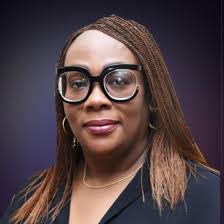
President of the Association of Psychiatrists in Nigeria, APN, Dr. Veronica Nyamali, on Wednesday 17 June, 2026 disclosed that Nigeria currently has less than 150 psychiatrists.
Nyamali warned that the dwindling number of specialists is making mental healthcare increasingly expensive and inaccessible, especially for patients in rural communities where psychiatrists are virtually non-existent.
Nyamali made this disclosure during an interview with Vanguardat the Ordinary General Meeting and Scientific Conference of the Association of Resident Doctors, ARD, held at the Federal Neuropsychiatric Hospital, FNPH, Yaba, Lagos, on Wednesday, 17 June, 2026 with the theme, “Too Few Doctors, Too Many Patients: The Consequences of Manpower Shortage on the Mental Well-being of Nigerians.”
She described the manpower shortage as a crisis that had forced consultants to abandon higher-level responsibilities, such as research and specialist care, in order to fill gaps left by departing doctors.
“There are gaps everywhere. Work that should be done by four psychiatrists is now being handled by one or two people. Consultants are increasingly forced to work at lower levels because the doctors they are supposed to supervise are no longer there,” she said.
Nyamali lamented that many doctors undergoing specialist training now leave the country before completing their careers in Nigeria, creating persistent vacancies across psychiatric facilities.
“Those we train are leaving. Junior registrars, senior registrars, many complete their examinations and return abroad. The result is that we have shortages at every level of care,” she stated.
“When specialists become scarce, services become more expensive. Access becomes difficult because patients must travel long distances to find care. This is contrary to the principle of universal health coverage, where mental health services should be available, affordable and accessible to everyone,” Nyamali said.
She linked the brain drain to a shrinking pharmaceutical landscape, saying several pharmaceutical companies had either scaled down operations or exited the country, reducing access to newer and more effective psychiatric medications.
“We now have fewer treatment options. Some of the newer drugs that offer better outcomes are no longer readily available. At the same time, the market is being flooded with fake medicines, making treatment even more challenging,” she warned.
According to Nyamali, the shortage of specialists has created room for greater reliance on traditional and faith-based healers, who are often the first point of contact for people with mental illnesses.
While acknowledging their influence within communities, she said psychiatrists are increasingly collaborating with traditional and religious healers to discourage harmful practices such as chaining, flogging and unlawful confinement of persons living with mental disorders.
“We recognise that people go to them first because they are available, accessible and affordable. Rather than confront them, we are engaging them and providing basic mental health education so that harmful practices can be eliminated and patients referred appropriately,” she explained.
Nyamali also highlighted the growing burden of mental illness in Nigeria, linking rising cases to worsening economic hardship, insecurity, unemployment, substance abuse, kidnappings and other traumatic experiences.
“People are being traumatised daily. Poverty, joblessness, violence and insecurity are all social determinants of mental illness. Those already living with mental health conditions are relapsing more frequently, while many others are developing new mental health challenges because of the pressures of daily living,” she said, expressing concern that mental healthcare remains largely financed through out-of-pocket spending, despite the chronic nature of many psychiatric conditions.
“Mental illness is not properly covered under health insurance. Many of the newer medications are not included in insurance drug lists, leaving families to bear enormous treatment costs. The burden on care-givers is huge,” she added.
A Consultant Psychiatrist at the Neuropsychiatric Hospital, Aro, Dr. Yesir Kareem, speaking at the meeting said Nigeria’s doctor-to-patient ratio had fallen to about one doctor for more than 10,000 patients, far below the World Health Organisation’s recommended ratio of one doctor to 600 people.
According to him, Karrem the consequences are particularly devastating for mental healthcare.
“Only about 55,000 doctors remain to serve a population of over 220 million Nigerians. More than 40 million Nigerians suffer from mental health disorders, yet about 85 per cent of them do not have access to mental healthcare services,” Kareem said.
He noted that Nigeria’s shortage of psychiatrists and other mental health specialists has reached alarming levels, warning that untreated mental illnesses contribute to family breakdowns, substance abuse, unemployment, delayed diagnosis and premature deaths.
“The economic consequences are equally devastating, with billions of dollars lost annually due to untreated mental health conditions,” he added.
He also noted that 94,000 doctors and nurses had left Nigeria since the Japa syndrome started some years ago.
He said the doctors were leaving due to poor remuneration and delayed salaries, competitive salaries in destination countries, overwhelming patient loads (1:10,000+), better work-life balance and conditions, and inadequate medical equipment & facilities.
He also listed access to modern medical technology, limited career advancement opportunities, professional development and training, unsafe working conditions and long hours, unstable political and economic environment and insecurity and socioeconomic instability as factors encouraging migration of doctors from the country.
At the conference, the President of ARD, FNPH Yaba, Dr. Okuwoga Temitope, said the shortage of doctors has become a major threat to access to quality mental healthcare in Nigeria.
“As mental health professionals, we witness first hand the widening treatment gap, the burden on already stretched healthcare workers and the impact these shortages have on access to quality mental healthcare for Nigerians,” he said.
According to Temitope, resident doctors are increasingly battling burnout, anxiety, stress and depression due to overwhelming workloads caused by the shortage of manpower.
The association urged federal and state governments to improve remuneration, strengthen welfare packages, expand specialist training programmes, improve working conditions and increase investment in mental healthcare to stem the tide of migration.
The doctors also advocated the integration of mental health services into primary healthcare centres, wider deployment of telepsychiatry and increased public awareness to reduce stigma and improve early treatment seeking.
In a communiqué issued at the end of the conference, the association reaffirmed its commitment to advancing the welfare of resident doctors and improving access to quality mental healthcare services across the country.
It also urged the management of the Federal Neuropsychiatric Hospital, Yaba, to expedite the enrolment of newly employed resident doctors on the Integrated Payroll and Personnel Information System, IPPIS, to prevent salary delays and financial hardship.
The doctors, however, commended the Medical Director of the hospital, Dr. Olugbenga Owoeye, for restoring public electricity supply to the Yaba and Oshodi arms of the institution after a prolonged outage, while calling for more stable power to support patient care and residency training.
Source: Vanguard online
