


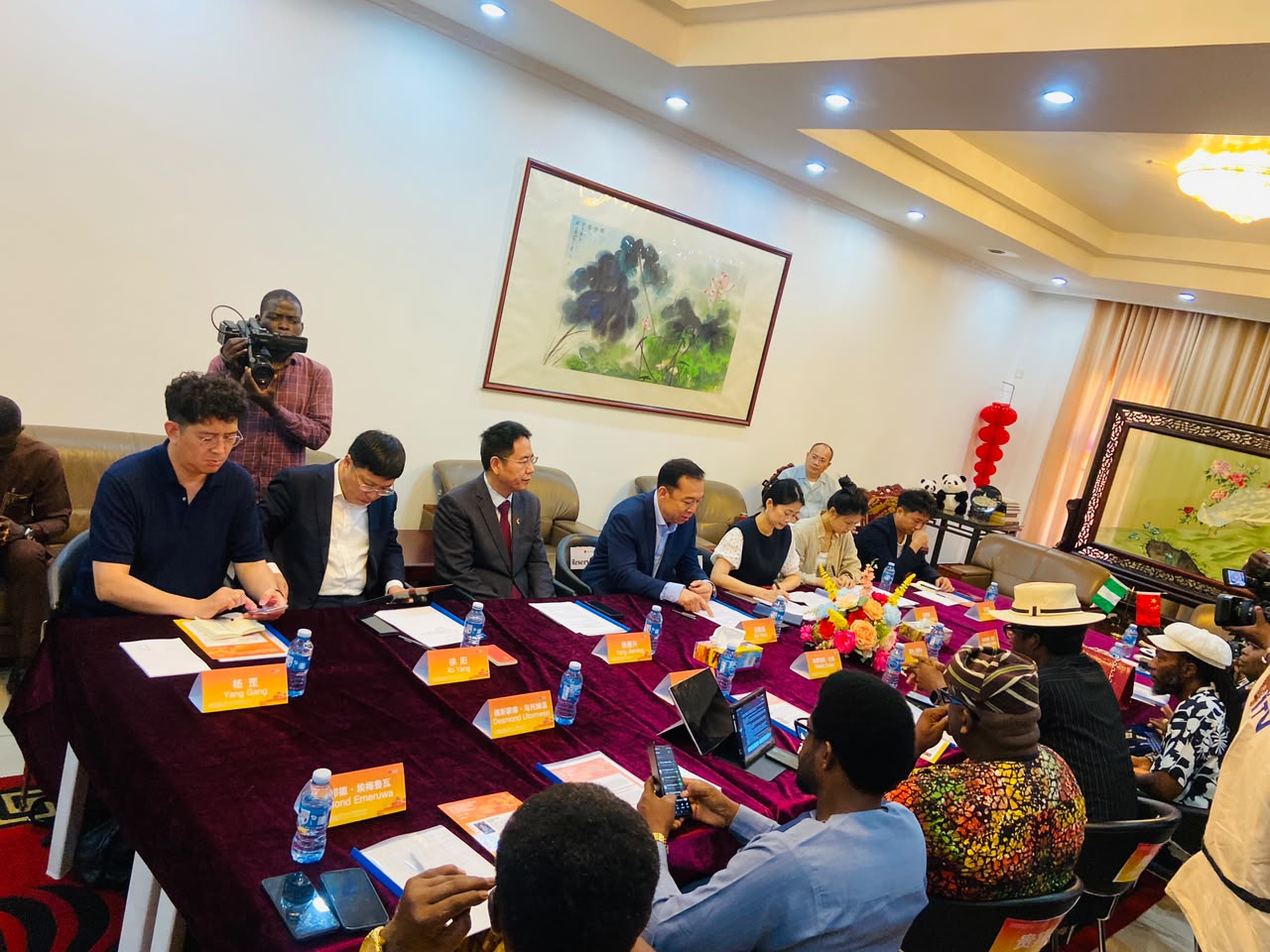
Nigeria and China are seeking to turn their growing cultural relationship into a stronger commercial partnership in film, with filmmakers from both countries exploring co-production, technology transfer and distribution opportunities that could open up two major audiences to each other’s creative industries.
The push gained momentum at the Chinese Film Screening in Nigeria 2026 in Abuja, where industry stakeholders identified the combination of Nigeria’s storytelling strength and China’s cinema infrastructure, capital and distribution expertise as a potential pathway to expanding the global reach of their productions.
The discussions also highlighted a major challenge facing the proposed partnership: translating cultural exchanges and diplomatic goodwill into concrete business arrangements that enable filmmakers to secure investment, distribute their works across borders and earn sustainable returns.
The Director of the China Cultural Centre in Nigeria, Mr Yang Jianxing, said film remained an important bridge for strengthening understanding between the two countries, whose creative industries offered considerable scope for collaboration.
“China and Nigeria share a deep-rooted traditional friendship and close people-to-people exchanges, and film serves as an important bridge for fostering mutual understanding between our peoples,” he said.
Jianxing said cooperation had expanded through reciprocal film screenings, professional exchanges, festivals and the distribution of productions across national borders.
The partnership involving the Chinese Embassy, the China Cultural Centre and StarTimes Nigeria has helped bring Chinese film and television productions to Nigerian audiences through initiatives including a month-long showcase, the Chinese Women’s Film Festival and screenings of works dubbed or subtitled in local languages, including Hausa.
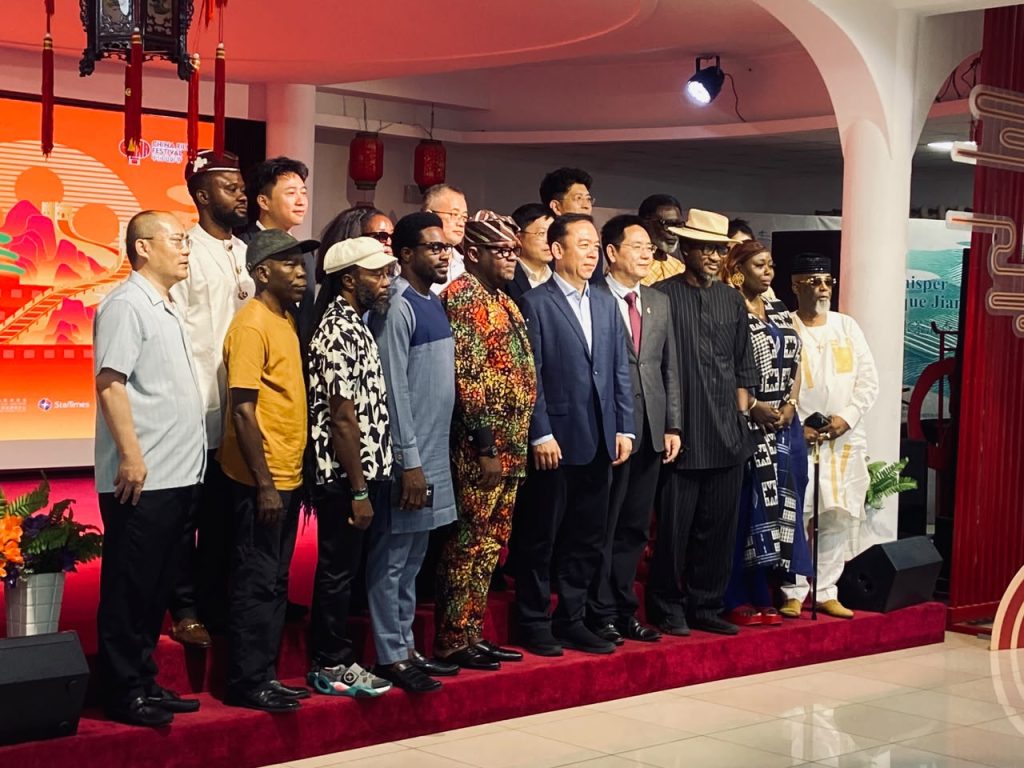
“StarTimes has successfully brought outstanding Chinese productions and knowledge series to a broader audience,” he said.
He added that Nigerian films had also reached mainstream Chinese digital media platforms, exposing audiences there to Nigerian stories, characters and experiences.
The commercial potential of the relationship was underscored by Fidelis Duker, founder of the Abuja International Film Festival, who said discussions with the Chinese delegation had focused on production, distribution and co-production opportunities, including engagements with Nigerian film institutions and plans to meet distributors and cinema operators in Lagos.
Duker argued that the population sizes of the two countries presented an opportunity to expand the reach of their film industries, provided that investment, technology and distribution networks were developed to support the exchange of content.
“What we found out today, or what we’ve known over the years, is that China has technology,” he said, adding that the Chinese delegation had told participants that China sold 1.3 billion cinema tickets in the previous year.
China’s film market provides an indication of the scale of the opportunity. According to figures released by the China Film Administration, the country generated 51.832 billion yuan in box-office revenue in 2025, while cinema attendance reached 1.238 billion. Domestic productions accounted for nearly 80 per cent of total box-office receipts, and the country ended the year with 93,187 cinema screens.
The figures illustrate the scale of China’s production and exhibition ecosystem, offering Nigerian filmmakers potential access to a market where locally produced content commands a substantial share of cinema revenue.
For Nigeria, the opportunity extends beyond exporting completed films. Collaboration could also create avenues for joint productions, technical training, improved post-production capacity and the development of distribution arrangements that give Nigerian stories a wider international audience.
Duker said the combination of Nigerian creativity and Chinese industrial capacity could be particularly valuable to both sides.
“When you marry Nigerian narrative vitality with China’s technical infrastructure, capital, and unparalleled distribution expertise, you can imagine” the possibilities, he said.
The Chinese delegation, led by Bai Yimin, chairman of Huaxia Film Distribution Company Limited, also emphasised the contribution of cinema to bilateral relations.
Bai said cooperation between the countries had produced results through reciprocal film festivals, professional exchanges, and the translation and broadcasting of films.
“In recent years, cooperation in the film industry has become a brilliant chapter in China-Nigerian cultural and people-to-people exchanges,” he said.
He added that the Chinese Embassy and the China Cultural Centre would continue to support initiatives using cinema to connect audiences and strengthen relations between the two countries.
The screening coincided with the 23rd Abuja International Film Festival, which received 10 Chinese film entries this year, five of which were nominated for awards. Duker said Chinese films had featured in 22 of the festival’s 23 editions, reflecting a longstanding relationship between the event and China’s film industry.
He also credited StarTimes with supporting the festival over the years, saying the relationship had contributed to its growth.
Three films were screened at the event: The Shadow’s Edge, Blades of the Guardians: Wind Rises in the Desert and The Lychee Road.
The screening comes against the backdrop of broader efforts to deepen Nigeria-China cooperation in the creative sector. In August 2026, the Nigerian Television Authority and China Movie Channel signed a strategic cooperation agreement aimed at promoting film co-production, technology transfer, professional training and wider distribution of creative content.
The agreement, announced at the China-Nigeria Film and Literature Symposium in Abuja, signalled an interest in moving cultural relations beyond the exchange of finished productions towards more structured industry collaboration.
The latest engagements at the film festival could build on that momentum by bringing filmmakers, distributors, cinema operators and production institutions into discussions about the practical requirements of cross-border business.
However, access to a large audience does not automatically translate into commercial success. Nigerian and Chinese productions seeking to enter each other’s markets will need effective distribution partners, appropriate subtitling and dubbing, marketing support, clear licensing arrangements and investment structures that protect the interests of participating filmmakers.
Differences in audience preferences, language, production practices and market regulations will also need to be addressed if joint projects are to attract viewers and generate revenue.
For Nigeria, the immediate priority is to ensure that its creative talent benefits commercially from international partnerships rather than limiting participation to festival appearances and cultural showcases. For China, deeper engagement with Nollywood offers an avenue to broaden the international reach of its productions while building relationships with one of Africa’s most prominent film industries.
The success of the partnership will ultimately depend on whether the two countries can turn screenings and professional exchanges into financed co-productions, regular content distribution and lasting commercial relationships.
With both sides signalling interest in closer collaboration, the emerging challenge is to build an industry-to-industry framework capable of converting shared cultural interests and large populations into tangible opportunities for filmmakers, distributors and audiences.
[22/10, 15:13] Michael Olugbode: Nigeria’s $337bn Climate Plan Faces Funding Test as FG Inaugurates Steering Committee
Nigeria’s ambition to cut emissions by 32 per cent by 2035 and achieve net-zero emissions by 2060 will require an estimated $337 billion in financing over the next decade, putting pressure on the Federal Government to mobilise investment and translate climate commitments into measurable results.
To address the challenge, the government on Thursday inaugurated an interministerial steering committee to coordinate the implementation of the country’s Nationally Determined Contribution 3.0 (NDC 3.0), the Net-Zero Investment Plan and the Long-Term Low-Emissions Development Strategy.
The Director-General of the National Council on Climate Change (NCCC), Mrs. Tenioye Majekodunmi, disclosed that the financing requirement for 2026 to 2035 comprised approximately $195 billion for emissions mitigation and $141.5 billion for adaptation.
She described the funding requirement not merely as a financing gap but also as an opportunity to attract investments into energy, agriculture, infrastructure and other sectors capable of generating jobs, strengthening economic resilience and supporting Nigeria’s development priorities.
Majekodunmi said the immediate task was to develop credible investment pipelines, deploy public and concessional finance strategically, attract domestic and international private capital, and establish the policy certainty required to encourage investors.
She stressed that the newly inaugurated steering committee must provide high-level coordination, integrate climate priorities into national planning and budgeting, mobilise finance and resolve implementation bottlenecks that individual ministries could not address independently.
According to her, the committee’s effectiveness should be measured by the barriers it removes, the investments it unlocks and the results it delivers, rather than the number of meetings it holds.
The committee is expected to bring together relevant ministries and institutions whose decisions on finance, energy, agriculture, transportation, industry and other sectors will determine the implementation of Nigeria’s climate commitments.
The NCCC will provide technical secretariat support, including coordination, analysis, implementation tracking and engagement with development partners.
In a keynote address, the Secretary to the Government of the Federation (SGF), Senator George Akume, said climate commitments must translate into measurable benefits for Nigerians, urging ministries, departments and agencies to integrate climate considerations into their policies, budgets and investment decisions.
Akume, who was represented by Prof. Babatunde Bernard, a Nigerian scientist, environmental scholar and Technical Adviser to the SGF, said the country must move beyond policy announcements to tangible results.
“We must therefore judge success by implementation, not announcements; by measurable outcomes, not intentions; and by the benefits delivered to our citizens, not documents produced,” he said.
The SGF said climate change could no longer be treated as the exclusive responsibility of the environmental sector because of its far-reaching implications for food security, infrastructure, public health, water resources, coastal communities and livelihoods.
He called for stronger collaboration among federal and state governments, the private sector, financial institutions, research bodies and international development partners to ensure that climate priorities were reflected in practical programmes and investment decisions.
Akume also urged state governments and the Federal Capital Territory Administration to incorporate climate considerations into agriculture, transportation, urban development, waste management, infrastructure and community resilience.
He maintained that Nigeria’s transition to a low-emissions economy must reflect its development circumstances, including the need to expand access to affordable and reliable energy, create jobs, strengthen industrial capacity and protect vulnerable communities.
Meanwhile, the United Nations Development Programme (UNDP) has identified the preparation of investment-ready projects as a critical requirement for Nigeria to attract the funding needed to implement its climate action plan.
The UNDP Resident Representative in Nigeria, Ms. Elsie Attafuah, said many potentially viable private-sector initiatives remained unfunded because they lacked adequate feasibility studies, credible business models, clear delivery arrangements or appropriate financing instruments.
She stressed that preparing projects to meet investors’ requirements was essential to mobilising private capital, particularly for initiatives that promise substantial public benefits but may not generate sufficient commercial returns on their own.
Attafuah’s remarks highlighted the need to combine private investment with domestic public resources and international climate finance, especially for adaptation projects whose benefits might not translate directly into financial returns.
She noted that reliable clean energy could help businesses improve production, while climate-smart agriculture could protect farmers’ incomes, strengthen food security and improve resilience to extreme weather.
Such investments, she said, could also support more competitive businesses, healthier communities and a more resilient economy.
The UNDP representative further underscored the importance of transparent carbon-market systems, credible emissions measurement and reporting, and a reliable national carbon registry in strengthening accountability and investor confidence.
Support for developing Nigeria’s national carbon-market registry was cited as part of efforts to establish the systems needed to track climate-related transactions and verify results.
She also stressed that climate projects must respond to local needs and involve the communities expected to live with their consequences.
Women, young people, farmers and other affected groups, she said, should participate from the outset, particularly where changes in technology, land use or employment could affect livelihoods and access to economic opportunities.
State governments were also identified as essential to implementation because decisions on land, infrastructure and public services directly influence climate resilience. The NCCC’s engagement with states is intended to connect their development priorities with technical assistance, investment opportunities and practical implementation programmes.
Nigeria’s NDC 3.0 outlines mitigation measures across energy, industry, agriculture, forestry and land use, waste and other sectors, alongside adaptation priorities covering food systems, water, health, coastal and urban areas, and disaster-risk management.
The Federal Government has also launched the Net-Zero Investment Plan and the Long-Term Low-Emissions Development Strategy to align immediate climate commitments with the country’s long-term economic transformation.
The launch comes weeks before the global climate community gathers in Antalya, Türkiye, for COP31, offering Nigeria an opportunity to pursue partnerships and mobilise support around its national climate priorities.
However, the immediate test will be whether the newly inaugurated committee can translate the country’s targets into costed programmes, prepare projects capable of attracting investment and secure financing on the scale required.
Ultimately, the success of NDC 3.0 will depend not only on reducing emissions but also on whether climate investments strengthen resilience, improve energy access, protect livelihoods, create jobs and deliver tangible benefits to Nigerians.
