


By Godwin Anyebe
The recent political turmoil in Benue State, culminating in the swift ousting and replacement of the Speaker of the House of Assembly, is more than just a legislative drama. It is a potent reminder of the enduring power tussles that have long characterized Nigerian politics, often to the detriment of the very citizens they are meant to serve.
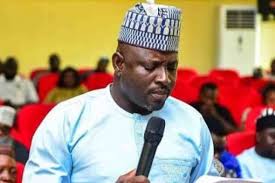
The abrupt resignation of Hon. Aondona Dajoh and the ascension of Hon. Alfred Emberga—a lawmaker just recalled from suspension—exposes a deep fissure within the state’s political class, begging the question of who truly benefits from this perpetual conflict.
Power struggles among politicians are, regrettably, a common feature of Nigeria’s political landscape. They manifest as a relentless contest for control and influence, with the legislative and executive arms of government often clashing over perceived slights or a scramble for resources.
For the average Benue citizen, this political infighting is not a distant spectacle; it is a direct obstacle to development. It diverts the government’s attention from critical issues such as the incessant farmer-herder conflict, the economy, and the welfare of internally displaced persons. While politicians engage in a high-stakes game of chess, the masses are left to grapple with the consequences of a disunited and distracted government.
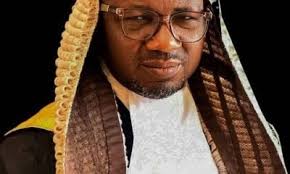
Emberga
In this specific instance, a key question arises: who gains? Is it the Benue politicians based in Abuja, like the powerful Secretary to the Government of the Federation, George Akume, or those rooted in the state?
The recent events suggest a move to consolidate power around Governor Alia’s office, an action that could be interpreted as a win for the Benue-based political elite seeking to control the levers of power directly. The new speaker, Alfred Emberga, is reported to be an ally of Governor Alia, and his emergence points to a successful pushback against any perceived insubordination from the legislative arm. This may represent a temporary triumph for the camp loyal to the governor, but it does little to resolve the underlying tension that could lead to more instability.
Perhaps the most fascinating aspect of this saga is the leadership style of Governor Hyacinth Alia himself. A man who came to power with the popular “Yes Father” slogan, promising to cleanse the state of political “godfathers,” is now being scrutinized for his own actions. Does the swift change in the House leadership signify his resolve to do away with external political sponsors, or is it a sign that he is becoming a political godfather in his own right, in the mold of former President Olusegun Obasanjo?
Obasanjo’s tenure was marked by a strong, centralized, and at times, autocratic style, where he often wielded immense influence over the National Assembly and state governors. Similarly, Governor Alia’s hands-on approach to the legislative arm suggests a leadership that brooks no dissent and seeks to align all arms of government with his vision. This is a double-edged sword. On one hand, it could be seen as decisive leadership necessary to cut through bureaucratic red tape and deliver development projects.
On the other, it raises concerns about the principle of separation of powers and the health of the state’s democracy. The people of Benue voted for a leader who promised to be different, one who would prioritize them over political patronage. Whether he can achieve this by mirroring the strong-arm tactics of the past remains to be seen.
Ultimately, the Benue political crisis is a microcosm of a larger problem in Nigeria’s democracy. Until the political class learns to place the collective good above personal ambition and institutional supremacy, the masses will continue to be the biggest losers. The “beneficiaries” of this power tussle may celebrate their temporary victories in Abuja or Makurdi, but the true prize—a stable, prosperous Benue—will remain elusive.
Comrade Godwin Anyebe is a Journalist and a Rights Activist.
