


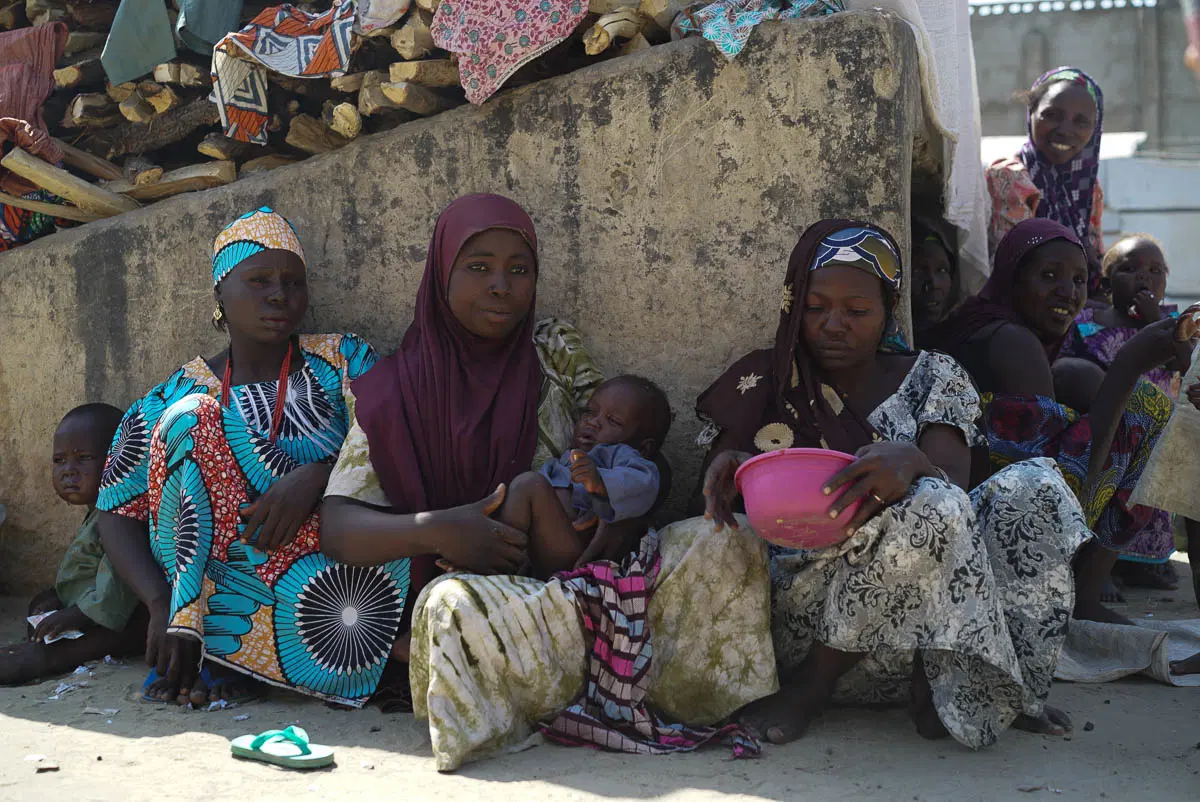
The International Committee of the Red Cross (ICRC) has decried that across conflict-affected areas of northeast Nigeria, more than 3.7 million people face food insecurity.
It stated that many of them are farmers who once nourished their communities, but years of conflict have displaced families, restricted their access to farmland and disrupted local food production.
According to a statement by ICRC, a community leader in Dikwa, Modu Umar said: “Right now, we face severe food shortages,” adding that some families are forced to walk long distances every day to collect firewood to sell, just to afford food.
“Farming is the only solution to hunger,”
In some communities, insecurity severely limits farmers’ movements. “Some people trek three hours to reach their farms,” a 70-year-old farmer Churi Ibrahim from Gajibo said.
He added that: “By the time you reach your farm, you’re already exhausted, and when you return home, it’s late.”
Despite these challenges, farmers persist. “Even when you’re afraid, you have to go,” said Bintu Konto, a mother of five, insisting that: “If you don’t farm during the rainy season, you’ll have nothing to eat.”
As the lean season begins and food stocks dwindle, the pressure is mounting. “This is when households must start purchasing food, but many conflict-affected families can’t afford much,” Diana Japaridze, Head of the International Committee of the Red Cross (ICRC) office in Maiduguri, said.
She added that: “They’re forced to drastically limit their intake.”
The ICRC lamented that food insecurity is also fueling malnutrition, especially among children under five and pregnant or breastfeeding women.
In response, the ICRC supports malnutrition stabilization centres as well as community education to help families care for vulnerable children; to help address these challenges and promote long-term resilience, the ICRC has initiated an agricultural assistance programme that supports both rainy and dry season farming.
This year, more than 21,000 farming households have received seeds tailored to local conditions, along with seed planting tools to reduce labour burdens and improve efficiency.
According to the statement, the support includes both field crops and vegetables, such as rice, maize, tomato and okra, contributing to greater dietary diversity and nutritional value. Farmers are also trained in sustainable farming practices, helping to build local capacity and ensure they can continue even when the ICRC leaves.
It stated that at a systemic level, and in partnership with the National Agricultural Seed Council (NASC), the ICRC also recently completed repairs to a key a water source, ensuring continuous water access for the council’s seed testing and greenhouse facilities.
It said nevertheless, the lean season in particular constitutes a significant challenge for the many farmers who cannot produce enough food for their families.“For a large family like mine, sometimes, we don’t even get one meal a day,” a farmer, Churi Ibrahim said.
