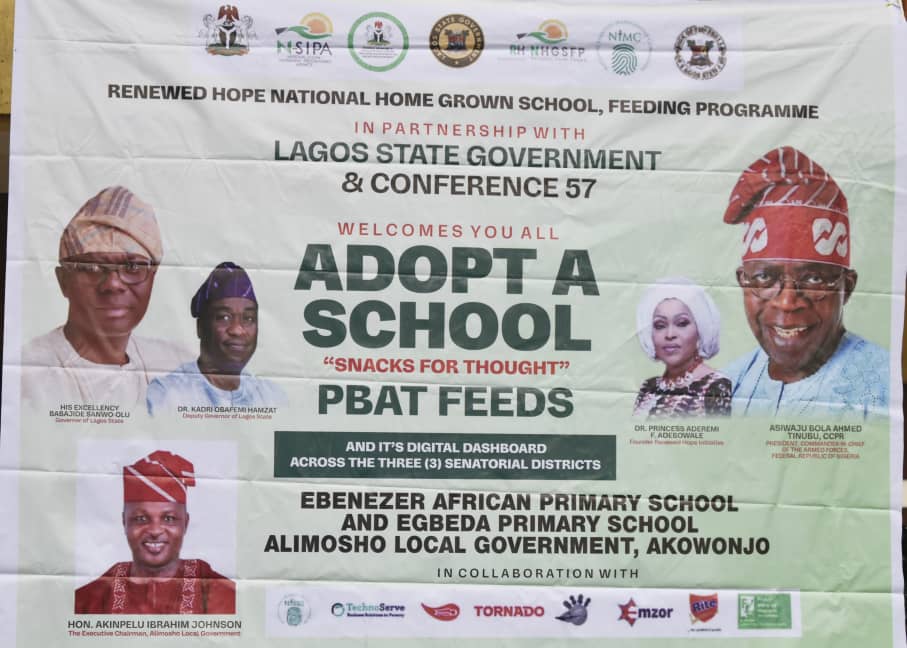
Alimosho Local Government on Tuesday, 30 June, 2026, hosted the official launch of the ‘Adopt a School: Snacks for Thought, PBAT Feeds’ Programme, a flagship initiative under the Renewed Hope National Home-Grown School Feeding Programme (RH-NHGSFP) aimed at strengthening child nutrition, boosting school attendance, and improving learning outcomes among pupils in public primary schools.

The programme featured the unveiling of the ‘Adopt-a-School Dashboard, a digital platform designed to enable individuals, corporate organisations, foundations, and development partners to directly support school feeding efforts while ensuring transparency, accountability, and measurable impact.
The Chairman of Alimosho Local Government, Hon. Akinpelu Ibrahim Johnson, who was represented by the Secretary to the local government, Mr. Ismael Ajimotokan commended the Renewed Hope National Home-Grown School Feeding Programme, the Lagos State Government, and Conference 57 for championing an initiative that places children at the centre of national development.
The Chairman emphasised that investing in children’s education and well-being remains one of the most sustainable pathways to building a prosperous society.
He noted that hunger remains a major barrier to effective learning, stressing that a child who attends school on an empty stomach is disadvantaged academically, emotionally, and socially.
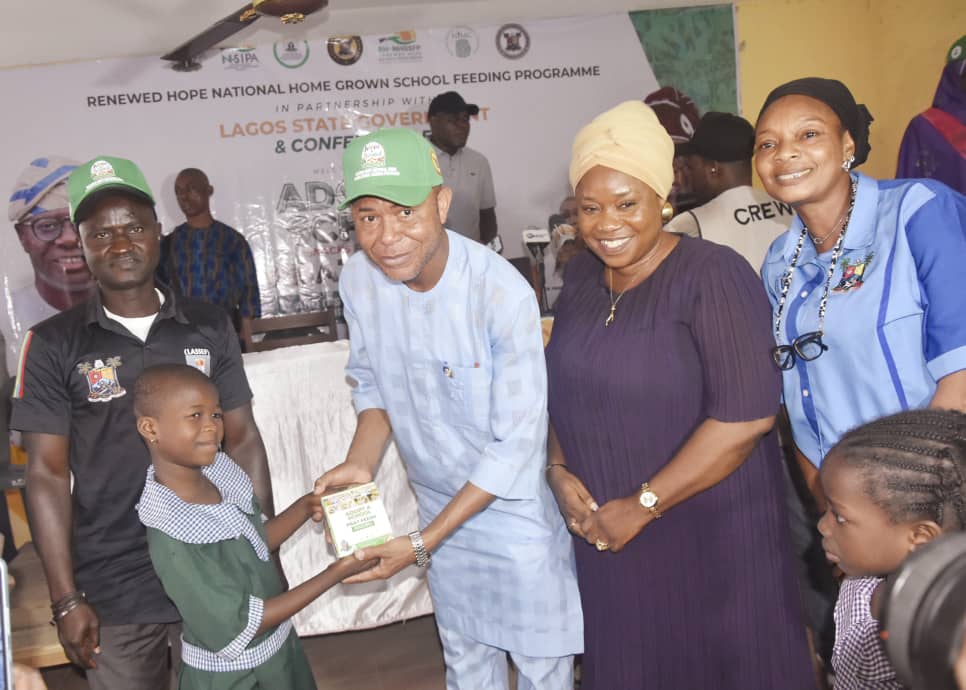
“As an administration, we firmly believe that no child should be deprived of quality education because of hunger. A well-fed child is more attentive, healthier, and better positioned to learn and achieve academic excellence,” he said.
Hon. Johnson further explained that the school feeding initiative aligns with the developmental priorities of Alimosho Local Government, particularly in the areas of educational support, child welfare, healthcare, and community development. He reaffirmed his administration’s commitment to policies and programmes that improve the quality of life of residents, especially children, who represent the future of society.
Addressing pupils at the event, the Chairman encouraged them to remain focused on their academic pursuits and maximise the opportunities being created for their growth and success.
He urged them to remain disciplined, hardworking, and determined to excel in their studies. “To our pupils, I encourage you to remain focused on your studies and make the most of this opportunity,” he said.
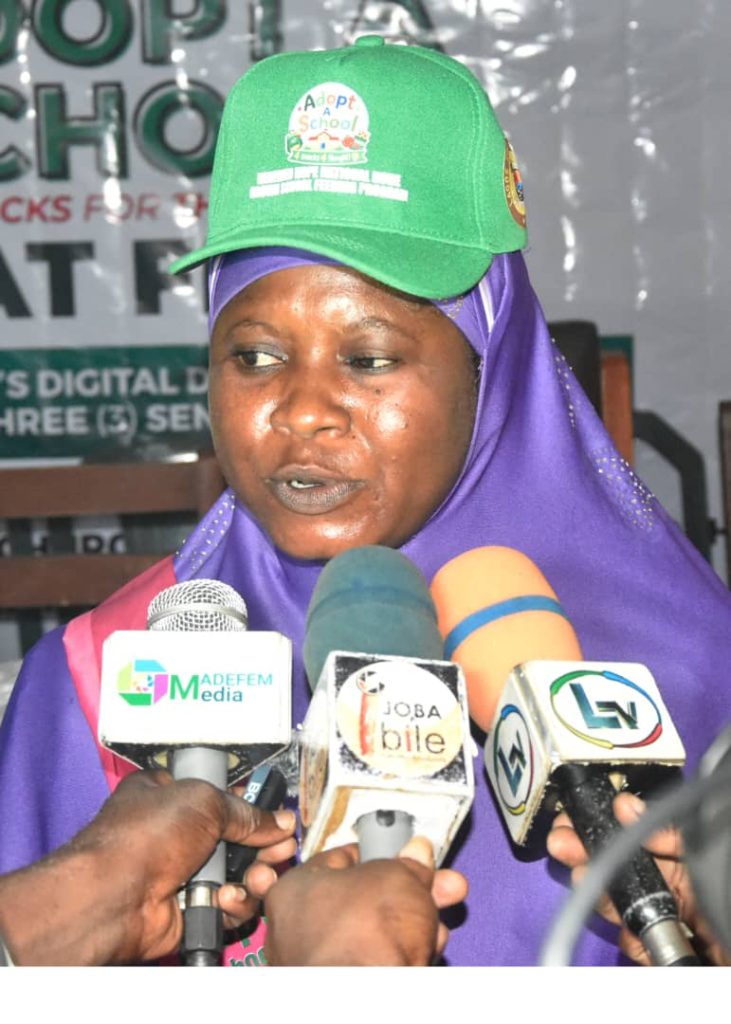
Hon. Johnson also charged teachers and parents to continue playing their vital roles in shaping the next generation. He stressed that beyond feeding children, proper mentorship, discipline, and moral guidance remain critical ingredients in raising responsible and productive citizens. “To our teachers and parents, I urge you to continue nurturing these children with dedication, discipline, and sound moral values,” he added.
The Chairman assured all partners and stakeholders that Alimosho Local Government remains fully committed to supporting programmes that promote educational development, child welfare, and broader community advancement. He expressed optimism that through collaborative partnerships, more children across Alimosho would gain access to improved nutrition and better learning conditions. “Together, we can build a brighter future for every child in our communities,” he declared.
The keynote address was delivered by Dr. Princess Aderemi F. Adebowale, National Programme Manager of the Renewed Hope National Home-Grown School Feeding Programme, who described the launch as more than the unveiling of a programme.
According to her, the initiative marks the beginning of a transformative national movement built around a simple but powerful principle: Food Security Meets National Security. “Today is more than the launch of a programme; it is the beginning of a movement,” she stated.
Dr. Adebowale explained that the relationship between food security and national security cannot be overstated, particularly in relation to Nigeria’s human capital development. She noted that children who come to school hungry often struggle to concentrate, leading to poor academic performance and weakened long-term productivity.
“When a child goes to school hungry, learning suffers. When learning suffers, our human capital weakens,” she explained. She emphasised that feeding children adequately does more than address immediate hunger—it strengthens education, improves health outcomes, enhances productivity, stimulates economic growth, and ultimately secures the future of the nation.
“But when we nourish our children, we strengthen education, build productive citizens, grow our economy, and secure our nation’s future,” she added.

Speaking on the newly launched Adopt a School Dashboard, Dr. Adebowale described it as a groundbreaking innovation that broadens support for school feeding by allowing citizens and organisations to contribute directly to public primary schools.
She explained that the platform creates a transparent system through which donations can be tracked and resources allocated efficiently to ensure maximum impact. According to her, the dashboard will improve accountability and encourage greater participation from private sector players, philanthropic foundations, diaspora communities, and development agencies.
Dr. Adebowale stressed that even small contributions can create a profound impact on a child’s life and educational journey. She noted that school feeding programmes have consistently improved enrolment, reduced absenteeism, enhanced classroom participation, and supported cognitive development.
The National Programme Manager also highlighted the importance of multi-stakeholder collaboration in ensuring the success and sustainability of the initiative. She observed that the Federal Government alone cannot shoulder the responsibility of feeding millions of schoolchildren across Nigeria.
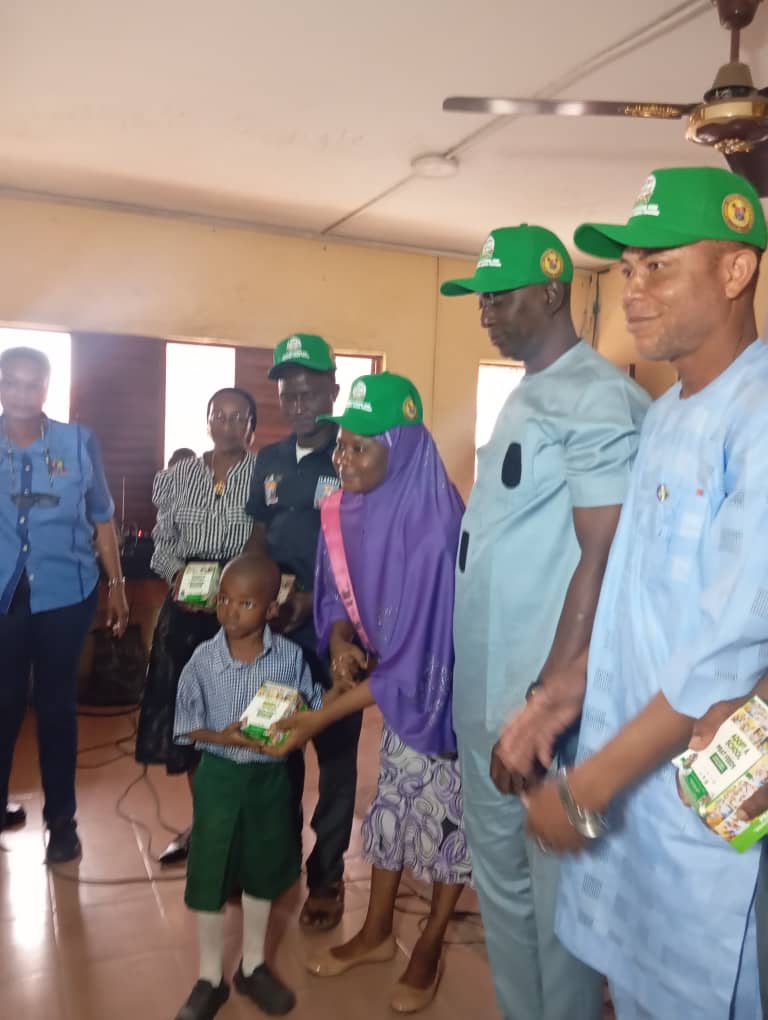
According to her, sustainable progress requires active collaboration among the Federal Government, State Governments, Local Governments, the private sector, development partners, civil society, and local communities.
Dr. Adebowale called on Nigerians from all walks of life to adopt schools within their communities and contribute actively toward building a stronger educational foundation for future generations. She urged citizens to see school feeding not as charity, but as a strategic investment in national development.
In her closing remarks, she delivered a powerful message linking knowledge, nutrition, and national progress. “The more developed your knowledge base is, the smarter you are—but you cannot be smarter than your knowledge base,” she said.

Many stakeholders also welcomed the introduction of the digital dashboard, describing it as a strategic tool capable of mobilising wider support and strengthening public trust through transparency.
The launch of the ‘Adopt a School: Snacks for Thought, PBAT Feeds’ Programme marks a major milestone in the effort to improve educational access and child welfare in Alimosho Local Government.
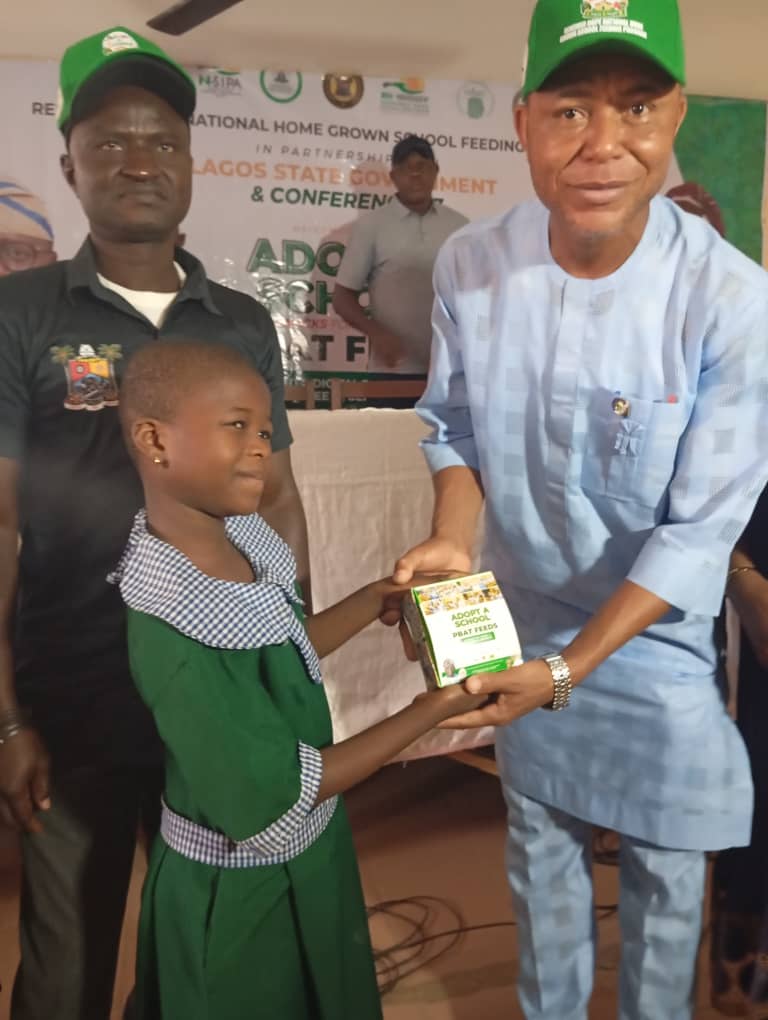
As hunger continues to challenge effective learning, initiatives such as this provide a practical and sustainable framework for addressing one of the most pressing barriers to educational success. By combining public policy, digital innovation, community participation, and strategic partnerships, the programme offers renewed hope for thousands of children.
The message from the event was clear and compelling: feeding children is not merely a welfare intervention—it is a national development strategy.

When children are fed, they learn better. When they learn better, societies become stronger. And when societies invest meaningfully in their children, nations secure their future.
The launch therefore stands not only as a programme rollout but also as a call to action for every Nigerian to participate in building a healthier, smarter, and more prosperous nation.
Indeed, by feeding young minds today, Nigeria is investing in the leaders, innovators, and builders of tomorrow.