



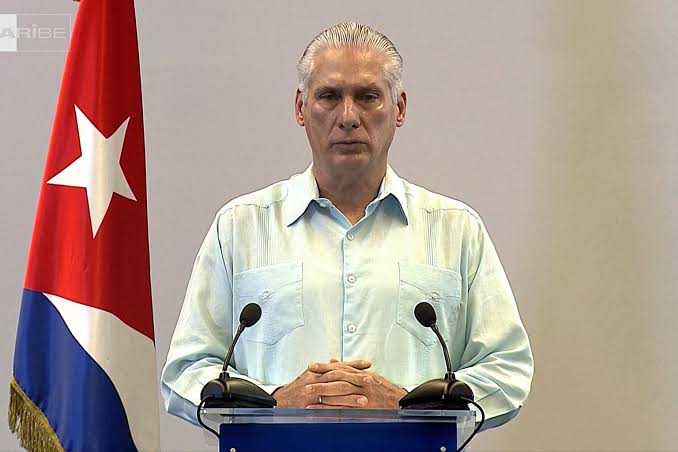
The Cuban government has strongly rejected a recent report by the United States Department of State accusing Havana of engaging in subversive activities against the US, describing the document as a “propaganda pamphlet” aimed at portraying Cuba as a threat.
In a statement issued by the country’s Ministry of Foreign Affairs, Cuba dismissed the allegations as part of what it called a long-running campaign by Washington to justify economic pressure and hostile policies against the island nation.
The ministry argued that the report was designed to “fabricate support for potential aggression” by constructing what it described as false narratives about Cuba’s international activities and political influence.
“Cuba rejects, in the strongest terms, the report published on July 20 by the United States Department of State,” the statement said, accusing Washington of using allegations against Havana as a pretext for maintaining sanctions and restrictions that, according to Cuba, harm ordinary citizens.
The Cuban government also accused the United States of hypocrisy, alleging that Washington itself has spent millions of dollars supporting programmes aimed at influencing Cuba’s internal affairs and destabilising its government.
Havana further rejected the US designation of Cuba as a state sponsor of terrorism, insisting that the accusation lacks evidence and describing it as politically motivated.
“It is evident that neither this report nor any other can present evidence, not even the slightest indication, for such an illegitimate accusation,” the statement said.
The Cuban government also criticised what it described as a growing US focus on “left-wing terrorism,” claiming that the concept was being used to target progressive movements, social activists and critics of American foreign policy.
According to Havana, the campaign represents a form of “neo-McCarthyism” intended to increase political repression and intimidate those who oppose Washington’s policies, including Americans and members of the Cuban diaspora who advocate for improved relations with Cuba.
The statement defended Cuba’s international alliances, rejecting criticism of its diplomatic relations with other countries and arguing that such partnerships fall within the rights of sovereign states under international law.
Cuba highlighted its decades-long resistance to the US economic embargo, noting that Washington’s sanctions policy has repeatedly faced international criticism at the United Nations, where Havana has consistently called for the blockade to be lifted.
The Cuban government maintained that despite political disagreements, it would continue seeking engagement with the American people and institutions based on the principles of the United Nations Charter, international law and diplomatic conventions.
The latest dispute adds to decades of strained relations between Havana and Washington, marked by ideological differences, economic sanctions and periodic attempts at diplomatic rapprochement. While relations improved briefly under the Obama administration, subsequent US governments have maintained significant restrictions on Cuba, citing concerns over human rights, governance and regional security.
Cuba, however, continues to argue that the US policy of pressure is an attempt to undermine its sovereignty and restrict its economic development.
