


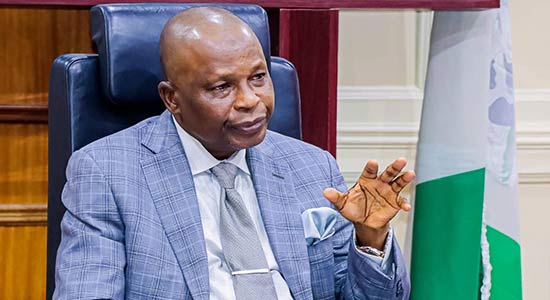
The Attorney-General of the Federation, Lateef Fagbemi (SAN), on Monday, 3 August, 2026 warned Nigerians not to weaponised state police for political persecution.
Fagbemi handed the warning while addressing State House correspondents after convening a meeting of Presidential Working Group on the National Policing Bill, headed by Chief of Staff to the President, Chief Femi Gbajabiamila at the Aso Rock Presidential Villa, Abuja.
“It is important that we do not make state policing a weapon of political persecution or oppression.
“There must be a minimum threshold to guarantee the continued existence and operation of the society. If you leave the door open, all sorts of situations will come in, and that will not be good enough for society.”
Ogun State Governor Dapo Abiodun, responding to questions from State House Correspondents about national standards amounting to federal micromanagement of a state responsibility, said that someone had to translate the constitutional amendment into workable legislation.
“This bill has to do with different consequential amendments to other parts of the Constitution that we may not even realise, the Firearms Bill, for instance, which only recognises a unitary policing system.
“Where do the powers of the federal police stop? Where do the powers of the state police start? These are the things we are working on.” Abiodun said.
At a consultative meeting on state police convened at the Presidential Villa, Abuja, on June 5, Gbajabiamila said while the constitutional amendment to establish state police had gained considerable ground, the new structure needed an enabling legislation to operationalise it after the amendment.
The consultative meetings were attended by the Deputy Senate President, Jibrin Barau, and the Deputy Speaker, Benjamin Kalu.
The National Policing Bill, he said at the time, will define national minimum standards, certification processes, funding, jurisdiction, firearms control and the consequential amendments required across dozens of existing federal and state laws before states can lawfully begin operating their own police service.
