


Three Sahel states broke away from regional bloc in January 2025
The Economic Community of West African States (ECOWAS) and the Confederation of Sahel States (AES) have agreed to establish joint working groups to negotiate a cooperation framework, marking a fresh diplomatic push to bridge divisions between the regional bloc and the three Sahelian countries that withdrew from it.
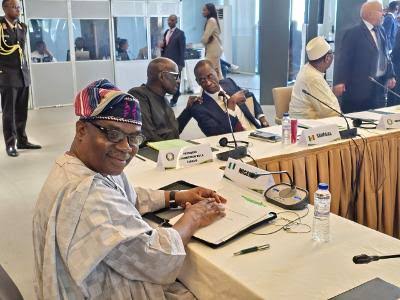
The agreement was reached in Dakar, Senegal, on Saturday at the first ministerial meeting of the ECOWAS-AES Dialogue on Cooperation, where the two sides committed to structured technical discussions aimed at defining the terms of their future relationship.
The move comes against the backdrop of a major rupture in West African regional integration following the withdrawal of Burkina Faso, Mali and Niger from ECOWAS in January 2025, after years of disagreements over military rule, sanctions and the regional bloc’s approach to political transitions.
Under the arrangement reached in Dakar, the joint working groups will examine areas of common interest and work towards an agreement that both sides say must be balanced, realistic and protective of the interests of their respective populations.
The outcome of the technical discussions will be submitted to the ministers for consideration before their next session, according to a joint communiqué issued at the end of the meeting.
Although the communiqué did not announce a comprehensive agreement or specify when negotiations would be concluded, the decision to establish joint technical teams provides a formal mechanism for continued engagement between the two organisations after their political differences.
The meeting was co-chaired by Senegal’s Minister of African Integration, Foreign Affairs and Senegalese Abroad, Cheikh Niang, who is President of the ECOWAS Council of Ministers, and Burkina Faso’s Foreign Affairs Minister, Karamoko Jean-Marie Traoré, who chairs the AES Ministerial Steering Committee.
The discussions followed consultations held in Bamako, Mali, on May 22, 2025, which the parties said provided the basis for further exchanges on their relationship.
The communiqué said both delegations welcomed the atmosphere of “fraternity, mutual respect and openness” during the meeting and reaffirmed the historical, socio-cultural and economic ties linking the peoples of West Africa.
They also agreed that their future relations should be guided by good-neighbourliness, respect for sovereignty, dignity and the welfare of West African populations.
The next ministerial meeting will be scheduled through diplomatic consultations.
THE CRISIS BEHIND THE TALKS
The Dakar meeting represents a significant diplomatic development in a region whose integration project has been strained by political upheavals, military takeovers and competing approaches to security and governance.
Burkina Faso, Mali and Niger, all governed by military-led administrations following coups, announced their withdrawal from ECOWAS in January 2024, accusing the organisation of imposing what they described as inhumane sanctions and failing to provide sufficient support in their fight against insecurity.
Their withdrawal took effect on January 29, 2025, after the one-year notice period stipulated by the ECOWAS treaty.
The three countries subsequently consolidated their separate regional arrangement through the Alliance of Sahel States, which evolved into the Confederation of Sahel States in July 2024.
The confederation has sought closer cooperation among its members, particularly in defence, security and economic affairs, while pursuing a political direction distinct from that of ECOWAS.
Their departure raised concerns about the future of regional cooperation on counter-terrorism, trade, free movement of people and goods, as well as the movement of citizens across borders that have historically linked communities throughout West Africa.
The countries share extensive commercial and social ties with other ECOWAS member states, making the management of their separation a critical issue for governments, businesses and millions of citizens who depend on cross-border exchanges.
Against this background, the establishment of joint working groups could provide an avenue for addressing practical concerns even as differences over political governance and regional authority persist.
However, the communiqué did not disclose the specific issues to be prioritised by the working groups, nor did it set out proposed arrangements for trade, border management, security cooperation or the status of citizens moving between the two blocs.
It also did not indicate whether the talks would lead to a reversal of the three countries’ withdrawal or a restoration of their membership in ECOWAS.
For now, the immediate objective is to negotiate a cooperation framework that allows both sides to identify common interests while maintaining their respective positions on sovereignty and regional relations.
The parties expressed gratitude to Senegalese President Bassirou Faye, the government and people of Senegal for hosting the meeting and supporting West African integration.
