


By Daniel Oluwatobiloba Popoola
The Federal Government has paid more than 1,000 contractors in recent weeks as it moved to ease mounting pressure over unpaid project debts, though a senior official at the Office of the Accountant-General of the Federation has disclosed that some of the approved payments are yet to receive cash backing, an indication that the government’s efforts to settle outstanding obligations may still face implementation delays.
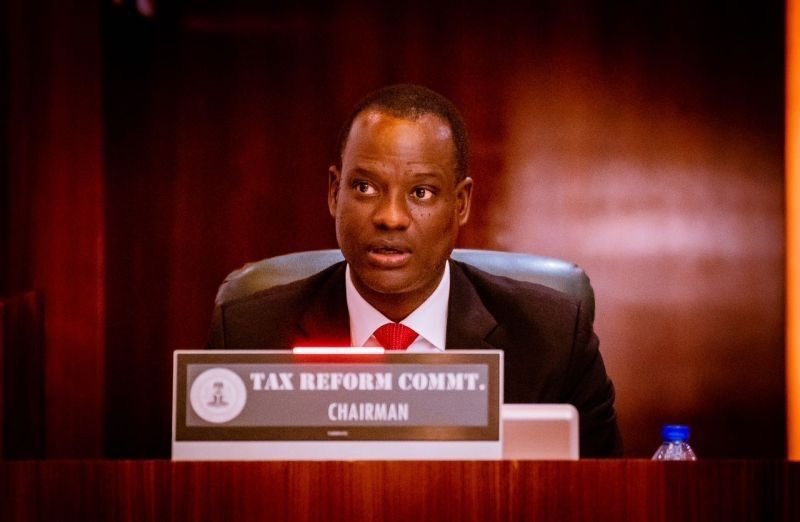
The Minister of Finance and Coordinating Minister of the Economy, Taiwo Oyedele, disclosed the payment figures during the question-and-answer session of a media conference held on Thursday, 20 August, 2026 to explain the proceeds of the subsidy removal, noting that the disbursement came after weeks of protests and complaints by contractors and Ministries, Departments and Agencies over poor budget implementation, delayed capital releases and unpaid certificates.
Recall that contractors had repeatedly blocked the entrance to the Ministry of Finance in Abuja, claiming they were owed for projects executed since 2024 and accusing the government of issuing some payment approvals without corresponding cash backing. The protests intensified in January and again in June 2026, with the contractors rejecting government claims of substantial debt settlements and insisting that a large proportion of their members remained unpaid.
Responding to the development, Oyedele explained that the government had deliberately prioritised thousands of smaller local contractors owed between N20 million and N40 million, rather than focusing first on bigger companies with multibillion-naira claims, an approach he said had helped reduce public protests, even as negotiations continued with larger firms.
He disclosed that in one payment alone, the government settled 1,240 contractors, while in the past couple of weeks, over 1,000 more contractors had been paid, adding that this accounted for the decline in protests witnessed in recent times.
The minister explained that the government had reviewed reports showing thousands of local contractors owed relatively small amounts, ranging from N20 million to N40 million, and had opted to settle those obligations first, given the limited resources available.
Oyedele stated that larger contractors, particularly those with claims running into billions of naira, were being handled through a different approach, noting that such firms could be engaged through arrangements like promissory notes or coupons rather than immediate cash payment.
He added that unlike smaller contractors, the bigger firms typically did not resort to public protests but instead communicated their grievances through formal letters, describing the overall process as a work in progress that would improve as the government enhanced revenue mobilisation.
Findings, however, indicate that the approval of contractor payments does not necessarily mean the funds have already reached the beneficiaries.
A source at the Office of the Accountant-General of the Federation, which processes government payments, disclosed that while the minister had approved certain payments, the cash backing for those approvals was still being processed, noting that the government was still working on the matter.
The disclosure highlighted a critical distinction between the approval or release of funds and the actual cash backing required before payment gets to contractors, as in public finance, a payment can be approved and a warrant or release issued, yet the transaction may remain incomplete until the required cash is made available and processed through the appropriate government payment system.
The development may therefore explain why some contractors and MDAs continue to complain about delayed funding despite government assurances that releases have been made.
Addressing the broader concerns, Oyedele acknowledged the complaints but urged stakeholders to view budget implementation within the wider pressures confronting public finances.
He explained that while there had been releases to MDAs, nothing was completely resolved, noting that many people often overlook the fact that the budget comprises three major components, namely recurrent expenditure, capital expenditure and debt service.
The Minister explained that government spending priorities often leave capital expenditure vulnerable whenever revenues fall short of expectations, stressing that salaries, overheads and debt service must be paid consistently, regardless of shortfalls.
He said the priority of public financial management was to deal with debt service first, given its potential to destabilise the country, followed by personnel costs and overhead to keep the government running, with the remaining balance channelled to capital expenditure, adding that whenever funds were insufficient, capital projects naturally suffered the most.
The Minister’s explanation comes as the Federal Government attempts to sustain massive infrastructure investments while contending with rising personnel costs, debt obligations, electricity subsidies and other recurrent commitments.
According to government figures on subsidy savings, N30.64 trillion in incremental expenditure was absorbed across major spending items, with N9.39 trillion going to wage adjustments and N9.37 trillion attributed to the foreign exchange impact on external debt servicing. Strategic infrastructure development accounted for N6.47 trillion, while electricity subsidy absorbed N3.14 trillion.
