


The Islamic Development Bank (IDB) has expressed interest in partnering with the Federal Government of Nigeria to address critical infrastructure gaps in the power sector, with ready funds to support the country’s energy development as part of a new Country Engagement Framework.
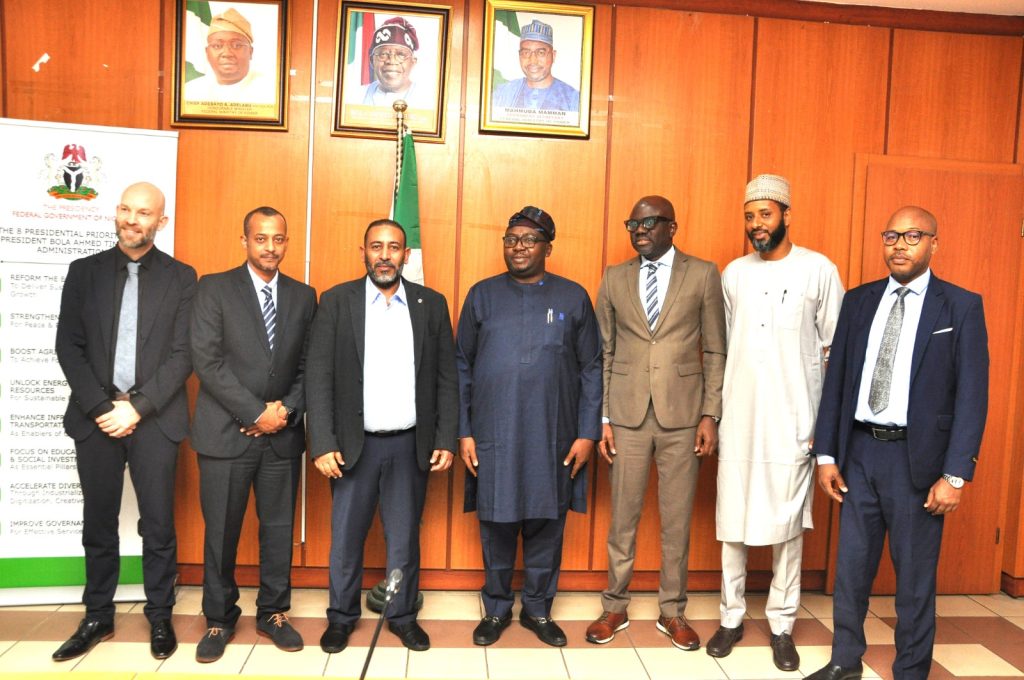
Officials from the Jeddah-based financial institution, led by Alagi Gaye, disclosed this during a courtesy visit to the Minister of Power, Chief Adebayo Adelabu, in Abuja on Tuesday, 22 July, 2025.

During the meeting, Chief Adelabu emphasized the need for substantial investment to ensure stable, efficient, and affordable electricity for Nigerians. He noted that improving power supply remains a top priority for President Bola Ahmed Tinubu’s administration, citing the Electricity Act of 2023 as a key step toward liberalizing the sector. Gaye revealed that the IDB has an active portfolio of nearly $2 billion across various sectors in Nigeria, including energy, transport, agriculture, and education, but stressed the bank’s desire to deepen its involvement in power infrastructure.
Gaye explained that the bank is developing its first-ever Country Engagement Framework for Nigeria since the nation joined the IDB in 2005.
Unlike its previous project-based approach, the bank now seeks program-based interventions that align with Nigeria’s sectoral policies, regulations, and challenges. He acknowledged the country’s significant electricity access gap and affirmed the IDB’s commitment to incentivizing private-sector investment in the sector.
In response, Adelabu highlighted ongoing reforms, including the Presidential Power Initiative (PPI)—a $2.3 billion agreement with Germany’s Siemens Energy to modernize Nigeria’s aging power grid. He noted that the pilot phase, involving the installation of 10 power transformers and 10 mobile substations, has already improved grid stability, with plans for further expansion over the next few years.
The government is also working on a “Super Grid” project to tackle redundancy and has secured support from the World Bank and African Development Bank (AfDB) for transmission upgrades.
The Minister also addressed challenges in the distribution segment, where inefficiencies persist despite privatization.
The government retains a 40 percent stake in Distribution Companies (DisCos) and is exploring partnerships to improve their performance. A major concern is the metering gap, with only six million meters deployed out of 13 million registered consumers. To address this, the government launched the Presidential Metering Initiative (PMI), which aims to import two million meters annually over five years.
Adelabu further discussed Nigeria’s “Mission 300” program, which promotes renewable energy solutions for rural electrification.
“Given the difficulty of extending the national grid to remote areas, the government is deploying solar home systems and mini-grids to power households, schools, and healthcare facilities while supporting agricultural activities. While acknowledging global climate concerns, the Minister emphasized that Africa’s minimal carbon footprint means Nigeria’s renewable energy push is driven more by necessity than emission targets.

Concluding the meeting, the Minister welcomed IDB’s support and urged the bank to review feasibility studies for proposed projects. He expressed confidence in the partnership, citing the bank’s credibility as a financial institution.
The discussions underscored the potential for collaboration in transforming Nigeria’s power sector and ensuring sustainable energy access for citizens.
