


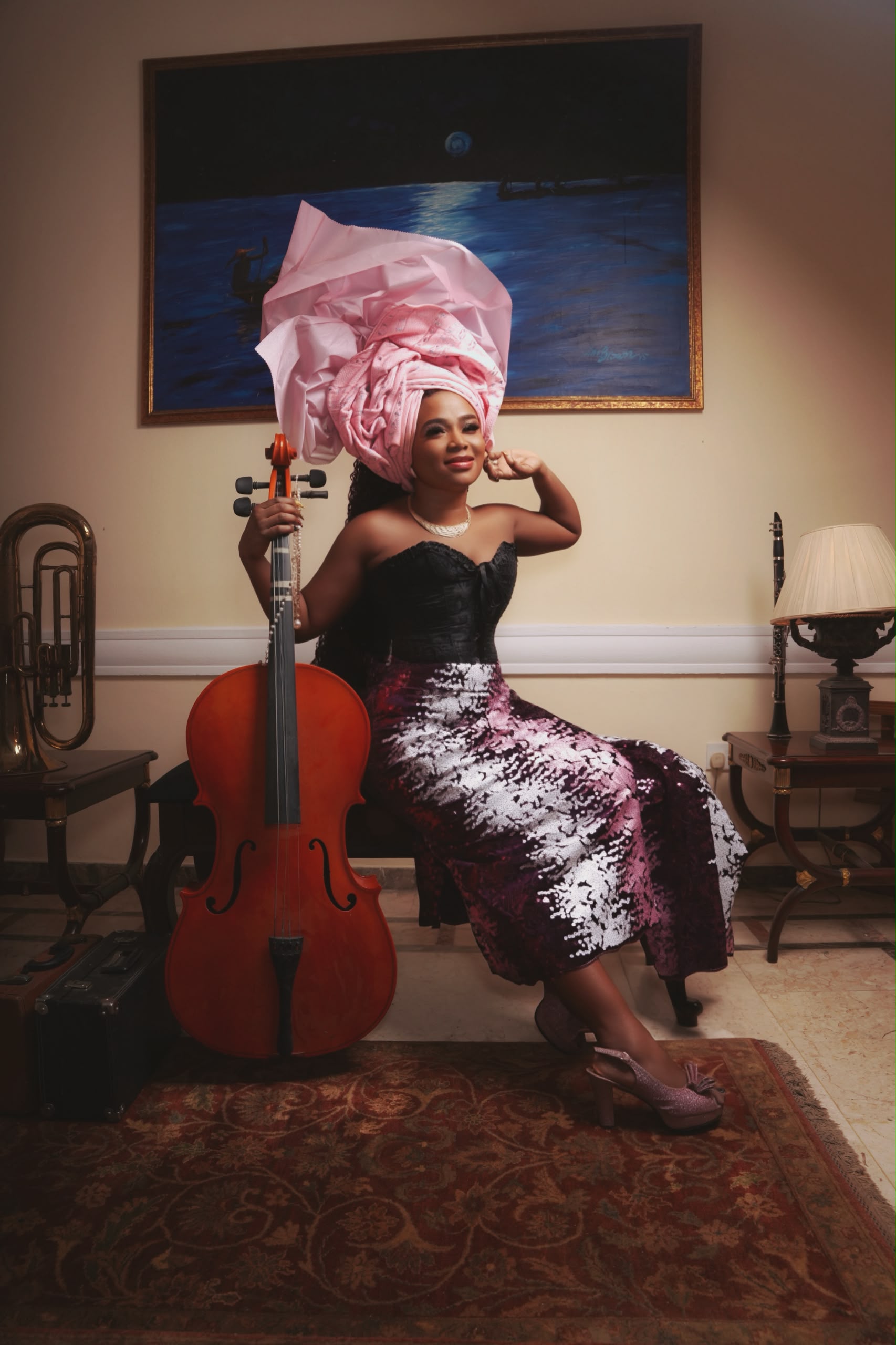
Lami Phillips is a singer, actor and creative entrepreneur. In this interview with thegazellenews.com’s ADETUTU AUDU, she spoke on her new song, ‘Broken Crayon’, her rebirth documentary and why people misconstrue her.
Q: You have maintained a low profile for quite a while. What does this comeback mean to you?
A: I actually don’t see it as a comeback. A comeback suggests you left because something ended.
For me, nothing ended. I have simply never believed that visibility is the same thing as value. We’re living in an era where people feel pressured to constantly produce, constantly post and constantly remind the world they exist. That’s never really been my philosophy. I’m quite comfortable with “withdrawing my presence” when necessary and long enough to create something worth returning with. Most of my album was recorded live across Europe and with meticulous intentionality and artistic freedom.
I have always believed that art should mature before it’s released into the world. Some things need time. They need life. They need perspective. I don’t create according to pressure, algorithms or other people’s timelines. I create when I honestly have something to say. I’ve also become far more selective about where I show up. I don’t think I need to be everywhere to matter. Presence is far more important than frequency. I often joke that I’m not fast food, I’m more like a nine-course tasting menu for the seasoned palette.
Not everyone wants that experience, and that’s perfectly fine. However ,the people who do understand that some things are meant to be savoured, not consumed in a hurry…, they’re my people. So this isn’t a comeback. It’s simply the next chapter… the window to my evolution. ..I think it’s my most honest one yet.
Q: Tell us about your documentary and what makes you feel that it is the right time to reveal that part of you to the world
A: The documentary is probably the most personal thing I’ve ever shared; not because it reveals secrets, but because it provides context.
People have experienced the music over the years without necessarily understanding the life that shaped it. This documentary is my invitation into that world. I was born into contrasts. People often describe me as ajebutter…and they’re not wrong. I was born into privilege, and I don’t shy away from acknowledging that.
However, the truth is that privilege was never the whole story. I won’t like that I’m most at home walking the streets in Belgravia but I also have Ikoyi roads etched into my subconscious. Yet, if you really want to understand my heritage and roots, you have to go much further back…to the narrow streets of Isale Eko….Okepopo to be exact. That’s where so much of my identity was formed.
My father made sure that every Sunday we worshipped at church in Aroloya. Those weren’t occasional visits; they formed the rhythm of my childhood. My late grandmother, who was very much a third parent, was determined that comfort would never become entitlement. She ensured I understood the Yoruba language and she refused to speak English to me most times. Growing up I thought she was being mean because I struggled with the wisdom she knew I would later need. She believed in moderation in all things. She taught me discipline, respect, humility and grace… long before I understood how valuable those lessons would become. So while people may see polish, what grounds me is heritage. Isale Eko isn’t just where my roots are; it’s where I learnt that legacy isn’t something you inherit, it’s something you honour.
At the same time, I have spent some of the most formative years of my life in England and also the United States. This exposed me to different ways of thinking, different cultures, different creative influences and a different pace of life. It taught me the value of systems, perspective and seeing the world beyond what was familiar.
So I have never really belonged to one world. For me, it’s never simply been about moving between cultures; it’s been about blending the lessons each one has given me. It’s learning to see people through a wider lens. It’s understanding that life is rarely black and white. And it’s finding the freedom to stop shrinking myself to fit other people’s expectations simply because my complexity makes them uncomfortable. I’ve learnt to embrace every facet of who I am. It’s reflected in how I think, how I lead, how I raise my daughter, how I write, and ultimately, how I create music. The documentary explores those layers.
It looks at my values, my upbringing, my faith, my creativity, the environments that shaped me and the experiences that challenged me. It helps people understand that the music didn’t appear in isolation; it grew out of a life lived across different worlds, different seasons and different perspectives. As for why now, I don’t think it’s about timing as much as readiness. I’ve never been someone who shares because people expect me to. I share when I feel there’s something meaningful to say.
For a long time, I wanted the work to speak before I did. Now, I feel ready to let people meet the woman behind the music and to begin a deeper artistic dialogue with those who have followed my journey. If people watch the documentary and leave understanding me a little better, that’s wonderful. But if they leave with permission to embrace every part of themselves……the polished and the imperfect, the traditional and the unconventional, the local and the global, then i think we have crated something far more meaningful
Q: What inspired your new song and the documentary?
A: They both came from observation. I’ve always been fascinated by people; how we think, how we make decisions, the things we normalise, the identities we construct and the stories we tell ourselves. ‘Broken Crayons’ is really an invitation to stop, to look again and to ask better questions. The song looks at a world that’s becoming increasingly noisy, where influence is often mistaken for wisdom, popularity for truth and imitation for originality. Somewhere in all of that, many of us have forgotten how to think for ourselves.
The documentary feels like a bridge between who I have been and who I am becoming. The documentary is simply the visual extension of that conversation. It doesn’t tell people what to think; it invites them into the journey that shaped the music. I wanted people to understand the person behind the art, because context often changes how we hear a song. At the end of the day, I’m less interested in making music that fills playlists than I am in making music that stays with people long after it has finished playing.
Q: What should people expect?
A: I have never been interested in making disposable music. I want to make records that reveal something new every time you listen to them. This song isn’t trying to fit into a moment or satisfy an algorithm. It’s not chasing trends or borrowing sounds. It’s unapologetically authentic. It’s thoughtful, lyrical, soulful and, at times, deliberately uncomfortable. I think music should make you feel something, but it should also make you think. People have always had opinions about me.
Some have been kind, others wildly inaccurate. That’s the nature of being visible. Over the years, I’ve learnt that people often become very confident about things they know absolutely nothing about. I used to feel the need to correct the narrative. I don’t anymore.
Not because I have become indifferent to truth, but because I have become comfortable with myself. I have realised that not every misconception deserves a response, and not every opinion deserves access to my peace. The people who matter will take the time to understand. Those who don’t probably never intended to. So this music isn’t me trying to explain myself. It isn’t me seeking permission or validation. It’s simply me creating from a place of complete freedom. I’ve stopped making decisions around expectation.
I make them around conviction. If people connect with the music, I’m grateful. If it challenges them, even better. If it starts conversations, then it’s doing exactly what I hoped it would do. Because at this stage of my life, I’m not interested in being understood by everyone. I’m interested in being unmistakably myself.
I have run out of the need to explain myself.
I have outgrown the need to manage other people’s perceptions of me.
Q: How have you been able to combine your talents in acting and music so effortlessly?
A: I have never really separated them. Whether I’m singing, acting, speaking or writing, I’m fundamentally doing the same thing; I’m telling stories.
Music gives those stories melody. Acting gives them character. Writing gives them language.
They are simply different expressions of the same creative instinct. I’ve never been interested in collecting titles. I don’t wake up thinking, ‘Today I’m a singer,” or “Today I’m an actor’. I’m a storyteller, and the medium depends on what the story requires.
