


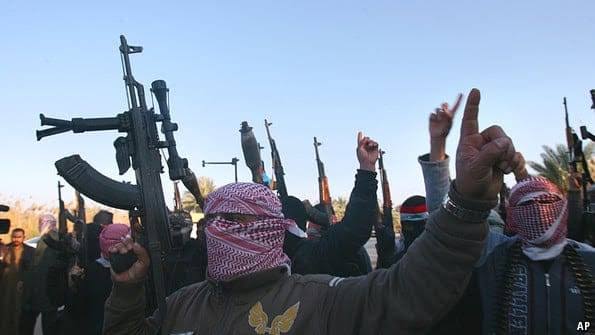
Jihadists on Friday, 21 August, 2026 killed several people and kidnapped others in an attack during Friday prayers in Niger state, survivors and a local lawmaker told AFP Saturday, 232 August, 2026, though some managed to escape during a clash with rival militants.
“Soon after finishing the normal Friday prayer, the armed group of Lakuwara, in their hundreds, wielding guns, knives and machetes, began to attack us,” said Jibril Ahmad, who survived the attack on Dikera village, in the Borgu local government area.
“They slaughtered some of our people, saying we are not practising the true teachings of Islam,” Ahmad said.
A slew of nearby villages were also hit, Ahmad and federal representative Jafaru Mohammed told AFP.
Lakurawa is a shadowy group that some researchers have linked to the Islamic State Sahel Province group. The ISSP is active in Burkina Faso, Mali and Niger.
However another resident said that a local jihadist group, Ansaru, was responsible for the attack.
Details on attacks by armed groups in rural areas are often hard to confirm, and federal government and military authorities have yet to comment on the assault.
Lakurawa militants are known to impose “taxes” on farmers and herders in the area, Ahmad said, including by taking produce or cattle.
Amid the violence Friday, 21 august another jihadist group, known as Mahmuda, intervened and clashed with the Lakurawa fighters, Ahmad and Mohammed said — allowing some abductees to escape.
Mohammed told AFP that “some members of the Mahmuda group were against the doctrine of the Lakurawa and when they heard of what the Lakurawa were doing they fought them”.
Neither of the men had a firm toll Saturday morning. A medical source in Dikera put the initial figure at around 40 dead.
Police in Niger state said they were aware of the kidnapping, but had not received reports of anyone killed.
Another Dikera resident, Abdullahi Ahmad, blamed the initial Friday attack on Ansaru, a local jihadist group.
He said they had returned to the area Saturday to kidnap more people as a “bargaining chip” in the face of an expected troop deployment and placed landmines on a road leading out of Dikera.
“A man and his family who were fleeing the town yesterday were killed when their car hit a landmine planted by the terrorists. Everyone is living in fear,” he said.
In August last year, the Nigerian government claimed it had “dismantled” Mahmuda and Ansaru with the arrest of their leaders.
Though jihadist violence in Nigeria has declined since its peak around a decade ago, which was the height of jihadist group Boko Haram’s insurgency, the military and police remain overstretched as they face multiple, sometimes overlapping conflicts.
Northwest and central Nigeria, where jihadists have been making inroads, are also awash with non-ideological “bandit” gangs that raid villages, conduct kidnappings and “tax” farmers and miners.
In Zamfara state, which borders Niger state, bandits kidnapped at least 23 people and killed four the same day as the jihadist attack in Dikera, storming multiple villages and herders’ settlements, local residents told AFP.
Nigeria, Africa’s most populous country is battling a 17-year insurgency by jihadist groups, which have made mass abductions a key tactic — including the 2014 kidnapping of hundreds of schoolgirls in the town of Chibok.
The insurgency is concentrated in the northeast, though Friday’s attack was near the western border with Benin, an area that has seen increased activity by local armed groups and militants from the neighbouring Sahel as the conflict has splintered.
Source: AFP
