



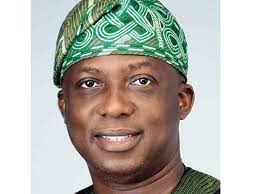
By Daniel Oluwatobiloba Popoola
The Lagos State Government has called on scientists to develop evidence-based solutions that will tackle climate change, strengthen the resilience of coastal cities and support sustainable environmental management.
The call was made on Tuesday, 21 July, 2026 by the state Commissioner for the Environment and Water Resources, Tokunbo Wahab, while delivering the keynote address at the opening of the 58th Annual Conference of the Science Association of Nigeria in Ikeja.
He said the conference came at a critical time as countries continue to grapple with the devastating effects of climate change, including record-breaking heatwaves in Europe and increasing rainfall and flooding in Lagos.
Wahab described the conference theme as timely, stressing that climate change is no longer a distant concern but a present reality that demands coordinated action from governments, scientists, researchers and citizens.
He said science must remain the foundation of decisions affecting coastal environments because it provides the evidence required for sound policymaking, effective planning and preparedness for future environmental risks.
The commissioner explained that the blue economy extends beyond oceans, ports and fisheries, noting that it also encompasses sustainable economic growth driven by healthy water ecosystems, environmental protection and social inclusion.
According to him, Lagos, as a low-lying coastal megacity with a 187-kilometre coastline, remains increasingly vulnerable to the effects of rising sea levels and other climate-related threats.
He noted that decisions taken today on urban planning, infrastructure development and ecosystem conservation would determine the city’s capacity to withstand future climate challenges.
Wahab also highlighted the close relationship between environmental sustainability and public health, warning that polluted waterways and recurrent flooding significantly increase the risk of cholera and other waterborne diseases.
He added that the continued degradation of marine ecosystems poses serious threats to food security and nutrition, making environmental protection a critical public health priority.
The Commissioner stressed that collaboration among governments, scientists, researchers and academic institutions is no longer optional but essential to addressing the growing environmental and public health challenges confronting society.
He therefore urged participants at the conference to produce practical, science-driven recommendations that would support the development of a cleaner, healthier and more climate-resilient Lagos while providing sustainable solutions to the challenges posed by climate change.
FRSC Boss Seeks Stronger Global Cooperation on Road Safety at UN Meeting
By Daniel Oluwatobiloba Popoola
The Corps Marshal of the Federal Road Safety Corps (FRSC), Shehu Mohammed, has called for stronger international cooperation to improve road safety, reaffirming Nigeria’s commitment to achieving the United Nations target of reducing road traffic deaths and injuries by 50 per cent by 2030 through institutional reforms, technological innovation and strategic partnerships.
Mohammed made the call while presenting Nigeria’s national statement at the ongoing United Nations High-Level Meeting on Improving Global Road Safety at the UN General Assembly Headquarters in New York, United States.
He is leading Nigeria’s delegation to the meeting on the directive of President Bola Ahmed Tinubu. The global gathering brings together Heads of State, ministers, policymakers and road safety experts to accelerate the implementation of commitments under the UN Decade of Action for Road Safety 2021–2030.
Speaking on behalf of President Tinubu during the plenary session themed: “Scaling Up and Accelerating Implementation of Commitments to Halving Road Traffic Deaths and Injuries by 2030,” the Corps Marshal reaffirmed Nigeria’s determination to strengthen road safety governance through sustained political commitment, strategic investments, innovation and stronger international partnerships in line with the Renewed Hope Agenda.
Mohammed said the Federal Government has continued to strengthen the institutional capacity of the FRSC through strategic reforms, deployment of technology-driven enforcement systems, improved emergency response mechanisms and intensified public enlightenment campaigns aimed at reducing fatalities on Nigerian roads.
He also highlighted Nigeria’s growing leadership role in advancing road safety across Africa, noting that the country recently launched the Nigeria Road Assessment Programme (NigeriaRAP) in partnership with the International Road Assessment Programme (iRAP) to improve road infrastructure safety using the globally recognised Safe System Approach.
The Corps Marshal further stated that Nigeria hosts the Secretariat of the African Association of Road Safety Lead Agencies (AARSLA), providing a continental platform for collaboration, knowledge sharing and institutional capacity building among road safety agencies across Africa.
According to him, Nigeria is also aligning its transportation sector with global sustainability goals through the Presidential Initiative on Compressed Natural Gas (CNG) and Electric Vehicles, while developing comprehensive safety standards for heavy-duty vehicles and emerging transport technologies.
While acknowledging the progress already recorded, Mohammed stressed that stronger international cooperation remains critical to achieving the global target of reducing road traffic fatalities.
He identified intelligent enforcement technologies, road infrastructure safety assessment, institutional capacity development and technology transfer as key areas requiring deeper collaboration.
He, therefore, urged development partners and the international community to expand technical cooperation and support capacity-building initiatives that would accelerate the attainment of global road safety objectives.
Reaffirming Nigeria’s commitment, the Corps Marshal said road safety remains a national priority under the administration of President Bola Ahmed Tinubu, assuring the international community that Nigeria would continue to work closely with global partners to build safer roads, save more lives and contribute meaningfully to the achievement of the Sustainable Development Goals (SDGs).
Road traffic crashes remain one of the world’s leading public health challenges, claiming an estimated 1.2 million lives annually, according to the World Health Organisation (WHO). Under the UN Decade of Action for Road Safety 2021–2030, member states have committed to reducing road traffic deaths and serious injuries by at least 50 per cent before the end of the decade.
Nigeria has continued to implement reforms through the FRSC, including enhanced enforcement, improved public education, stronger emergency response systems and safer road infrastructure, as part of efforts to align with global road safety targets.
