


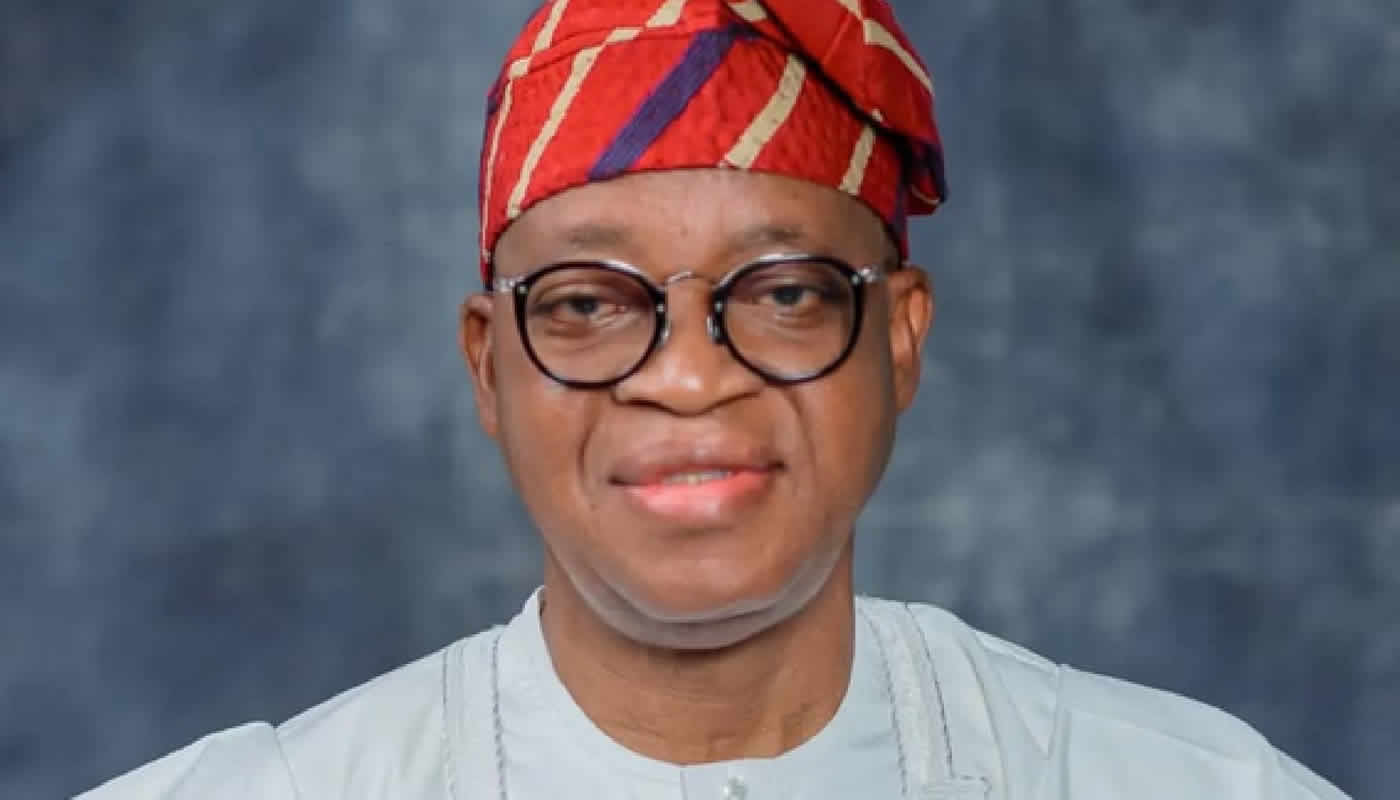
By Daniel Oluwatobiloba Popoola
The Minister of Marine and Blue Economy, Adegboyega Oyetola, has disclosed that agencies under the ministry generated a total of N1.83 trillion in revenue in 2025, reflecting a significant boost in the sector’s financial performance.
He made this known on Thursday, 2 April, 2026, in Lagos during the 2026 first-quarter Citizens/Stakeholders Engagement organised by the ministry, where he outlined reforms driving the increase and highlighted ongoing efforts to strengthen the marine and blue economy sector.
Speaking at the event, themed “Enhancing multi-stakeholder collaboration for sustainable implementation of the National Policy in Marine and Blue Economy,” Oyetola said the revenue growth represents a 160 per cent increase from the N700.79 billion generated in 2023.
“I am also pleased to note the strong revenue performance recorded by agencies under our ministry. The collective revenue generated by these agencies has increased by 160 per cent. In 2023, our agencies generated a total of N700.79 billion. By the end of 2025, this figure had increased to approximately N1.83 trillion,” he said.
He attributed the achievement to deliberate reforms, including strengthened regulatory oversight, improved international mechanisms, enhanced transparency, and a firm commitment to blocking leakages across the system.
According to him, these measures are aimed at building institutions that are efficient, financially accountable, and sustainable.
In addition, the Minister announced that plans to establish a new national shipping carrier were at an advanced stage, noting that discussions with credible international partners had been concluded.
“I am pleased to inform you that, in addition to the Cabotage Vessels Financing Fund, we have made significant progress toward the floating of a new shipping carrier. We have secured the interest of reputable international partners who are collaborating with us to bring this mission to fruition,” he stated.
Oyetola further revealed that local fish production rose from 1.1 billion metric tonnes to 1.4 billion metric tonnes in 2025, describing the increase as a positive step, although still below the national requirement of 3.6 billion metric tonnes annually.
He added that the government remains committed to bridging the gap through sustained investment and innovation, including the development of fishery ports and terminals.
The Minister also disclosed that approvals had been granted for the development of new deep seaports across the country, stressing that the projects would expand maritime capacity, modernise port infrastructure, and open new economic corridors.
“These initiatives are firmly aligned with the Renewed Hope Agenda of President Bola Tinubu, particularly in terms of economic diversification, enhancing infrastructure, and unlocking new sources of growth,” he said.
Furthermore, Oyetola described port modernisation as a transformative intervention that would improve efficiency, reduce vessel turnaround time, enhance cargo handling capacity, and boost Nigeria’s competitiveness as a maritime hub in West and Central Africa.
“It will also ease congestion, lower the cost of doing business, and stimulate trade and investment across multiple sectors of the economy,” he added.
He noted that the stakeholders’ engagement was both deliberate and strategic, emphasising the ministry’s commitment to inclusive and transparent governance.
“By bringing stakeholders, policymakers, and institutional leaders into the same room, we are fostering alignment between policy formulation, implementation, and public expectations. The integration of this engagement enables us to listen, reflect, and collaborate,” Oyetola said.
He added that the forum reinforces collective commitment to transparency, accountability, and coherence in delivering the ministry’s mandate.
In a presentation titled “Stakeholders’ roles and institutional collaboration,” the Chief Executive Officer of Starz Maritime, Greg Ogbeifun, stressed the urgent need for Nigeria to own and operate vessels, warning that the country continues to incur massive losses due to reliance on foreign shipping.
“Every time I have the opportunity to speak, I emphasise the need for this country to go back to its origin, flying the Nigerian flag as we had about 30 years ago, because our population demands it. The volume of our imports demands that we participate in carrying our cargo,” he said.
Ogbeifun further disclosed that Nigeria loses between $8 billion and $9 billion annually to foreign vessels transporting its cargo.
“Every day of inaction compounds a structural loss that leads to billions. Now, approximately $8 billion to $9 billion is lost by our country to foreign ships that carry our cargo,” he added.
