


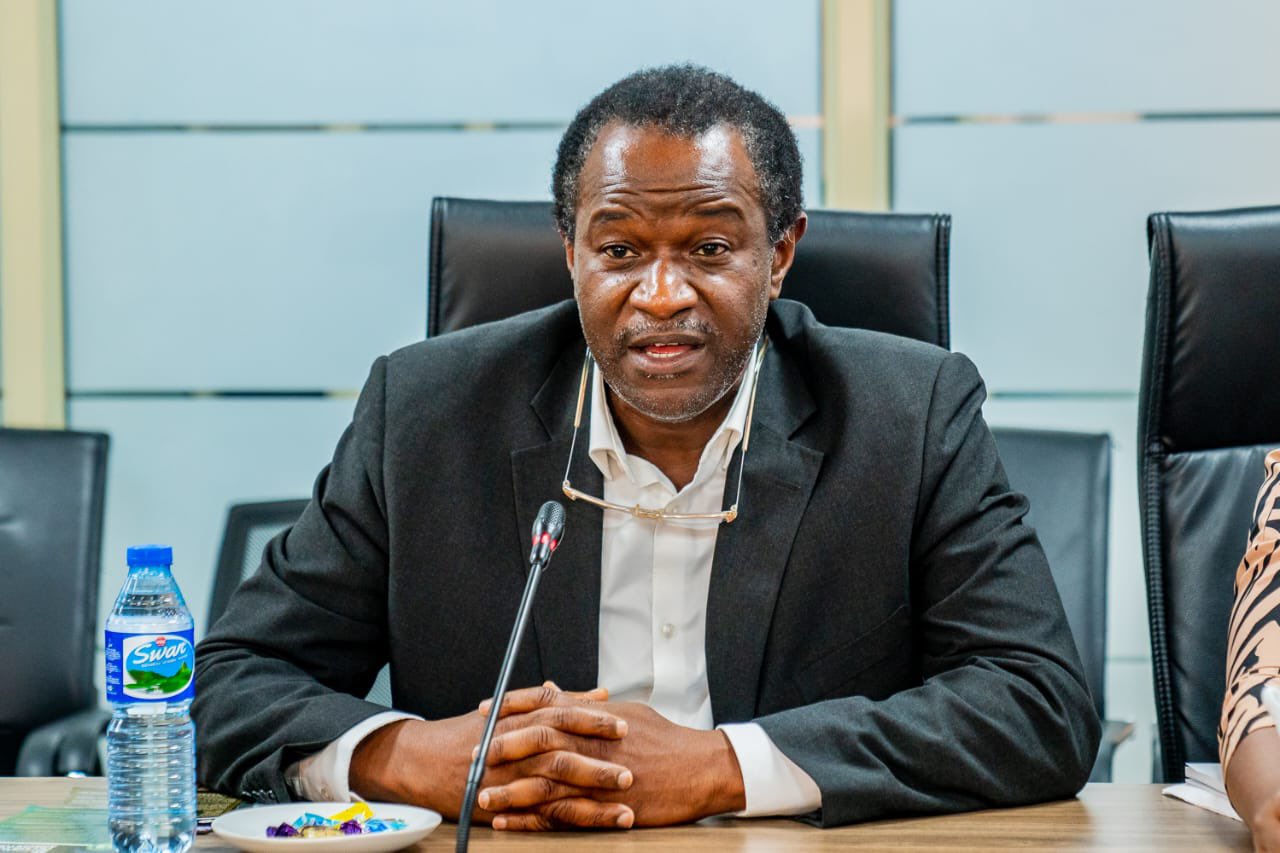
By Daniel Oluwatobiloba Popoola
The Managing Director of the Nigerian Education Loan Fund (NELFUND), Akintunde Sawyerr, has dismissed allegations of financial misappropriation at the agency, insisting that its disbursement process is transparent and electronically traceable.
Sawyerr made this known in an interview with ARISE NEWS on Monday, 31 August, 2026 saying NELFUND requires adequate capital to provide loans to students under the Federal Government’s student loan scheme.
He linked the scheme to the Tinubu administration’s decision to redirect funds from subsidy towards welfare programmes, including student financing.
“There is no evidence of any financial misappropriation by NELFUND. The reality of it is that in order for people to take a loan, there has to be some capital they can draw on,” he said.
Sawyerr also rejected claims that NELFUND’s financial operations were opaque, explaining that payments to institutions and students were made electronically and could be traced from the Central Bank of Nigeria to the final beneficiaries.
He cited the University of Ibadan, saying NELFUND recently transferred more than N1 billion to the institution, while students’ upkeep allowances were paid directly into their bank accounts.
“The University of Ibadan students, before NELFUND, probably had a very high dropout rate because they just didn’t have access to capital to go to school,” he said.
“Now, the President introduced NELFUND; we paid, I believe, over a billion naira to the University of Ibadan recently. And those funds are transferred directly to the institution. So, where is the opacity in that?”
He said the funds transferred to institutions were intended to enable eligible students to continue their studies, while upkeep payments went directly to beneficiaries.
According to him, the electronic payment system makes every transaction traceable, whether funds are transferred to an institution or directly to a student.
“The money leaves the Central Bank of Nigeria and goes either to the institution, the University of Ibadan, or in the case of upkeep, goes directly to the students in their bank accounts,” Sawyerr said.
He described claims of a lack of transparency as extreme, but said he would examine the research on which the allegations were based.
“It sounds a little bit like mischief to me. But again, I’d need to interrogate this research that was done,” he said.
On concerns over the fairness of beneficiary selection, Sawyerr said the NELFUND application process was fully electronic and based on eligibility criteria rather than personal influence.
“We receive applications electronically. The system doesn’t recognize whether you’re male, female, whether you’re Igbo, Hausa, Yoruba, Fulani, Ibibio, or Ogoja,” he said.
He explained that applicants must have a National Identification Number and a JAMB registration number, which confirms their eligibility for admission into a covered tertiary institution.
He added that applicants must also have a matriculation or registration number confirming their admission and a bank account, stressing that NELFUND does not make cash payments.
“If you’ve got a matriculation number or registration number, it means that you’ve been given admission. If you’ve got a bank account—because we don’t do cash, everything goes through the system—again, it means you qualify, and you’ve got admission in a proper institution,” Sawyerr said.
He maintained that the system was designed to prevent personal relationships or political connections from influencing the selection of beneficiaries.
“From our perspective, it’s completely agnostic as far as how people are chosen or concerned. It doesn’t care whether you’re friends with the Managing Director or in-laws with the Executive Director. It doesn’t care,” he said.
