


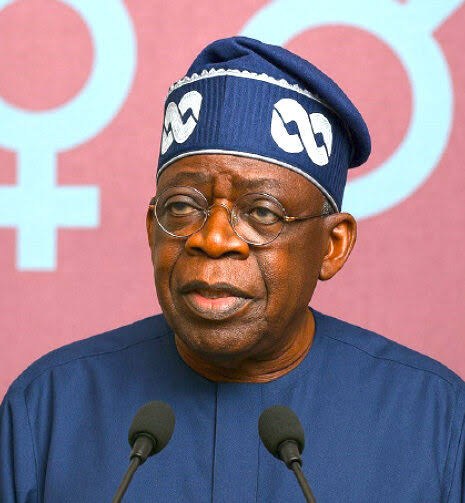
By Daniel Oluwatobiloba Popoola
President Bola Ahmed Tinubu has acknowledged that millions of Nigerians are still struggling to meet basic needs, including food, school fees, medical bills and transportation, saying his administration will not settle for merely managing poverty but will work to defeat it.
Tinubu made the declaration in his 66th Independence Day address to the nation on Thursday, 1 October, 2026, as he outlined a new phase of his administration focused on reducing the cost of living, expanding productive opportunities and ensuring that economic reforms translate into improved living conditions.
The President said the hardship confronting many households did not begin with the reforms introduced by his administration, but was the accumulated consequence of decades of low productivity, inadequate infrastructure, insufficient opportunities and institutions that had failed to adequately serve vulnerable Nigerians.
“I am also conscious that millions of our fellow citizens cannot wait for tomorrow. Some Nigerian families still struggle today for the next meal, the next school fee, the next medical bill, or simply enough money to get to work,” he said.
Tinubu said the government could not reverse within four years problems that had accumulated over several generations, but could change the country’s trajectory and build an economy capable of steadily lifting Nigerians out of poverty while protecting those who remained vulnerable.
“We cannot erase in four years what accumulated over generations. But we can change its course,” the President said.
He said the administration was therefore strengthening direct support for the poorest households and improving the National Social Register to ensure that assistance reached people who genuinely needed it.
Tinubu also highlighted the Nigerian Education Loan Fund, saying it was helping children from low-income families pursue higher education without being prevented by their parents’ inability to afford school fees.
He further cited the Consumer Credit Corporation, CREDICORP, as part of efforts to give working Nigerians access to credit for essential assets, including vehicles, solar systems and digital devices, without requiring them to save for years before making such purchases.
The President said the Federal Government would also continue working with state and local governments to strengthen primary healthcare, basic education and other essential public services on which poorer Nigerians depend.
According to him, salaries and pensions had been paid on time and in full since 2023, while reforms to the national pension programme were designed to benefit retirees and vulnerable Nigerians.
Tinubu, however, stressed that the measures were not intended to become a substitute for economic prosperity.
“These programmes are not substitutes for prosperity. They are a bridge to aid our nation’s citizens on their path towards it. Our objective is not to manage poverty more efficiently. We will defeat it,” he declared.
He acknowledged that achieving the objective would require time, discipline, sustained economic growth and the creation of millions of productive opportunities across the country.
The President said the next phase of his administration would therefore focus on ensuring that the economic reforms undertaken over the past three years translated into tangible benefits for ordinary Nigerians.
“When I speak of prosperity, I do not speak merely of a larger economy, abstract numbers or better statistics. I mean something much more personal,” he said.
Tinubu said his vision was for a Nigeria where farmers could cultivate their land safely, produce more at lower cost and earn better returns; factories could access reliable electricity; businesses could obtain credit; and young Nigerians could find productive employment.
He also envisaged a country where food and transportation were affordable, education was within reach and hardworking families could look towards the future with confidence.
The President identified lowering the cost of living as a major priority, saying this would be pursued by reducing the cost of producing and transporting goods consumed by Nigerians.
“Our priority is to bring down the cost of living. We will achieve this by lowering the cost of producing and moving the things Nigerians consume,” he said.
To achieve this, Tinubu said the government was expanding mechanised irrigation and dry-season farming, improving access to seeds and fertiliser, increasing mechanisation and investing in storage and transportation.
He said roads, railways and ports were also being built and completed to improve connections between farms, factories and markets.
According to him, reducing production losses, lowering manufacturing costs, improving transportation and promoting fair competition would ultimately help bring down the prices of goods.
Turning to employment, Tinubu said poverty reduction would also depend on creating productive opportunities for Nigeria’s growing youth population.
“Nigeria is a young country. Millions of young Nigerians enter adulthood every year with talent, energy and ambition. Our responsibility is to ensure that this great demographic strength becomes an engine of production rather than a source of despair,” he said.
He said the government would use gas to power new industries, support businesses seeking to revive factories, expand digital connectivity and invest in skills demanded by employers.
“We are therefore placing jobs, enterprise, and industrial growth at the heart of our government’s policies,” Tinubu said.
The President said he wanted to see increased local production, Nigerian farms supplying cities and factories, and Nigerian businesses exporting their products to the global market.
“I want to see more Nigerians making things. I want to see more Nigerian farms feeding our cities and supplying our factories. I want to see Nigerian businesses selling Nigerian goods to the whole world. I want young Nigerians building unicorns and creating opportunities for others here at home,” he said.
Tinubu’s remarks came as his administration sought to frame the next stage of its economic programme around translating macroeconomic reforms into broader improvements in household welfare. In his Independence Day address, he said the difficult phase of correcting the country’s economic direction had laid the foundation for what he called an “age of prosperity.”
He maintained that the ultimate objective was not simply to record economic growth, but to ensure that the benefits were reflected in the daily lives of Nigerians.
The President said the country must now build on the foundations laid through the reform period by creating an economy capable of lifting people out of poverty and providing opportunities across different sections of society.
He concluded by urging Nigerians to remain committed to the country’s future, saying the sacrifices made during the reform period should eventually produce tangible benefits.
“The Promised Land before us is a Nigeria of abundance and opportunity; a nation where prosperity is broadly shared, where every child can dream beyond the circumstances of his birth, and where our country’s immense promise is finally reflected in the lives of our people,” Tinubu said.
