


By Daniel Oluwatobiloba Popoola
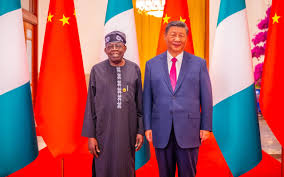
Nigeria and China have reaffirmed their commitment to deepening the Nigeria-China Comprehensive Strategic Partnership, with both countries agreeing to strengthen cooperation in trade, investment, manufacturing, energy, agriculture, mining, digital technology, artificial intelligence, security and infrastructure.
The commitment was renewed on Thursday,13 August,2026, when the Permanent Secretary, Ministry of Foreign Affairs, Ambassador Dunoma Umar Ahmed, received the Chinese Ambassador to Nigeria, Yu Dunhai, in Abuja for discussions on bilateral relations and opportunities to expand cooperation, including follow-up on a proposed RMB200 million grant, increased Nigerian exports to China under a zero-tariff arrangement and greater Chinese investment in Nigeria’s priority sectors.
The meeting, according to the Ministry of Foreign Affairs, focused on recent developments in Nigeria-China economic relations and ways of translating the longstanding political partnership between both countries into tangible economic and developmental benefits.
During the engagement, Yu highlighted the growing opportunities for Nigerian products in the Chinese market under the zero-tariff policy.
He said the arrangement would provide Nigerian manufacturers and exporters, including producers of plastic products, with greater access to the Chinese market and create new opportunities for expansion.
The Chinese envoy also disclosed that his government had approved a RMB200 million grant, estimated at about US$3.3 million, to support projects to be jointly identified and implemented by Nigeria and China.
Responding, Ahmed appreciated China’s continued support for Nigeria and Africa, while reaffirming Nigeria’s commitment to further deepening the Comprehensive Strategic Partnership.
He stressed the need to convert the strong political relationship between the two countries into tangible economic benefits through increased trade and investment, technology transfer and mutually beneficial development projects.
Ahmed also reaffirmed Nigeria’s adherence to the One-China Policy and called for expanded cooperation in agriculture, digital technology, mining and renewable energy.
He urged increased Chinese investment in Nigeria’s Special Economic Zones to promote industrialisation, value addition and the development of local manufacturing capacity.
The Permanent Secretary further identified Nigeria’s ongoing mining reforms and abundant solid mineral resources as additional areas with potential for bilateral cooperation.
He assured investors of the Federal Government’s commitment to creating an enabling environment and encouraged greater Chinese investment in manufacturing, energy and other priority sectors capable of supporting economic diversification and sustainable development.
On security cooperation, Ahmed commended China’s contributions to peacekeeping, counter-terrorism and conflict resolution, while seeking stronger collaboration to enhance Nigeria’s capacity to combat terrorism.
He specifically called for increased exchanges in security expertise, technology and capacity building, including cooperation in the deployment of drones and other relevant technologies.
Yu, in response, reaffirmed China’s readiness to deepen security cooperation with Nigeria and identified manufacturing and power development as areas with significant potential for collaboration.
The Chinese ambassador also identified the power sector, particularly renewable energy, as another area of opportunity, noting the presence of leading Chinese power companies in Nigeria.
He stressed the importance of reliable electricity supply to industrialisation and expressed China’s readiness to support Nigeria’s efforts to expand power generation and renewable energy capacity.
Yu further underscored the need to strengthen Nigeria’s manufacturing base, particularly in view of the country’s population and development needs.
The discussions also covered artificial intelligence, with Yu encouraging Nigeria to consider membership of the Global Artificial Intelligence Organisation.
He said membership could open opportunities for cooperation in AI research, training, capacity building and the establishment of artificial intelligence laboratories.
Ahmed indicated that the proposal would be followed up with the relevant authorities, given its potential benefits to Nigeria’s technological development.
The meeting also reviewed Nigeria’s established position on the Taiwan issue, with Yu commending the country’s adherence to the One-China Policy and urging continued sensitisation of relevant ministries, departments and agencies to ensure that official engagements remained consistent with Nigeria’s position.
He also appreciated the security arrangements provided by Nigerian authorities around the Chinese Embassy in Abuja and sought continued effective coordination and timely security support.
Transportation was also identified as a potential area for expanded Nigeria-China cooperation.
At the end of the meeting, both countries reaffirmed the strength and expanding scope of their Comprehensive Strategic Partnership and agreed to sustain consultations on trade and investment, manufacturing, energy, agriculture, mining, digital technology, artificial intelligence, security and infrastructure.
They also agreed to pursue follow-up on the proposed RMB200 million grant, promote Nigerian exports to China under the zero-tariff arrangement, strengthen security cooperation, explore Nigeria’s possible participation in the Global Artificial Intelligence Organisation and encourage increased Chinese investment in the country’s priority sectors.
The renewed commitment comes as Nigeria and China seek to broaden their longstanding relationship beyond political and diplomatic ties and secure greater investment, technology transfer, industrial development and other measurable economic benefits for both countries.
