


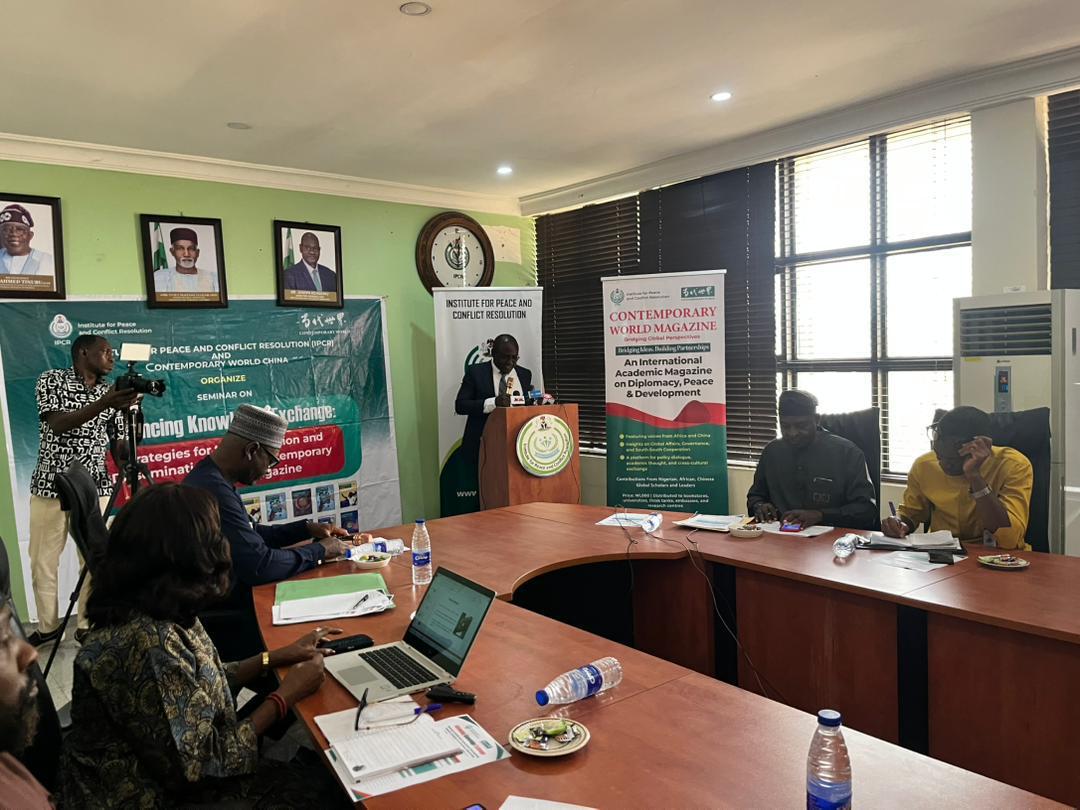
Nigeria is at a pivotal moment in its engagement with the global order, as rising security threats, economic volatility and technological disruptions demand a shift toward strategic autonomy, cooperation and smarter diplomacy, experts warns at a seminar convened by the Institute for Peace and Conflict Resolution.
The Director-General of the Institute for Peace and Conflict Resolution, Dr. Joseph Ochogwu, explained that the event was organized to deepen Nigerians’ understanding of evolving global dynamics and Nigeria’s efforts to reposition itself through strategic autonomy and cooperative foreign policy, noting that Nigeria is leveraging multilateral and bilateral platforms to advance its security, economic, and diplomatic interests.
“This theme is more timely and compelling as Nigeria navigates a world marked by shifting power dynamics, economic uncertainties, technological disruptions and very complex security challenges,” Dr. Ochogwu said.
He highlighted the paradox of the current global order, describing it as one shaped simultaneously by rising conflicts and expanding opportunities for cooperation through diplomacy and multilateral engagement.
“Today’s global order presents a paradox on one hand, it is defined by intensifying conflicts, on the other, it offers unprecedented opportunities for cooperation through diplomacy, regional integration and multilateral engagement.”
Ochogwu explained that Nigeria’s approach to foreign relations is guided by strategic autonomy, emphasizing the need to convert national vulnerabilities into resilience and partnerships that align with global realities.
“Nigeria’s stability lies in how effectively we balance these forces, transforming vulnerabilities into platforms for resilience and partnerships,” he said.
He assured participants that outcomes from the seminar would directly inform government policy, with actionable recommendations forwarded to the Minister of Foreign Affairs and relevant agencies.
“The output and outcome from this particular conversation will be forwarded to the Office of the Honourable Minister, with recommendations targeted at responsible agencies.”
Professor Istifanus Zabadi, Director of Research and Innovation at Birmingham University said Nigeria must fundamentally rethink what stability means in a changing global order. He stressed that stability can no longer be defined simply as the absence of violence. “Stability is no longer seen as the absence of violence.
In fact, violence can go on in a country, but that the country is able to manage and contain such violence from spilling over and engulfing the entire country is what stability is about. Reimagining Nigerian stability therefore requires a shift towards a cooperative, legitimacy-centered approach integrating governance reforms, human security and preventive engagement, rather than relying on force alone.”
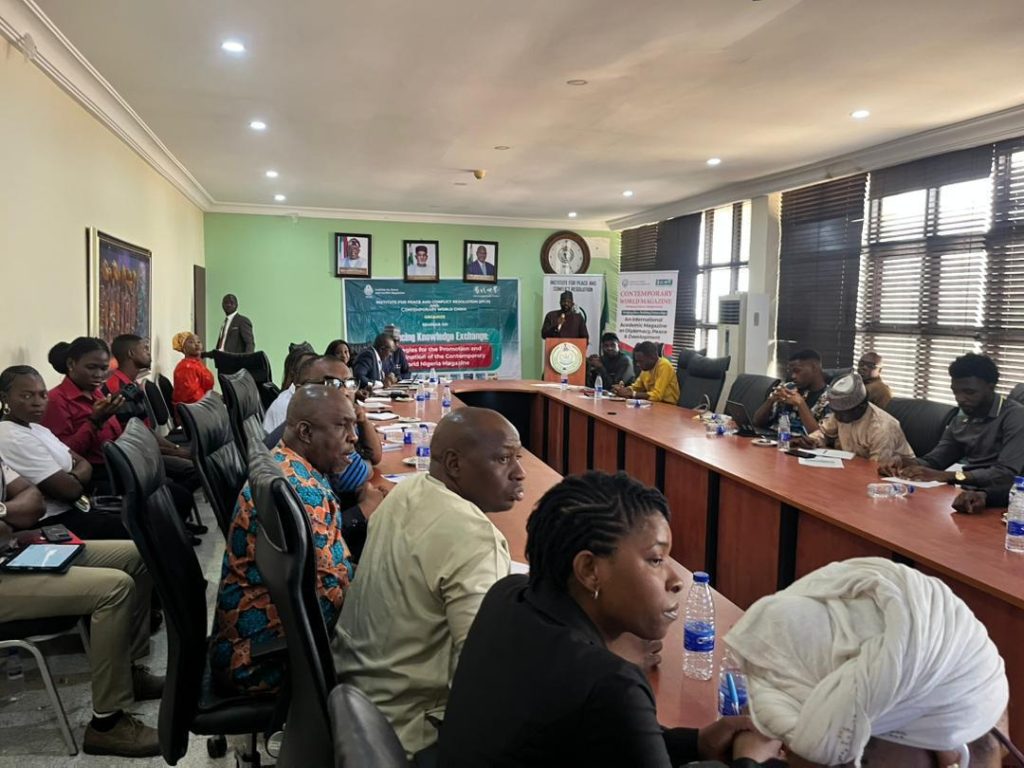
He warned that Nigeria’s heavy reliance on militarised and kinetic responses to insecurity has delivered only short-term gains while failing to address the deeper political, economic and social roots of conflict.
“Military responses are often necessary, they can bring down the fire, but they are not sufficient. They deliver short-term gains but cannot resolve conflicts rooted in political exclusion, economic deprivation and social fragmentation. Our reliance on coercion risks alienating communities and even generating new non-state actors. A country that devotes enormous resources to securing itself, yet neglects education, health and livelihoods, will still struggle with insecurity.”
Professor Zabadi emphasized that cooperation, rather than force, remains Nigeria’s most undervalued security asset. He called for stronger inter-agency coordination, deeper community engagement, and the revitalisation of institutions at all levels of governance. “Cooperation is an undervalued security asset. It is easy to buy guns and think you can scare people, but it is much harder to get people to sit together and build trust. Stability is not merely the absence of conflict but the presence of institutions that can manage disputes. Domestically, this requires stronger coordination across federal, state and local levels, deeper engagement with communities, traditional institutions and civil society. Insecurity is never addressed through partisan political lines, and no country facing serious insecurity succeeds by scoring political points.”he noted .
Dr. Olalekan Babatunde, a security and conflict studies scholar, said Nigeria’s conflict landscape must be understood within a global context. He explained that terrorism, banditry, separatism, and communal violence are interconnected with broader global forces.
“Nigerian conflicts are not happening as isolated or purely local problems. They occur within national and international conflict dynamics that are being shaped by the evolving global order. While insecurity may appear domestic in nature, its drivers and impacts are increasingly transnational, influenced by international networks, global economic pressures and wider geopolitical shifts.”
Dr. Babatunde noted that Nigeria’s conflicts are multilayered and mutually reinforcing, ranging from insurgency and terrorism to climate-induced farmer–herder clashes, separatist agitations, and transnational banditry. “Nigerian conflicts are multilayered.
We have insurgency and terrorism, climate-related resource conflicts, separatist and identity-based tensions, banditry and communal violence. Understanding this landscape means recognizing how these conflicts overlap and reinforce one another, rather than existing independently, and why addressing one in isolation will not deliver sustainable peace.”
He also highlighted the role of global forces such as climate change, transnational terrorism, arms proliferation, and digital platforms in intensifying local insecurity. “Climate change is driving desertification, migration and competition over land. Global terrorism networks shape ideology, funding and tactics, while arms proliferation from conflict zones like Libya has flooded the Sahel and Nigeria. Digital platforms now enable radicalisation, misinformation and mobilisation, making Nigerian insecurity partly a local expression of global pressure.”
Dr. Babatunde emphasized Nigeria’s dual role as both a conflict-affected state and a regional stabilizing power, noting that how Nigeria manages its internal security directly affects regional trade, migration, diplomacy, and international confidence.
“Nigeria’s conflict landscape is inseparable from regional security architecture. Nigeria is not only a conflict-affected state; it is also a regional power and peacekeeping contributor. How Nigeria manages its internal conflicts influences global confidence, investment and partnerships, making it a thematically important state in Africa and global security that must deepen cooperation with regional, continental and global partners.”
The seminar concluded that Nigeria’s stability in the 21st century requires a combination of strategic autonomy, cooperation, governance reforms, and international engagement.
Experts emphasized that national resilience is not measured by the absence of violence alone, but by the capacity to manage conflicts, build trust, and maintain Nigeria’s role as a stabilizing force in Africa and a responsible actor in the global order.
