


By Daniel Oluwatobiloba Popoola
Nigeria has sought deeper cooperation with China in water-saving agriculture, soil management and scientific research to address agricultural challenges in the northern part of the country and the Lake Chad basin.
The Permanent Secretary, Federal Ministry of Innovation, Science and Technology, Mukhtar Muhammed, disclosed this on Saturday,8 August,2026 at the Seasonal Life and Harmonious China cultural exhibition held at the China Cultural Centre in Abuja.
Muhammed said Nigeria could draw lessons from China’s experience in using science and technology to improve agricultural productivity in areas affected by water scarcity and land degradation.
He explained that his recent technical visit to China, particularly the Yangling High-Tech Agricultural Demonstration Zone in Shaanxi Province, had demonstrated the potential of applying scientific innovation to Nigeria’s agricultural challenges.
He described Yangling as China’s Agricultural Silicon Valley, where officials witnessed the seamless integration of modern technology with traditional farming, including advanced water-saving irrigation systems and soil monitoring technologies that allow farmers to cultivate crops in arid conditions with minimal water wastage.
He said the experience was particularly relevant to Nigeria’s efforts to address land degradation and improve agricultural productivity in the north, describing China’s success in combating land degradation and improving agricultural productivity in the Loess Plateau as a powerful inspiration for efforts in Northern Nigeria and the Lake Chad region.
Muhammed said the ministry would seek stronger collaboration between Nigerian and Chinese ministries of science and technology, research institutions, universities and industries, with the proposed cooperation focusing on sustainable agriculture, water management, agro-processing and scientific research.
He said Nigeria planned to expand scholarships and STEM training for Nigerian scientists in Chinese universities, particularly in sustainable agriculture and water management.
The permanent secretary linked the proposed scientific cooperation to the growing economic relationship between both countries, particularly China’s expanded market access for African agricultural products.
He said Nigeria needed to strengthen its scientific and technological capacity to ensure that increased access to the Chinese market translated into tangible benefits for farmers and the wider economy, describing the policy as a starting point that forces Nigeria to level up rather than merely facilitate exports.
He said Nigeria would seek Chinese technology transfer to strengthen agro-processing and move the country from exporting raw commodities to value-added products, identifying cassava, shea butter and cashew nuts as commodities that could benefit from improved processing technology for the Chinese and global markets.
Also speaking, the Director of the China Cultural Centre in Nigeria, Yang Jianxing, said China remained committed to strengthening people-to-people exchanges with Nigeria as part of efforts to deepen the bilateral partnership.
He said cultural cooperation provided an important platform for mutual learning between both countries, describing cultural exchange as a vital component of China-Africa friendly cooperation that serves as a bridge for fostering mutual understanding and dialogue among civilisations.
Yang said the centre would continue to implement the outcomes of the 2024 Forum on China-Africa Cooperation Beijing Summit and agreements reached by the leaders of Nigeria and China, expanding programmes in culture, education, youth affairs and tourism that bring the peoples of both countries closer.
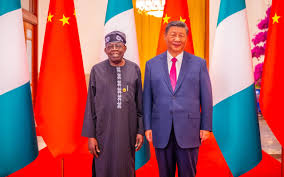
The exhibition marked the China-Africa Year of people-to-people exchanges and the 55th anniversary of China-Nigeria diplomatic relations.
