


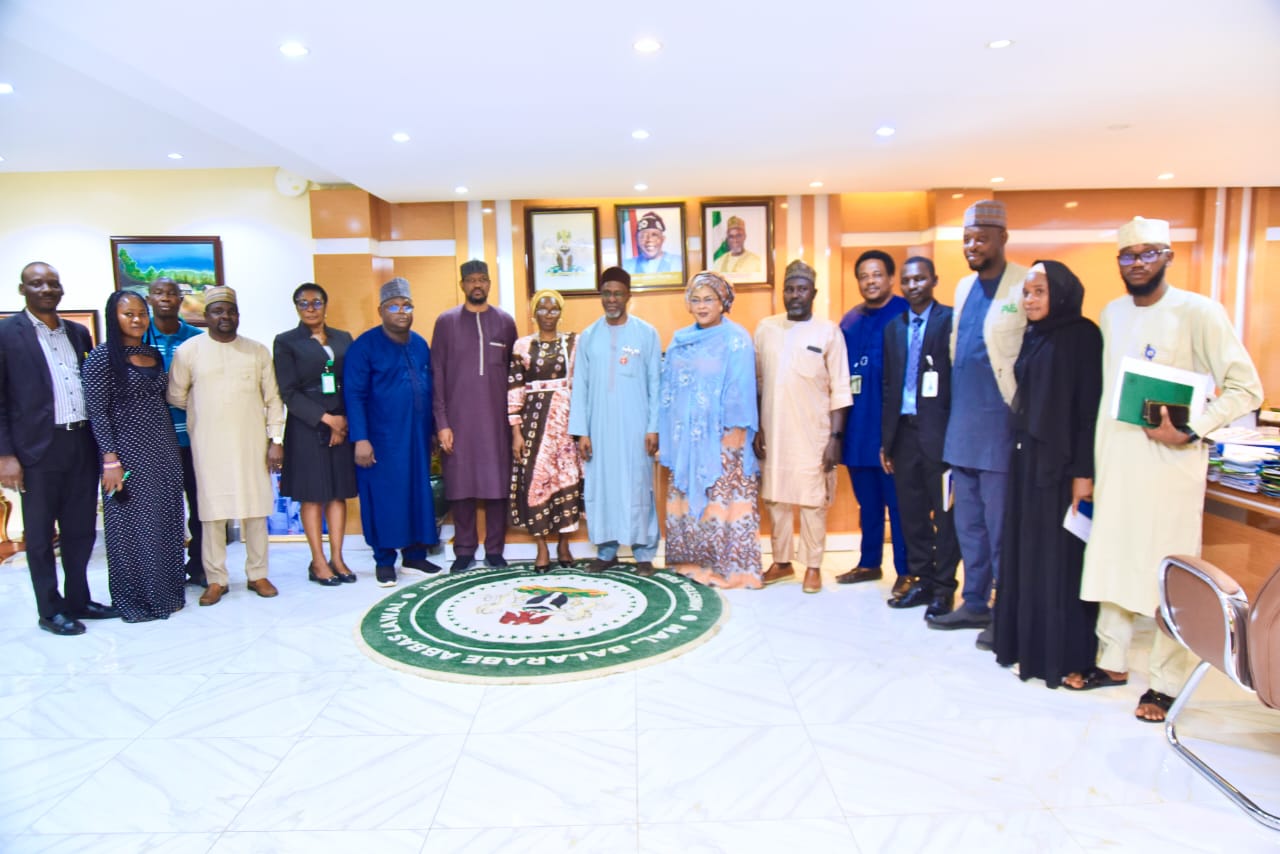
The Minister of Environment, Balarabe Abbas Lawal has revealed that Nigeria is presently working towards the transition to low-sulphur fuels.The Minister disclosed this in Abuja during the commemoration of the third International Day of Clean Air for Blue Skies.He said: “I am pleased to inform you that the Federal Ministry of Environment, in collaboration with other Government Ministries, Departments, and Agencies, as well as key stakeholders such as NNPCL, SON, and DPR, are working towards the transition to low-sulphur fuels. The Nigeria Industrial Standards (NIS) for petroleum products have been reviewed in line with AFRI IV standards and will soon be implemented.”Lawal said: “On vehicular emissions, the Administration of His Excellency, President Bola Ahmed Tinubu, GCFR, is promoting clean air by discouraging the importation of old vehicles, encouraging local manufacturing, and advancing the adoption of alternative fuels such as CNG and LNG. “The Government also supports the importation of electric vehicles, efficient mass transport systems (rail and waterways), and prioritizes CNG for its low emissions and affordability, with plans for a gradual transition to hydrogen and
electric vehicles. I am further pleased to announce Government approval of a Green Hydrogen Project in partnership with UNIDO, while also developing a framework for States to establish Vehicular Emissions Testing Centres in line with global best practices.”He also disclosed that “Ministry of Environment is advancing a National Policy on Air Quality Management alongside
the youth-led National Clean Air Programme under the slogan #BreatheEasyNigeria. With support from the Pediatric Association of Nigeria, UNDP, and Bhustan Energy & Environmental Services, we are raising awareness using credible data and engaging young people whose fragile lungs deserve protection.”
He said: “Today, the Department of Pollution Control and Environmental Health is signing an MoU with the Environmental Health Council of Nigeria to extend clean air
advocacy to all 774 Local Government Areas.”He noted that the International Day of Clean Air for Blue Skies is aimed at raising public awareness on the essential role of clean air in survival, productivity, economic growth, and environmental sustainability. The global goal is to achieve a 50% reduction of all forms of air pollution by 2030, calling on all to commit to conscious choices that reduce air pollution—especially in their daily activities at home such as cooking. He decried that: “Globally, air pollution is recognised as the leading environmental health risk, causing over seven million deaths annually, even more than malaria and HIV/AIDS combined. Nigeria shares this burden, as air pollution is linked to stroke, heart disease, COPD, lung cancer, pneumonia, cataracts, dementia and Alzheimer’s disease. The cost of global inaction remains severe, with devastating impacts on health, ecosystems, and economies. In Nigeria, bush burning, vehicular emissions, gas flaring, and venting remain major contributors to pollution with negative effects on both human health and ecosystems.”Earlier, the Permanent Secretary in the Ministry, Mahmud Kambari, had said the
The National Clean Air Programme represents a coordinated framework to protect our environment, safeguard public health, and align with global best practices. He added that: “Today, we are witnessing groundbreaking innovative solutions that make it easier for every Nigerian to get involved in our mission to tackle air pollution. Together, we can turn the tide on this silent killer. Let’s work together and Breathe Easily.”
