


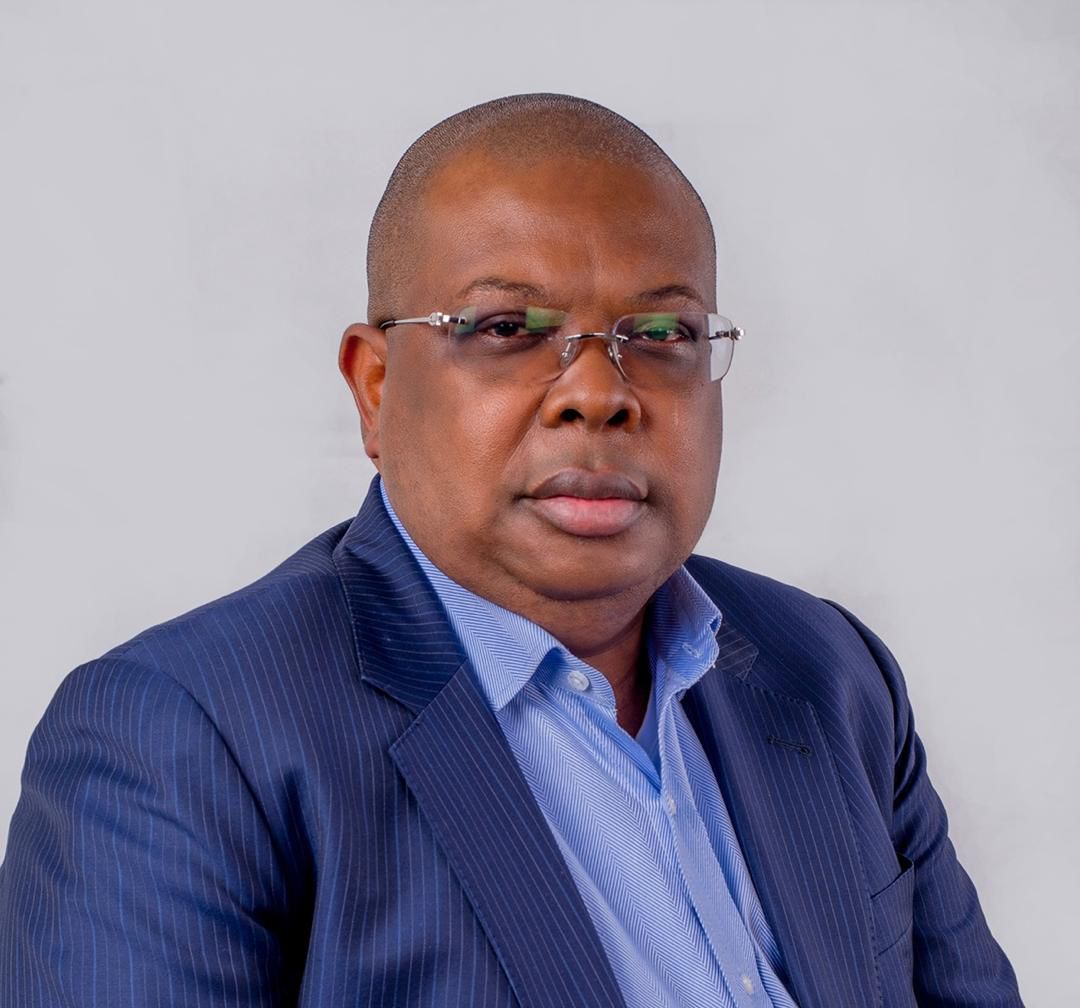
By Daniel Oluwatobiloba Popoola
The Minister of Power, Joseph Tegbe, has declared that the Federal Government will shift focus from announcements to actual project delivery under the Nigeria Power for Health Initiative, insisting that Nigerians must begin to see teaching hospitals, state hospitals and primary healthcare centres fully energised.
Tegbe spoke on Tuesday, 4 August, 2026 at the third meeting of the Inter-Ministerial Steering Committee of the initiative, a presidential programme jointly coordinated by the Federal Ministry of Health and Social Welfare and the Federal Ministry of Power to improve electricity access in public health institutions.
The meeting approved a financing framework and a set of institutional reforms targeting reliable 24-hour electricity for at least 30 per cent of Nigeria’s health facilities by the end of 2027.
Describing the initiative as one of the Tinubu administration’s flagship programmes, Tegbe said the time for ceremonial launches was over.
“Enough of groundbreaking and media events. We want to start commissioning projects. We want Nigerians to see teaching hospitals, state hospitals and primary healthcare centres that have been fully energised,” he said.
The minister stressed that dependable electricity would significantly improve patient care and eliminate hospitals’ frequent reliance on generators during medical emergencies, a practice he said must end.
“I want us to stop this idea of rushing generators to hospitals during emergencies. That should become a thing of the past. Whatever resources are required, we will continue to prioritise this initiative while ensuring value for money,” he added.
His remarks came as the Minister of State for Health and Social Welfare, Dr Iziaq Salako, disclosed that the committee had endorsed new governance structures, approved a facility energy management framework, and cleared eight private sector proposals for further engagement, out of about 70 submissions received during the National Healthcare Electrification Investor Matchmaking Week held in Lagos.
Salako said the committee approved a financing framework to mobilise investments for healthcare electrification, alongside a framework on facility energy management to ensure participating hospitals establish sustainable systems for managing their energy infrastructure.
He disclosed that Energy Management Teams had already been constituted in federal tertiary hospitals, with state governments encouraged to set up similar structures.
He further announced that the initiative would be institutionalised through dedicated budgetary provisions and a full-time Project Coordination Unit to oversee implementation, in line with the delivery-focused approach Tegbe emphasised.
“Our goal, as approved by Mr President, is to ensure that we deliver reliable energy access to at least 30 per cent of Nigeria’s health facilities by the end of 2027 using public-private partnerships that prioritise energy-as-a-service delivery models,” Salako said.
On the technology to be deployed, the health minister explained that solutions would vary by facility.
“There is no one-size-fits-all approach. Some facilities will use mini-grids, others may adopt gas-powered systems or other solutions. We will deploy whatever technology best suits each location,” he said.
Giving an update on progress since the initiative’s inauguration about eight months ago, Salako said governance structures had largely been established, while electrification projects continued across primary, secondary and tertiary healthcare facilities.
He disclosed that the Rural Electrification Agency had already installed containerised solar power systems in about 100 hospitals nationwide.
“We have used the eight months to build the governance structure. At the same time, electrification projects are ongoing at primary healthcare centres, secondary facilities through state governments and tertiary hospitals. The REA alone has energised about 100 hospitals nationwide,” he said.
Responding to questions on when blackouts would end in tertiary hospitals, Salako tied the initiative to the government’s wider electricity sector reforms.
“What we should be asking is the timeline for eradicating blackouts from our country. That is a work in progress. But what Mr President has done by democratising the energy provision space has created opportunities like this. We are confident that Nigeria will gradually eliminate blackouts,” he said.
Earlier at the meeting, the Permanent Secretary of the Federal Ministry of Power, Mahmuda Mamman, said uninterrupted electricity was indispensable for powering critical medical equipment, preserving vaccines, supporting laboratories and strengthening emergency response systems.
He described the Nigeria Power for Health Initiative as a landmark collaboration involving the Federal Government, development partners and the private sector, aimed at tackling one of the biggest infrastructure challenges facing the health sector a challenge Tegbe insisted must now be met with visible, on-ground results rather than further ceremony.
