



Nigeria’s tertiary education system stands today at a decisive inflection point. With university enrolment rising faster than infrastructure investment, student housing has emerged as one of the most urgent gaps holding back academic performance, institutional competitiveness, and nationwide human capital development.
Evidence shows that less than 15% of Nigeria’s over 2 million tertiary students have access to on campus hostels, forcing thousands into unsafe, overcrowded, and poorly regulated off campus accommodations.
Across federal, state, and private universities, the story is remarkably similar: inadequate bed spaces, aging dormitories, poor amenities, and a lack of structured policy direction on student accommodation. With federal universities alone hosting over 1.5 million undergraduates, the shortage of quality housing has become a national problem with far reaching educational, economic, and social consequences.
Why Student Housing Is Central to Learning and Skills Development
Research confirms that housing is the foundation for learning, inclusion, and academic retention, with inadequate accommodation linked to stress, insecurity, and diminished academic focus.
Studies from Nigerian institutions also show that overcrowding, poor sanitation, and unsafe environments significantly impair students’ mental well being and academic performance.
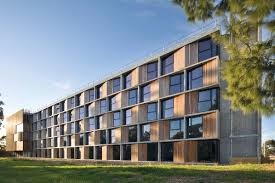
Students who reside in structured, safe, and purpose built accommodations:
• Enjoy higher concentration and improved academic outcomes
• Benefit from peer learning, teamwork, and social cohesion
• Develop stronger discipline, time management, and personal responsibility
• Experience better security, mental health, and stability
In essence, qualitative student housing contributes directly to graduate quality, innovation capacity, and workforce readiness — all essential to national development.
Investment Opportunities Across the 3 Tiers of Ownership
1. Federal Universities
With massive enrolment and decades old infrastructure, federal institutions reflect the most intense housing deficits. Allocation demand often exceeds supply by up to 400%, creating opportunities for PPP-led expansion.
2. State Universities
State institutions face financial constraints and slow expansion, making them fertile ground for Build Operate Transfer (BOT) and concession agreements.
3. Private Universities
While generally better resourced, many private universities still lack purpose built facilities at scale, creating room for premium and mid-tier student housing products.
Across all tiers, the common denominator is a clear and growing demand, making student housing one of Nigeria’s most stable, recession resistant real estate asset classes. Private-sector activity is rising, driven by high occupancy rates of 90–100% and multiple income streams from rentals and ancillary services.
Funding Availability, Ease of Doing Business and Concessions
For developers, financing has been one of the biggest obstacles, with typical commercial interest rates ranging from 25–30%, severely limiting the viability of student housing projects.
However, blended financing models are emerging:
• Government grants, private equity, and concessional debt are now being combined to reduce overall project costs, lowering effective interest rates to under 11%
• PPP schemes such as the Renewed Hope Student Housing Programme, which is delivering 38,400 bedspaces across 24 tertiary institutions, provide an excellent template for investor involvement.
Furthermore, simplifying concession processes, improving land allocation frameworks, and offering tax incentives will dramatically improve the ease of doing business, paving the way for broader private-sector participation.
Introducing BrookHill & BrookHill Real Estate Firm: A Model for Purpose Built Student Housing Excellence
As part of the solutions emerging within the sector, BrookHill & BrookHill Real Estate Firm has positioned itself as a pioneering force in the delivery of modern, sustainable student accommodation. The firm recently secured a 25 year BOT (Build Operate Transfer) concession with a leading university in Ogun State, marking a bold step forward in addressing Nigeria’s student housing deficit.
Under this concession, BrookHill & BrookHill is developing three ultra-modern student housing facilities designed to deliver 2,520 bed spaces — a transformative addition to the university’s residential capacity.
A First-of-Its-Kind Student Housing Experience
At completion, the BrookHill & BrookHill student housing projects will redefine what student living can and should be in Nigeria. The facilities will feature:
• Swimming Pool
• Fully Equipped Gym
• Laundry Mart
• Supermart
• Green Recreational Areas
• Reliable Power and Clean Water Supply
• 6 Aside Astro Turf
• Basketball Court
• Car Park
These amenities are not merely aesthetic upgrades — they are part of an intentional design philosophy centered on student well being, academic performance and life readiness. They will also support the university’s preparation for upcoming NUGA Games, strengthening sports development and campus vibrancy, while it improves and increases the asset value of the university.
Alignment with SDGs: Education, Sustainability and Community Well Being
BrookHill student housing model directly advances multiple Sustainable Development Goals (SDGs):
• SDG 4: Quality Education
A conducive residential environment directly improves learning outcomes and student success.
• SDG 11: Sustainable Cities and Communities
Purpose-built housing with green spaces and efficient utilities contributes to inclusive, resilient campus communities.
• SDG 3: Good Health and Well Being
Facilities such as gyms, recreational courts, and green relaxation areas enhance physical and mental health.
• SDG 7 & 13: Affordable and Clean Energy / Climate Action
Sustainable power systems and environmentally conscious buildings reduce carbon footprints and operational costs.
Through this concession model, BrookHill & BrookHill is not just building hostels — it is building a future-focused student ecosystem.
The Overall Benefits: For Stakeholders, Investors, Universities, and the Economy
For Students
• Better living, enhanced safety, and improved academic outcomes.
For Universities
• Improved competitiveness, increased enrolment, and stronger global appeal.
For Investors & Developers
• Stable, predictable returns supported by rising demand and long-term concessions.
For the Nigerian Economy
• Job creation in construction and facility management
• Strengthened human capital
• Contribution to GDP through real estate growth and educational competitiveness
• Reduced capital flight by retaining students domestically
Quality student housing is therefore not just a real estate opportunity — it is a national development imperative.
BROOKHILL & BROOKHILL REAL ESTATE FIRM – BOILERPLATE
About BrookHill & BrookHill Real Estate Firm
BrookHill & BrookHill Real Estate Firm is a Nigerian property development and infrastructure company specializing in purpose-built student accommodation, affordable housing solutions and sustainable community developments. With a commitment to innovation, quality, and long-term value creation, BrookHill & BrookHill leverages modern construction technologies and strategic partnerships to deliver transformational real estate assets.
The firm’s flagship 25-year BOT concession in Ogun State — featuring 840 state-of-the-art student bedspaces — underscores its mission to enhance student living, support academic excellence, and contribute to national development.
For enquiries, partnerships, and investment opportunities:
Email: info@brookhill.ng
Phone: +234 (0) 708-521-4859
Website: www.brookhill.ng
