


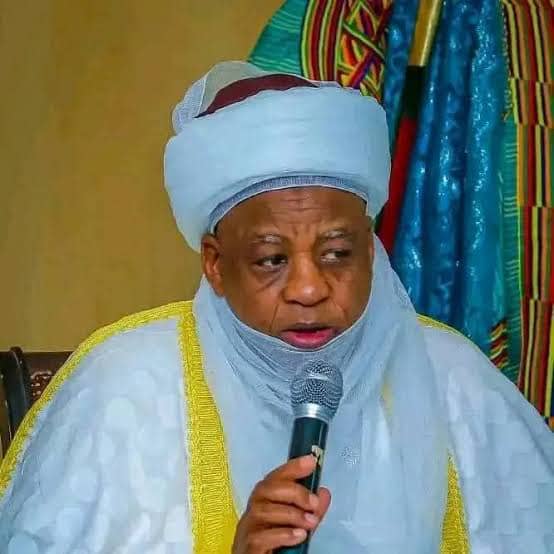
By Bashir Adefaka
There are people who occupy positions, and there are people who become the positions they occupy. There are leaders whose influence is defined by the office they hold, and there are those whose personal character, wisdom and conduct give extraordinary meaning to the office itself.
Sultan Muhammad Sa’ad Abubakar belongs, in my estimation, to the second category.
To understand the enigma that is the Sultan of Sokoto, one must look beyond the splendour of the turban, the grandeur of the palace and the centuries-old institution over which he presides. One must look beyond the title of Amirul Mu’minin, beyond the position of President-General of the Nigerian Supreme Council for Islamic Affairs and beyond the traditional authority associated with the Sultanate of Sokoto.
One must look at the man.
And there, perhaps, lies the mystery.
Sultan Muhammad Sa’ad Abubakar is a rare combination of the soldier and the scholar, the traditional ruler and the modern statesman, the spiritual leader and the voice of conscience. His journey from the military barracks to the throne of Sokoto is itself remarkable. He served in the Nigerian Army for decades, rose to the rank of brigadier general and participated in national and international military assignments before ascending the Sultanate in 2006.
That transition—from military command to spiritual and traditional leadership—could have produced a man defined by the rigidity of command. Instead, Nigerians encountered a Sultan whose public interventions have often been characterised by dialogue, moderation, national unity and a persistent appeal for justice.
That is the first part of the enigma.
The Soldier Who Became a Bridge-Builder
The military teaches discipline. It teaches obedience to command, loyalty to country and the importance of order. Yet, leadership from the palace requires something different. It requires patience. It requires listening. It requires the ability to bring together people who may disagree profoundly.
The Sultan has, over the years, demonstrated an ability to move between these worlds.
His military career exposed him to the realities of Nigeria and the wider world. He served in peacekeeping and diplomatic capacities and was involved in assignments connected to regional security and international relations. Such experiences inevitably broaden a person’s understanding of the complexities of human conflict.
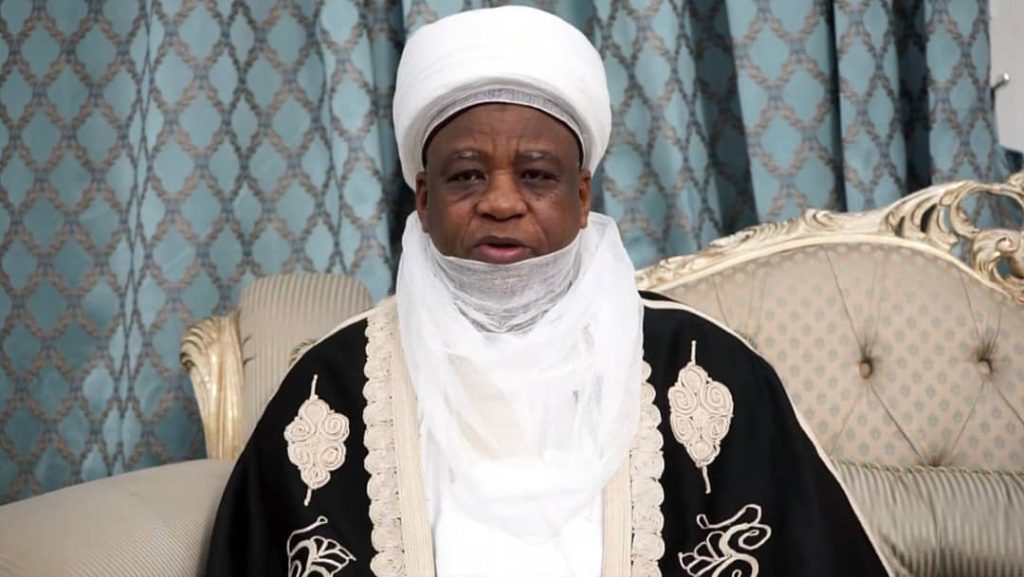
Perhaps this explains why the Sultan’s interventions on national issues frequently transcend narrow ethnic or sectional considerations.
He speaks as a Muslim leader, but he is also conscious that he is a Nigerian leader.
He speaks for Muslims, but he understands that Nigeria cannot be built by Muslims alone.
He defends the interests of his faith community, yet his public engagements have repeatedly emphasised peaceful coexistence and interfaith understanding.
This is why his role has often extended beyond the boundaries of Sokoto.
The Sultanate is not simply a traditional institution. Under Sultan Muhammad Sa’ad Abubakar, it has remained an important platform for conversations about religion, national unity, security, education, social development and the future of Nigeria.
An Authority That Does Not Need to Shout
In an age when public discourse is increasingly dominated by noise, the Sultan represents a different kind of authority.
He does not need to shout to be heard.
He does not need to insult to command attention.
He does not need to contest every criticism.
There is something about his public persona that suggests an understanding of the difference between influence and publicity.
This is perhaps one of the reasons why his words often carry weight far beyond the immediate audience before whom they are delivered.
A traditional ruler who is simultaneously a religious leader must constantly navigate a difficult terrain. Every statement can be interpreted politically. Every silence can be misunderstood. Every intervention can attract praise from one side and criticism from another.
Yet, the Sultan has continued to occupy that difficult middle ground.
And occupying the middle ground in Nigeria is no easy task.
Nigeria is a country where every issue is quickly given an ethnic, regional or religious interpretation. A statement made in Sokoto can be interpreted in Lagos. A comment about insecurity can be read through the lens of politics. A call for unity can be dismissed as political positioning. A criticism of government can be interpreted as opposition.
The Sultan, however, has maintained his place in the national conversation.
That, in itself, is an achievement.
The Burden of the Sokoto Throne
The Sultan of Sokoto does not inherit an ordinary throne.
The institution is historically connected to the legacy of Sheikh Usman dan Fodio and the Sokoto Caliphate, a tradition that has left a profound imprint on Islamic scholarship, governance and social organisation in West Africa.
Sultan Muhammad Sa’ad Abubakar is the 20th Sultan of Sokoto. He succeeded his elder brother, Sultan Muhammadu Maccido, who died in the 2006 ADC Airlines crash. Since then, he has carried the immense responsibility of leading an institution whose influence extends beyond Sokoto and into the broader Nigerian Muslim community.
The weight of that responsibility cannot be easily measured.
Millions of Muslims look to the Sultan for guidance on matters of religious importance. He also occupies a central position in the Nigerian Muslim leadership structure as President-General of the Nigerian Supreme Council for Islamic Affairs. His role in national religious life therefore requires balancing scholarship, tradition, politics, diplomacy and the demands of a rapidly changing society.
It is a position in which perfection is impossible.
But it is also a position in which character matters enormously.
A Leader in a Time of National Anxiety
Perhaps the greatest test of Sultan Muhammad Sa’ad Abubakar’s leadership has been the Nigeria of his reign.
He became Sultan at a time when the country was already wrestling with deep divisions. Since then, Nigeria has experienced terrorism, banditry, communal conflicts, political polarisation, economic hardship, religious tension and a growing crisis of confidence in national institutions.
The temptation in such an environment is for every leader to retreat into his own constituency.
But the Sultan has frequently spoken from the broader perspective of Nigeria.
This does not mean that every Nigerian agrees with every position he takes. Indeed, no leader of such prominence can escape criticism. But disagreement should not obscure the significance of his role.
The Sultan has consistently remained a voice in the national conversation at moments when Nigeria needs respected figures who can speak across divides.
His significance lies partly in his ability to engage both the powerful and the ordinary.
Governments listen to him.
Religious leaders engage with him.
Traditional rulers recognise his authority.
International institutions have sought his participation in conversations around peace and interfaith relations.
And ordinary Nigerians, Muslims and non-Muslims alike, pay attention when he speaks.
That is not the influence of a mere ceremonial monarch.
The Enigma of Independence
One of the most fascinating aspects of Sultan Muhammad Sa’ad Abubakar’s public life is the perception of independence that surrounds his office.
Nigeria’s political environment is one in which traditional institutions can easily become entangled with partisan interests. The Sultanate, however, occupies a unique position that demands a degree of distance from everyday partisan politics.
The Sultan has interacted with successive administrations and political leaders. Yet the institution has continued to exist beyond individual governments.
This is important.
A traditional institution of such magnitude must survive political seasons.
Governments come and go.
Presidents come and go.
Political parties rise and fall.
But the Sultanate remains.
The responsibility of the Sultan, therefore, is not merely to praise whoever is in power. It is to maintain the dignity of the institution and, where necessary, remind those in power of their obligations to the people.
That is why the Sultan’s interventions on national issues are important.
His voice is most valuable when it is independent enough to speak truth to power, but responsible enough to avoid reckless confrontation.
That balance is extraordinarily difficult to achieve.
A Muslim Leader in a Multi-Religious Nation
The Sultan’s leadership must also be viewed through the lens of Nigeria’s religious diversity.
Nigeria is a country of Muslims and Christians, as well as communities that preserve traditional religious practices. The relationship between faith communities has sometimes been strained by politics, insecurity and inflammatory rhetoric.
In such a context, the Sultan’s role carries a special responsibility.
His position requires him to defend Islam and the interests of Muslims. But it also requires him to contribute to peace in a nation where no religious community can afford to pretend that it exists alone.
His engagements with Christian leaders and interfaith initiatives have been part of a broader effort to demonstrate that religious leadership need not be synonymous with religious hostility. His participation in interfaith dialogue has also placed him among Nigerian religious figures who have sought to promote peaceful coexistence.
This is particularly important because Nigeria does not need religious leaders who merely mobilise their followers against one another.
It needs leaders who can say to their own people:
We must defend our faith without hating our neighbour.
That is a difficult message to deliver.
It is even more difficult to sustain.
The Sultan and the Question of National Unity
There is a recurring question in Nigeria: Who can still speak to the whole country?
Political leaders are often viewed through partisan lenses.
Business leaders are judged by their interests.
Activists are associated with causes.
Ethnic leaders are expected to speak for their communities.
But traditional and religious leaders can sometimes occupy a different space.
The Sultan is one of the few figures whose voice can travel across Nigeria’s complicated social landscape.
His greatest contribution may therefore not be in any single speech or intervention. It may be in the continued existence of a platform from which Nigerians can still be reminded that the country is bigger than its divisions.
In a nation where ethnicity can overshadow citizenship and religion can overshadow humanity, the Sultan’s insistence on national cohesion remains significant.
Nigeria needs such voices.
It needs them from the North and the South.
It needs them from Muslims and Christians.
It needs them from traditional rulers, political leaders, academics and civil society.
The Sultan’s voice is important because it comes from a position that combines history, religion and national experience.
The Man Behind the Mystery
Yet, perhaps, the greatest enigma about Sultan Muhammad Sa’ad Abubakar is that the more one observes his public life, the more difficult it becomes to reduce him to a single description.
Is he a soldier?
Yes.
Is he a traditional ruler?
Yes.
Is he a Muslim leader?
Certainly.
Is he a statesman?
His public record suggests so.
Is he a northern leader?
He is, by tradition and institution.
But is he only a northern leader?
That would be an incomplete description.
He has become part of Nigeria’s national leadership landscape.
His words are studied not merely in Sokoto but across the country.
His actions are scrutinised not merely by Muslims but by Nigerians of different faiths and backgrounds.
His silence can become news.
His intervention can become a national conversation.
That is influence.
And influence of that magnitude comes with an enormous burden.
A Sultan for His Time
Every generation produces leaders who are products of their time.
But occasionally, history produces a leader whose personality seems to sit at the intersection of different eras.
Sultan Muhammad Sa’ad Abubakar is one such figure.
He is a product of the old military Nigeria and the new democratic Nigeria.
He belongs to a centuries-old traditional institution but operates in a modern constitutional state.
He represents a religious tradition while participating in a multi-faith national conversation.
He inherited a throne rooted in history but has had to confront the realities of terrorism, social media, modern politics and globalisation.
That is what makes him an enigma like never before.
He is not without critics.
He is not beyond scrutiny.
He is not immune to disagreement.
And he should not be.
But even his critics must acknowledge the extraordinary complexity of the position he occupies.
The Sultan of Sokoto is expected to be many things at once: a guardian of tradition, a Muslim leader, a national elder, a voice of conscience, a bridge-builder and a custodian of an institution whose historical significance extends far beyond the walls of his palace.
To carry all these responsibilities without losing one’s humanity is no small feat.
The Legacy Being Written
History will eventually judge the reign of Sultan Muhammad Sa’ad Abubakar.
It will assess his words and his silences.
It will examine his interventions and his restraint.
It will consider his relationship with governments, religious communities, traditional institutions and ordinary Nigerians.
But perhaps the most important question history will ask is this:
Did he use the immense moral authority of his office to make Nigeria more peaceful, more united and more respectful of its diversity?
The answer to that question is still being written.
What is already clear, however, is that Sultan Muhammad Sa’ad Abubakar has carved out a distinctive place in Nigeria’s contemporary history.
He came to the throne with the experience of a soldier.
He inherited the responsibility of a Sultan.
He embraced the burden of religious leadership.
And he has spent years navigating the difficult space between tradition and modernity, faith and citizenship, authority and restraint.
That is why he remains an enigma.
Not because he is unknowable, but because he is difficult to define.
He is a man of the barracks who found his greatest battlefield in the search for peace.
A traditional ruler who operates in a modern republic.
A Muslim leader whose national responsibility demands engagement with people of every faith.
And an elder whose greatest strength may ultimately be his ability to remain standing above the turbulence of the moment.
In an increasingly noisy Nigeria, perhaps the true measure of the Sultan’s influence is not how loudly he speaks, but how many people still stop to listen when he does.
Adefaka, a prince of two Ondo State kingdoms in South West Nigeria, is a media proprietor and publisher of The DEFENDER Newspaper. Reach him via his email: omope72@gmail.com
