


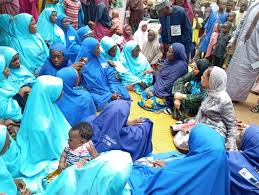
By Segun Adewale, Bauchi
United Nation’s Children’s Fund (UNICEF), has expressed worry over the inability of Women and adolescents in Bauch State from the age of 15-49 years to make informed decisions regarding sexual relations, contraception use and Reproductive Health Care.
The organisation however,called for more attention on the issue, particularly adolescents care in order to avoid implosive future, observing that attention has been placed on infants, mothers and children while little or no attention is given to adolescents while millions of them are drifting into behaviour that could destroy their potentials.
The observation was made by the Chief of Field Office (CFO), Bauchi Field Office (BFO), Dr. Nuzhat Rafique, while speaking with select Journalists at the ongoing media dialogue in Azare, headquarters of Katagum Local Government Area of the state on Tuesday, 9 December, 2025.
Represented by a Health Officer, Oluseyi Olosunde, Nuzhat Rafique, expressed fear that neglecting adolescent people threatens the future of the country, as vital productive segment would have been lost.
She therefore urged parents and stakeholders to design a robust initiative that caters for the adolescent population in order to have a lively and active society.
She also said that adolescence is a vital period when biological, social, emotional and cognitive changes occur in adolescents, stressing that care for adolescents today determines the future.
According to her, “Adolescents represent a significant proportion of the global population. They are future leaders, workers, parents, and contributors to society.”
Nuzhat Rafique stressed that, “Investments in adolescence produce long-term social and economic benefits. Investments yield triple dividends: for adolescents now, their future adulthood, and the next generation.
“Many life-long health behaviors, positive or risky-begin during adolescence. Early interventions can prevent adult illness and premature death”.
She suggested that empowering adolescents supports stronger, more resilient societies adding that targeted policies and programmes can unlock their full potential. Investing in health, education and empowerment is a strategic priority.
She stressed further that, “A healthy, educated, empowered adolescent population strengthens national and global development.”
She then urged parents to dedicate more time in upbringing of their children with proper education and investment in their well-being and said that many untrained adolescents would be readily available for insecurity and other social vices.
The UNICEF CFO, further said that many adolescents have been introduced to hard drugs and robbery because their guardians and parents have probably failed to play their roles.
She added that, “All these affect our country’s economy. If you have an adolescent who failed to obtain education and rejected skill acquisition, how could such a person be a productive workforce?
According to her, “Such a person has become a liability to the nation. Not only that, he or she would marry with no concrete means of livelihood and that is where stealing sets in because he or she wants to survive.”
She added that a well trained adolescent would prioritise his or her health and give birth to healthy children.
In her remarks, the Gender Desk Officer at the Bauchi State Primary Healthcare Development Board, Amina Balali, commended the role UNICEF is playing in supporting the State in the advocacy for gender rights and equality.
She further commended Journalists for the sustained reportage of issues of health with particular attention on gender related matters.
Amina Balali urged the Journalists to engage on advocacy so that there will be provision for a budget line on gender activities for proper attention and implementation of gender rights.
The 2-day media engagement is part of the advocacy efforts to enhance adolescent health, with focus on the Global Affairs Canada, GAC-funded initiative, on Adolescent Sexual and Reproductive Health.
Thegazellenews.com reports that the engagement was convened to strengthen the capacity of Bauchi-based media practitioners to accurately report on adolescent reproductive health and nutrition issues.
With limited decision-making power among girls, as well as high anaemia and malnutrition rates among adolescents, the media plays a crucial role in driving awareness, shaping public perception, and supporting positive behavioural change.
The purpose of the engagement was to orient Journalists on the current SRH situation in Bauchi State; Strengthen ethical, gender-sensitive, and youth-responsive reporting on ASRH; Promote donor visibility on the GAC-supported project and Facilitate field interactions between journalists and communities to deepen understanding of adolescent health and nutrition issues.
