


By Daniel Oluwatobiloba Popoola
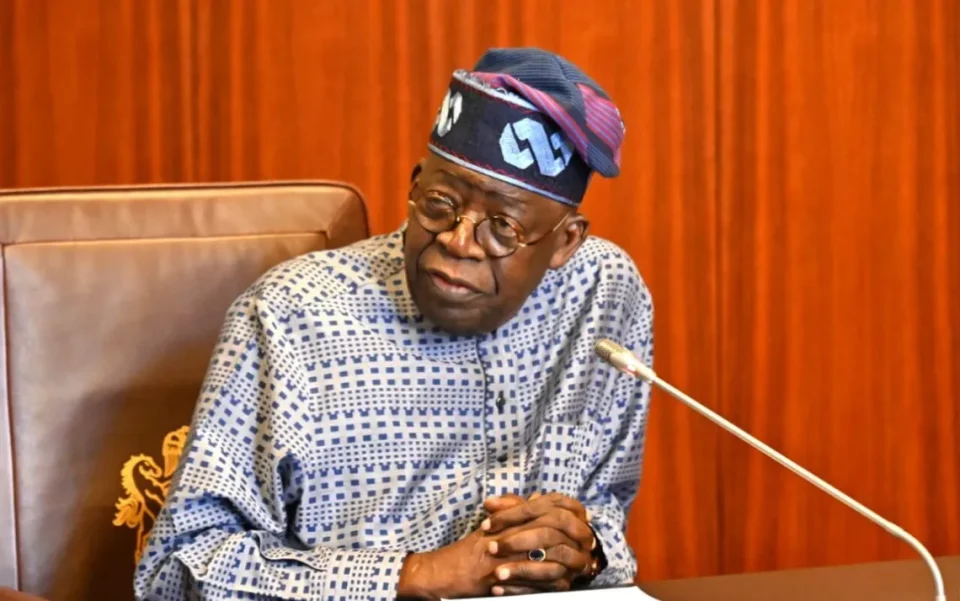
President Bola Tinubu has challenged Nigerian universities to move beyond conventional academic research and provide evidence-based advice and innovative solutions to the country’s pressing challenges, particularly insecurity, food insecurity, climate change and technological backwardness.
Tinubu made the call on Saturday, 25 July, 2026 at the 55th Convocation Ceremony of the University of Nigeria, Nsukka (UNN), where he was represented by the Vice-Chancellor of the University of Benin, Prof. Edoba Omoregie.
Delivering the Visitor’s address, the President urged universities to ensure that research findings move from library shelves into industries and translate into policies capable of shaping Nigeria’s developmental priorities and economic transformation.
The President said the nation’s universities have a critical responsibility to contribute directly to solving problems confronting society, stressing that academic knowledge would have greater value when transformed into practical solutions.
He challenged the institutions to intensify research and innovation that could address insecurity, food shortages, climate change and the country’s technology gap, while also providing the government with reliable, evidence-based guidance for policymaking.
Tinubu reaffirmed his administration’s commitment to education, describing it as one of the most strategic investments required to achieve sustainable national growth.
He highlighted ongoing interventions through the Nigerian Education Loan Fund and the Tertiary Education Trust Fund, saying the initiatives were designed to make higher education more accessible while ensuring that tertiary institutions have the infrastructure required to fulfil their responsibilities.
According to him, the administration’s objective is to produce graduates who are not only employable but also equipped to create employment, build industries and contribute meaningfully to economic transformation.
The President urged the graduands to approach the future with optimism despite the prevailing economic difficulties, reminding them that their certificates came with responsibilities beyond personal advancement.
He encouraged them to deploy their knowledge, creativity, courage and integrity in addressing national challenges, creating jobs, strengthening industries and contributing to the consolidation of Nigeria’s democracy.
Earlier, the Chancellor of the university and Ooni of Ife, Oba Adeyeye Ogunwusi, commended the institution’s leadership for its efforts to reposition the university for greater global relevance.
The Ooni urged the graduands to remain adaptable as they enter a world being rapidly reshaped by technology, economic uncertainty and changing labour requirements.
He noted that the enduring strength of the University of Nigeria lies in its capacity to continually reinvent itself in response to contemporary challenges.
Addressing the graduands, the monarch stressed that their certificates should be regarded as evidence of academic accomplishment, but maintained that their ultimate worth would be determined by their character, integrity and impact on society.
He identified artificial intelligence, digital technologies, climate change, global economic uncertainties and evolving labour markets as factors that would continue to redefine the world of work.
The Ooni, therefore, urged the graduands to cultivate adaptability, innovation and a commitment to lifelong learning to remain relevant in the changing global environment.
In his address, the Pro-Chancellor and Chairman of the Governing Council, Prof Adegboyega Karim, highlighted the council’s efforts to drive institutional reforms and urged external stakeholders to complement government funding for the university.
Karim noted that within the preceding 11 months, the university had recorded significant progress in academic development, infrastructure transformation, research, international collaborations, digital transformation and institutional reforms.
He attributed the achievements to visionary leadership, dedication and teamwork, while stressing the need for continued support to sustain the institution’s development.
The Vice-Chancellor of the University of Nigeria, Prof Simon Ortuanya, announced that the institution had conferred 2,994 higher degrees at the convocation.
The awards comprised 1,390 Doctor of Philosophy degrees, 1,340 Master’s degrees and 214 Postgraduate Diplomas.
The university also conferred honorary doctorate degrees on the First Lady of Nigeria, Oluremi Tinubu, who received a Doctor of Public Administration; High Chief Williams Agbo, Doctor of Business Administration; Dr W. Franklyn Richardson, Doctor of Social Work; and Arc. Kaycee-Kelechi Orji, Doctor of Business Administration.
The institution further conferred the title of Professor Emeritus on Prof Peter-Jazzy Eze and Prof Boniface Okere, in recognition of their contributions to academia and the university community.
