


By Sunday Dare
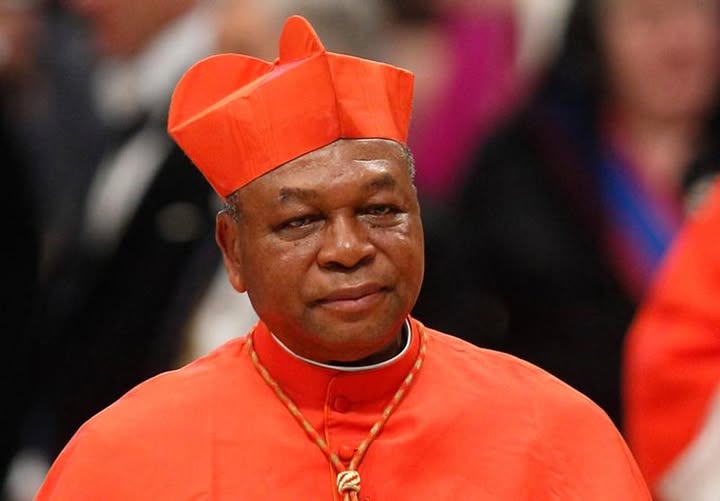
HISTORY has never been kind to institutions that mistake political opportunism for moral clarity. When the leadership of the Catholic Bishops’ Conference of Nigeria (CBCN), led by Most Rev. Matthew Ndagoso, accompanied by Archbishop Emeritus John Cardinal Onaiyekan, stepped into the State House on July 28, 2026, Nigerians expected a high-minded, clinical, and ecclesiastical engagement.
Every religious leader who chooses to intervene in political debate assumes a delicate responsibility. The moral influence of the clerical office depends upon being seen as independent of every political tendency. The moment public interventions begin to resemble partisan commentary, that moral advantage inevitably diminishes. We seem to have arrived at this diminishing point.
The nation anticipated a holy synod offering profound spiritual counsel, constructive statesmanship, and puritanical guidance to a leader steering a complex nation away from structural ruin.
Instead, what unfolded—and what Cardinal Onaiyekan subsequently magnified across television screens—was a disappointing spectacle of partisan posturing, cynical broadsides, and unpatriotic twitches. By abandoning the sacred detachment required of their revered offices to act as proxies for opposition political elements, the Prelates delivered a performance that was as superficial as it was banal.
When the Cassock Abandons the Pulpit.
The cassock does not desert its wearer simply because he challenges the king.
It begins to lose its unique moral force when conviction overtakes balance, when measured judgment yields to partisanship and when personal sentiment, longstanding disagreement or visible sympathy begins to cloud the discipline that the episcopal office requires.
The authority of the cassock has always rested on the perception that its wearer speaks above political passions, not from within them. In this instance, we see partisanship.
Nigeria benefits when respected clerics contribute to national debate. But their greatest influence comes not from taking political sides; it comes from remaining trusted moral voices whose authority rises above partisan contest.
But when you emerge from a room where power has spoken, tell the public what power said before telling them what you believe it meant.
That is not asking too much of a Cardinal.
It is asking exactly what the cassock demands.
For in the end, the cassock does not make the man truthful.
To reduce President Bola Ahmed Tinubu’s monumental, multi-sectoral transformation agenda to a narrative of failure is not merely an act of intellectual dishonesty; it is a scathingly uncharitable assault on a patriotic leader who inherited a crumbling, bankrupt estate in May 2023 and possessed the rare political courage to rebuild it from the foundation up.
The Tipping Point: The Inherited Bankruptcy of May 2023
To understand the weight of President Tinubu’s achievements, one must first measure the abyss Nigeria faced on the eve of his inauguration. In May 2023, the Nigerian nation was hovering on the precipice of total economic collapse and structural paralysis.
The unsustainable petrol subsidy regime was draining trillion-naira holes into the national treasury monthly, enriching a parasitic cabal of smugglers and middlemen while starving sub-national governments of basic infrastructure funding. A fraudulent multi-tiered foreign exchange system had turned the Central Bank of Nigeria into an arbitrage engine, crippling legitimate manufacturing, scaring off foreign direct investment, and burning through scarce external reserves.
The nation’s debt service-to-revenue ratio had spiraled to an unsustainable 97%, meaning Nigeria was literally borrowing money to pay interest on past loans while operational governance ran on fiscal fumes. This was the broken, bleeding nation handed over to President Tinubu. It required bold surgery, not diplomatic sedation. Yet, when the President applied the sharp scalpel of structural reform, armchair critics and political opponents decried the incision while ignoring the terminal tumor it removed.
A Record of Durable Transformation: Facts Over Partisan Rhetoric
While Cardinal Onaiyekan and his cohort choose the easy path of populist lamentation, the facts of President Tinubu’s administration reveal a relentless, methodical restoration of the Nigerian state. By courageously removing the petrol subsidy and unifying the foreign exchange windows within his first days in office, President Tinubu ended decades of economic illusion.
State and local governments now receive record-breaking monthly allocations from the Federation Account Allocation Committee (FAAC), enabling governors—including those in the Catholic heartlands—to pay salaries, fund local infrastructure, and service pensions promptly. The debt service-to-revenue ratio has been dramatically slashed to under 65%, pulling Nigeria back from the edge of default and restoring international credit rating confidence.
The administration did not merely reform numbers; it invested in human dignity. Through the landmark establishment of the Nigerian Education Loan Fund (NELFUND), millions of indigent students across tertiary institutions now access interest-free loans for tuition and stipends. Academic calendar stability has been restored, ending the agony of prolonged university strikes that once paralyzed national development.
To counter global inflation and local supply shocks, the Tinubu administration deployed emergency agricultural interventions that involves direct distribution of hundreds of thousands of metric tons of grains and fertilizers to small holder farmers nationwide, the multi-billion naira investments in dry-season farming, mechanization hubs, and irrigation infrastructure aimed at achieving permanent food self-sufficiency.
The long-awaited commercial activation of domestic refining capacity—anchored by aggressive crude supply support to local refiners—has redefined Nigeria’s energy landscape. Combined with the historic implementation of the Petroleum Industry Act (PIA) host community funds and massive infrastructure rollouts like the Lagos-Calabar Coastal Highway and regional rail corridor expansions, the physical spine of the economy is being systematically rebuilt.
The Bishops’ Failed Duty: Where is the Ecclesiastical Solution?
For a religious body as venerable as the Catholic Bishops’ Conference of Nigeria, pastoral duty requires more than compiling a list of national grievances. True spiritual authority speaks truth to power by offering moral wisdom, social cohesion, and actionable, puritanical solutions to complex human problems. Instead of bringing clinical policies or holistic strategic blueprints to the State House, the bishops presented a manifesto that mirrored the talking points of defeated political factions.
When Cardinal Onaiyekan declared on national television that “when the nation is bleeding, you cannot expect a polite meeting,” he did not speak with the stoic, unifying voice of an Archbishop Emeritus; he spoke with the sharp, adversarial tone of a political operative seeking headlines.
Where were the bishops’ concrete alternative economic models during their presentation? What alternative frameworks did they offer for securing vast forest terrains or raising national revenues without tax reform? To criticize without hazarding a single workable solution is the ultimate mark of armchair commentary.
Electoral Integrity and the Myth of Institutional Neutrality
Equally uncharitable was the bishops’ attempt to undermine confidence in the Independent National Electoral Commission (INEC) and cast shadows over the 2027 electoral landscape. To suggest that the administration is “bent on winning by all means” is to spread unfounded anxiety that discredits the democratic institutions the bishops claim to protect.
President Tinubu’s record as a titan of Nigeria’s pro-democracy struggle is indelible. He fought military dictatorship, risked life and liberty for the restoration of constitutional governance, and built political platforms on the bedrock of electoral competition.
To imply that a leader with such democratic credentials would undermine the electoral process is a baseless smear designed to provide cover for an opposition that has failed to present a coherent alternative vision to the Nigerian electorate.
Rising Above Partisan Mirage to Build a Resilient Nation
Governance is not a Sunday sermon; it is the difficult, often painful art of making hard choices for long-term national survival. President Bola Ahmed Tinubu did not seek office to court easy popularity or issue comforting platitudes while the nation decayed. He took the reins of power to confront structural rot, fix broken institutions, and lay a foundation for enduring national prosperity.
The Catholic Bishops’ Conference of Nigeria and Archbishop Emeritus John Onaiyekan possess a historic duty to serve as unifiers, moral anchors, and partners in national rebirth. By choosing instead to echo opposition talking points, downplay tangible national progress, and reduce complex economic restructuring to simplistic slogans, they diminish their own moral standing.
Nigeria is no longer at the tipping point. The dark tunnel of fiscal insolvency has been navigated, the foundation for stability has been laid, and prosperity is taking root. It is time for critics—clerical or political—to abandon the comfortable pulpits of cynicism, acknowledge the heavy lifting of national reconstruction, and join in the patriotic work of building a resilient, self-reliant Nigeria.
Sunday Dare is the Special Adviser to the President on Media and Public communications
