


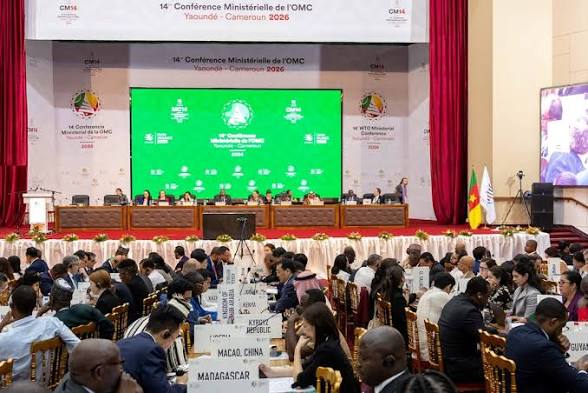
The 14th Ministerial Conference of the World Trade Organisation (WTO) ended in deadlock in Yaoundé, Cameroon, after member countries failed to reach consensus on extending a long-standing moratorium that prevents governments from imposing tariffs on digital transmissions.
The impasse occurred after Brazil and Turkey blocked a proposed agreement supported by most of the WTO’s 164 members to extend the moratorium on customs duties on electronic transmissions until December 31, 2030.
The breakdown halted progress on broader reform proposals championed by the United States and exposed deep divisions among member states over the future of global digital trade governance.
Reacting to the outcome, United States Trade Representative Jamieson Greer expressed frustration over what he described as a lack of seriousness among some members, noting that months of negotiations had failed to produce a compromise.
Greer said the inability to reach consensus on a digital trade issue after nearly three decades of the moratorium was a troubling signal for the future relevance of the global trade body.
“It is particularly frustrating that the WTO could not achieve consensus to make the e-commerce moratorium permanent or even extend it beyond a short period,” he said.
The moratorium, first adopted in 1998, has been periodically renewed to prevent tariffs on electronic transmissions such as software, digital media, and online services, which form a critical component of the modern digital economy.
According to Greer, despite the failure within the WTO framework, the United States has secured commitments from several major trading partners not to impose tariffs on American digital transmissions.
He added that Washington would pursue alternative arrangements outside the WTO if consensus remains impossible within the organisation.
“If the WTO cannot achieve this commonsense objective, the United States will work with willing partners to establish a plurilateral agreement on e-commerce tariffs,” he said.
Also commenting on the outcome, Deputy United States Trade Representative and U.S. Ambassador to the WTO Joseph Barloon said Washington remains committed to pushing reforms within the global trade institution despite the stalemate.
Barloon noted that although many member countries engaged constructively during the negotiations, the refusal by a few members to support the moratorium extension prevented a broader agreement that could have strengthened digital trade rules globally.
The ministerial conference, the highest decision-making forum of the WTO, brought together trade ministers and senior officials from member states to negotiate global trade policies and reforms.
During the week-long talks in Yaoundé, Greer held meetings with several counterparts including Cameroon’s trade minister Luc Magloire Mbarga Atangana, who chaired the conference, as well as representatives of least-developed countries coordinated by The Gambia.
The United States delegation also presented reform proposals aimed at modernising WTO operations and improving its capacity to address emerging trade challenges, particularly those linked to digital commerce.
However, the collapse of the talks highlighted growing tensions among WTO members over how global trade rules should adapt to the rapidly evolving digital economy.
Analysts say the failure to extend the e-commerce moratorium could introduce uncertainty for global digital trade, as countries may now consider imposing tariffs on cross-border electronic transmissions once the current arrangement expires.
