


By Daniel Oluwatobiloba Popoola
A Lagos-based political research outfit, the Political Intelligence Group (PIG), has projected that the All Progressives Congress (APC) will win the 2027 presidential election with 20 states, while the African Democratic Congress (ADC) and the Labour Party-aligned bloc, referred to in the projection as Nigeria Democraric Congress (NDC), are expected to secure nine and eight states respectively.
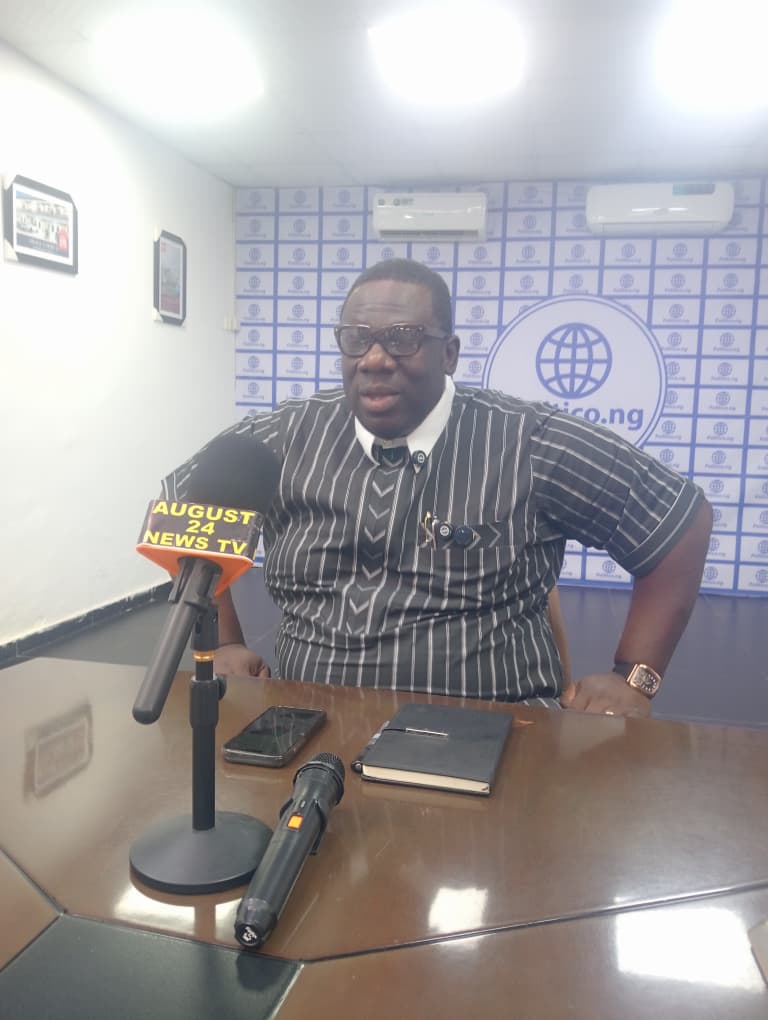
The projection was unveiled during a media engagement on Nigeria’s electoral law and analysis of the 2027 general elections, hosted by the Publisher of The Politico.ng, Mr Lai Omotola, at EBOOTCAMP, 46 Adeoye Adeyemi Street, Peace Estate, Wasimi, Maryland, on Sunday, 6 September, 2026.
Presenting the electoral map, which had been released on Tuesday, 1 September, 2026 and had since generated widespread debate across parties, the coordinator of PIG explained that the group had run similar forecasts for the past 12 years, covering three election cycles, but had chosen to make its findings public for the first time.
He disclosed that the group’s projections had consistently fallen within a 90 to 95 per cent accuracy range in the last three elections, adding that the current exercise was the most difficult yet, given that pre-election analysis was tougher than reviewing results after an election had been decided.
“This is just a pool and this is just a projection that is done all over the world. When the election comes near, it does not suggest the final results. That is why it is just a forecast,” he said.
Responding to criticism from the spokesperson of the Atiku Abubakar campaign, who had faulted the group a day earlier for not disclosing its methodology, the coordinator maintained that the projection was meant to alert parties to their strengths and weaknesses, not to declare a winner in advance.
“We should not create a fake accomplice whereby voters will feel intimidated that the results have already been announced. Our essence is to tell everybody, notice your weakness and also notice your strength, and go back home and tidy up. If they doubt us, it is their own peril,” he said.
He disclosed that although he was a card-carrying member of the APC, the projection was non-partisan and was arrived at without consulting any political party.
“This has nothing to do with APC. This is purely undiluted projection. Doubt it to your own peril,” he said.
Breaking down the state-by-state analysis, the coordinator said the Federal Capital Territory would be retained by the opposition, despite claims by the Minister of the FCT, Nyesom Wike, that he would deliver the territory for the APC.
He said the Labour Party-aligned bloc, through Peter Obi, would remain strong in the South-East, though it may fail to win Imo State, and would similarly dominate the South-South while possibly losing Rivers State. Kano State, he added, was projected to fall to the APC, just as the South-West was expected to return fully to the ruling party.
He explained that the projections were based on aligning political heavyweights in each state, senatorial district and local government area, rather than direct opinion polling, noting that sampling would only be applied in the group’s final release closer to the election.
According to him, the 2027 election would be shaped by three competing ideologies: a rotational presidency ideology favouring President Bola Tinubu’s re-election to complete the South’s turn in power; a Northern agenda favouring Atiku Abubakar, driven by claims of marginalisation and unmet expectations under the current administration; and a competence-based ideology favouring Peter Obi, driven by voters demanding capacity over zoning arrangements.
The coordinator said President Tinubu remained the only candidate projected to be competitive across all 36 states, even though he could lose ground in parts of the North, while Atiku’s pathway depended on dominating the North-West and North-East as former President Muhammadu Buhari once did.
He added that Obi’s pathway rested on sustaining the momentum of the 2023 election and mobilising an “untraditional” grassroots movement similar to the volunteer-driven campaign of former United States President Barack Obama.
He, however, warned that each scenario carried significant political consequences. Should Atiku win, he said, the unwritten agreement on power rotation between the North and South would collapse, allowing the North to seek the presidency at will in future contests.
An Obi presidency, on the other hand, would be historic in that the followership, rather than the candidate, had built the movement, a dynamic he said could complicate governance after the polls.
On the state of the opposition, the coordinator said the newly formed G100 coalition, despite recognising the importance of political heavyweights, lacked a unifying figure capable of rallying the various camps behind a single candidate.
He noted that Obi was unlikely to step down for any other aspirant, just as Atiku, having polled higher than Obi in the last election, was unlikely to step down for him, making a consensus opposition candidate near impossible.
Citing the August 15 Osun State governorship election, he attributed the scale of the Accord Party’s victory in the state largely to the involvement of singer Davido, whom he described as the “game-changer” in that contest.
The coordinator also projected a voter turnout of about 40 per cent for 2027, the highest in Nigeria’s electoral history, citing widespread hardship and anger in the country as key motivating factors, while insisting that ultimate victory would depend on each party’s ability to mobilise foot soldiers to polling units on election day.
“This election will be won by foot soldiers, your ability to deploy, your ability for logistics, your ability to match money for money,” he said.
He disclosed that the group’s projection would be updated monthly until the election, with a final release scheduled a week before the polls, and expressed confidence that the process would not be disrupted.
“We take this projection to the bank and we are 100 per cent sure that this is the minimum that will happen. It could go even higher than this if people do not sit down and mobilise,” he said.
