



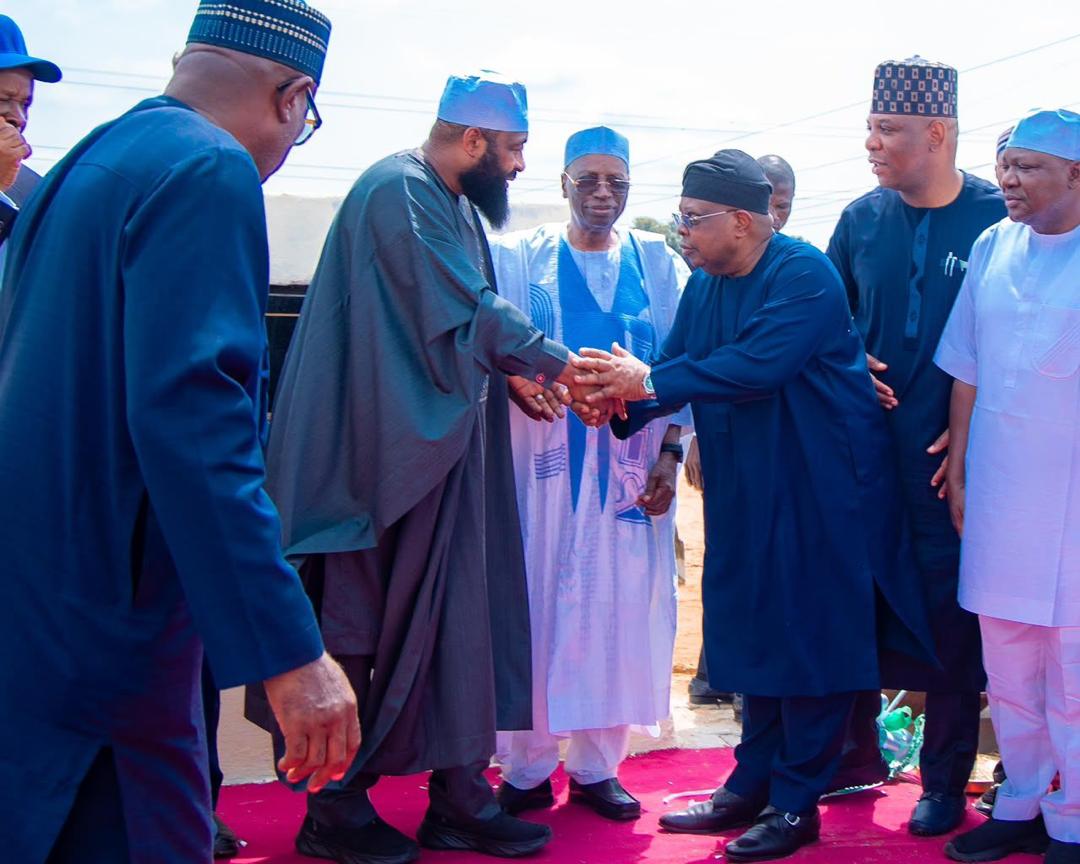
Nigeria’s push to combine industrialisation with clean energy gathered momentum at the weekend as the Federal Government and the Niger State Government broke ground for what is set to become the country’s largest solar-powered industrial project and the biggest embedded renewable energy installation in Sub-Saharan Africa.

The project, spearheaded by Abuja Steel Mills Limited, a subsidiary of the African Industries Group, will be powered by a dedicated 200-megawatt solar mini-grid designed to supply electricity to a sprawling industrial park and integrated steel manufacturing complex in Niger State.


The groundbreaking ceremony was attended by the Minister of Power, Joseph Tegbe; Minister of Steel Development, Prince Shuaibu Audu; Minister of State for Industry, Senator John Owan Enoh; Niger State Governor, Mohammed Umaru Bago; and top executives of the African Industries Group.
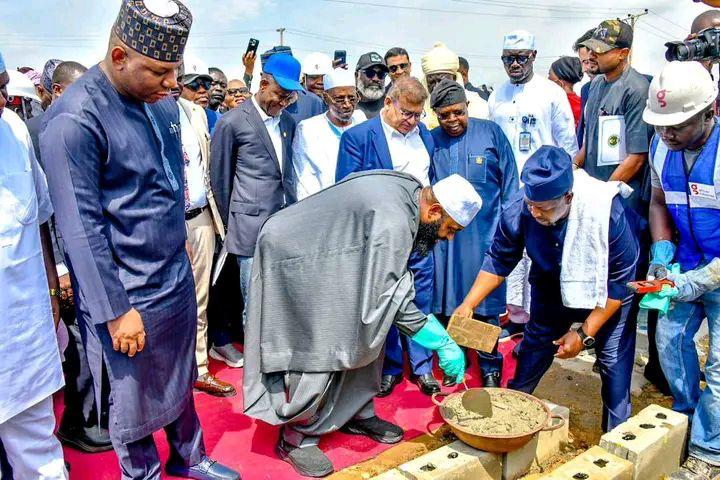
In a move underscoring the state’s commitment to the project, the Niger State Government formally handed over 500 hectares of land for the development of the industrial park and its supporting infrastructure.
Unlike traditional manufacturing facilities that depend largely on electricity supplied through the national grid, the Abuja Steel Mills project is designed to operate entirely on self-generated renewable energy, making it one of the continent’s most ambitious experiments in clean-powered heavy industry.
Officials described the off-grid approach as a deliberate business and industrial strategy aimed at guaranteeing reliable power supply, reducing production costs and insulating operations from the chronic electricity shortages that have constrained Nigeria’s manufacturing sector for decades.
The project is also being positioned as a practical demonstration of President Bola Ahmed Tinubu’s Renewed Hope Agenda, which seeks to expand electricity access, encourage private investment in energy infrastructure and accelerate industrial growth through innovative power solutions.
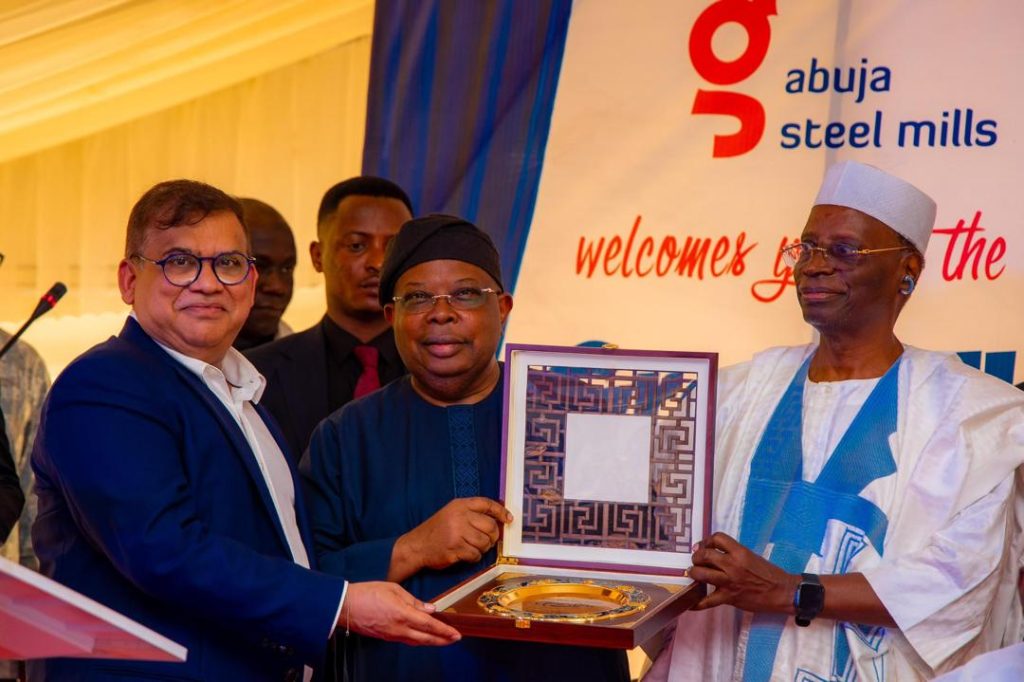
Speaking at the ceremony, government officials said the project demonstrates that renewable energy can move beyond powering homes and small businesses to supporting large-scale, energy-intensive industries such as steel manufacturing.
They noted that embedded generation, where industrial facilities produce electricity for their own use, offers manufacturers greater predictability, operational efficiency and long-term cost savings while reducing pressure on the national grid.
The development comes at a critical time for Nigeria’s power sector. Despite having an installed electricity generation capacity of over 13,000 megawatts, the country has struggled for years to deliver stable electricity supply, with actual generation frequently falling below demand due to infrastructure deficits, transmission constraints and gas supply challenges.
The unreliable electricity supply has significantly increased production costs for industries, many of which rely heavily on diesel-powered generators to sustain operations.
Successive administrations have therefore increasingly turned to renewable energy and decentralized electricity systems as part of broader efforts to improve energy access and drive economic growth.
Nigeria’s energy transition plan targets achieving net-zero carbon emissions by 2060 and significantly increasing the share of renewable energy in the country’s electricity mix. The Federal Government has also promoted mini-grid development, embedded generation and private sector participation as key pillars for expanding power supply and unlocking economic opportunities.
Analysts say the Abuja Steel Mills project could serve as a template for future industrial developments, demonstrating that large manufacturers can successfully deploy dedicated renewable energy systems at commercial scale.
Beyond its implications for the steel industry, the project is expected to stimulate economic activities in Niger State, create jobs, attract ancillary industries and strengthen Nigeria’s position as a destination for green industrial investments.
For investors and policymakers alike, the project signals an emerging development model in which industrial growth and clean energy transition are pursued simultaneously, offering a new pathway for addressing Nigeria’s long-standing energy and manufacturing challenges.
As construction begins on the solar-powered industrial park, the project is being seen not merely as another industrial investment, but as a bold statement that Nigeria’s future factories may increasingly be powered by the sun rather than by an overstretched national grid.
