


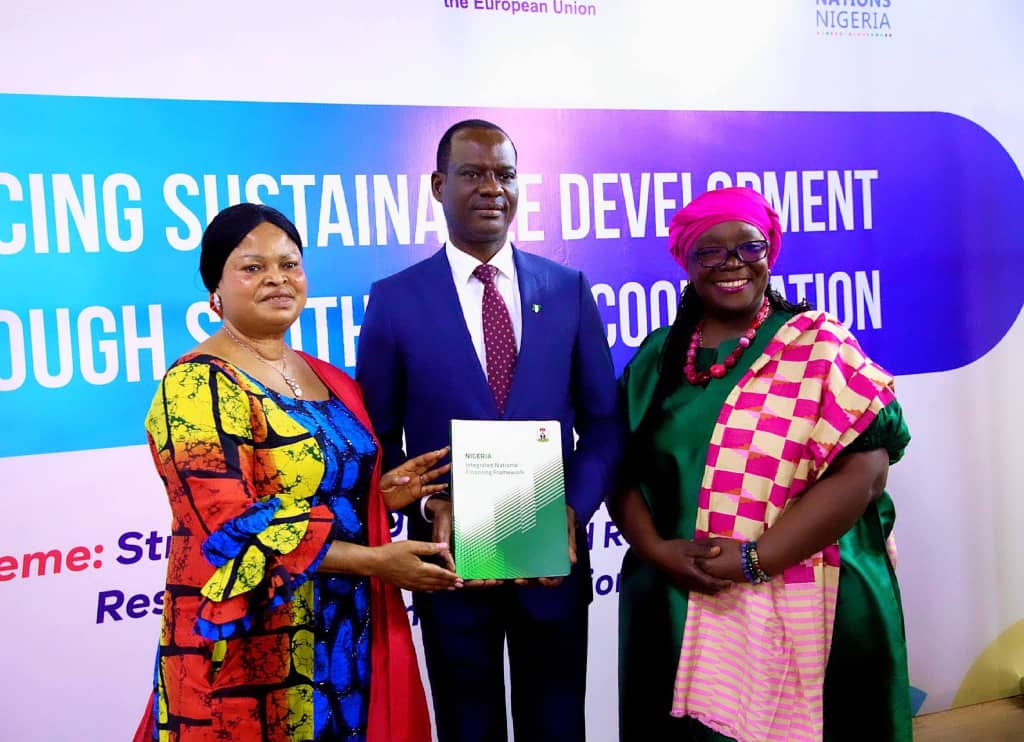
Nigeria has strengthened its position as one of Africa’s leading countries driving innovative financing for sustainable development following a three-day high-level experience exchange with the Federal Democratic Republic of Ethiopia on the implementation of the Integrated National Financing Framework (INFF).
The strategic engagement, hosted by the Federal Government through the Office of the Senior Special Assistant to the President on Sustainable Development Goals (OSSAP-SDGs), brought together senior government officials, development partners, fiscal experts and policymakers to examine how African countries can mobilise, coordinate and deploy financing to accelerate the achievement of the Sustainable Development Goals (SDGs).
Also in attendance were Chairmen and senior representatives of the Boards of Internal Revenue Services from the 36 states and the Federal Capital Territory (FCT), reflecting the Federal Government’s commitment to strengthening fiscal capacity at the sub-national level as a key driver of sustainable development financing and effective implementation of the Integrated National Financing Framework (INFF).
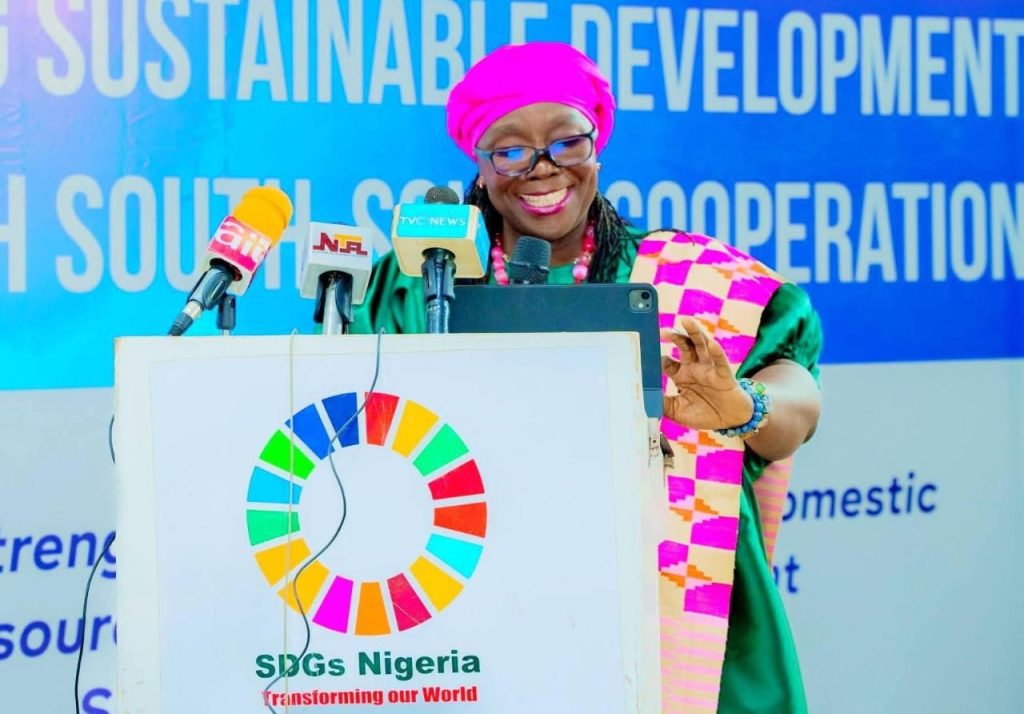
The exchange, organised in partnership with the United Nations Development Programme (UNDP) with financial support from the European Union (EU), underscored Nigeria’s growing leadership in implementing the INFF and highlighted the country’s experience as a model for other African nations seeking to strengthen domestic resource mobilisation, improve public financial management and attract private investment for national development.
Speaking at the opening session, the Senior Special Assistant to the President on Sustainable Development Goals, Princess Adejoke Orelope-Adefulire, OFR, stressed that strengthening fiscal governance at the sub-national level remains essential to achieving sustainable development.
She noted that state governments are responsible for delivering critical public services, including primary healthcare, basic education, water supply, sanitation, agriculture, infrastructure and local economic development, making stronger state-level financing systems indispensable.
According to her, the Integrated National Financing Framework provides governments with a comprehensive platform for coordinating domestic resource mobilisation, improving expenditure efficiency, strengthening public financial management, attracting private-sector investment and deploying innovative financing mechanisms.
“The INFF recognises that achieving sustainable development cannot rely solely on traditional public financing,” she said. “Strengthening fiscal capacity at the sub-national level is not merely a technical exercise; it is a strategic imperative.”
Also speaking, the Honourable Minister of Finance and Coordinating Minister of the Economy, Professor Taiwo Oyedele, described the INFF as a transformative framework capable of reshaping how countries finance development.
He said the framework represents “a fundamentally different way of thinking about how nations mobilise, align and deploy financing for sustainable development,” adding that the future of development financing would depend not only on the availability of resources but also on how effectively countries coordinate and invest those resources in national priorities.
The Minister further linked the INFF to Nigeria’s ongoing fiscal and tax reform agenda, explaining that stronger domestic revenue mobilisation and institutional reforms are essential to expanding development financing while supporting economic growth, enterprise and voluntary tax compliance.
The United Nations Development Programme (UNDP) Resident Representative in Nigeria, Ms. Elsie G. Attafuah, emphasised that the Sustainable Development Goals are ultimately delivered at the sub-national level.
She observed that stronger state institutions and improved fiscal systems enable governments to invest more effectively in education, healthcare, infrastructure, enterprise development and job creation, thereby translating policy ambitions into measurable improvements in citizens’ lives.
For the Ethiopian delegation, the visit provided an opportunity to study Nigeria’s practical experience in implementing the Integrated National Financing Framework.
Leader of the delegation, Mr. Solomon Tesfasilassie Tegene, described the exchange as a powerful demonstration of South-South cooperation and praised Nigeria for sharing valuable lessons on innovative financing, domestic resource mobilisation, governance structures, monitoring systems and private-sector engagement.
He said the knowledge gained during the visit would support Ethiopia’s own efforts to strengthen sustainable development financing and institutional reforms.
Throughout the three-day programme, participants examined Nigeria’s governance arrangements, financing strategies, reform coordination mechanisms, monitoring and evaluation systems, and emerging sub-national implementation framework under the INFF.
The discussions also explored ways to strengthen collaboration between African countries in designing nationally owned financing strategies capable of addressing growing development challenges amid constrained fiscal space.
The Nigeria Integrated National Financing Framework is designed to mobilise greater public and private financing for sustainable development in line with national priorities. The framework is chaired by the Honourable Minister of Finance and Coordinating Minister of the Economy and co-chaired by the United Nations Resident and Humanitarian Coordinator, with the Office of the Senior Special Assistant to the President on Sustainable Development Goals serving as the Secretariat.
As African countries continue searching for innovative ways to finance development amid global economic uncertainties, the Nigeria–Ethiopia exchange has reinforced the growing importance of South-South cooperation in building stronger institutions, mobilising domestic resources and accelerating progress towards the Sustainable Development Goals.
