
Former Lagos State Commissioner for Home Affairs, AbdulHakeem AbdulLateef, has charged intending pilgrims to Saudi Arabia for the 2027 Hajj to uphold discipline, patience, and spiritual devotion during their stay in the country.

He stressed that a proper understanding of the rites and procedures is essential for a successful pilgrimage.AbdulLateef gave the advice on Saturday during a one-day Hajj sensitisation seminar organised by Adulateef Hajj Travels in Ojodu, axis of the state.

At the seminar where intending pilgrims gathered for orientation ahead of their departure to the Saudi Arabia, the former commissioner said Hajj is not merely a physical journey but a sacred spiritual obligation that requires sincerity, humility, obedience, and strict adherence to Islamic guidelines.
He explained that the pilgrimage follows a carefully structured sequence of movements and acts of worship, beginning from the pilgrims’ arrival in Saudi Arabia and continuing through the various holy sites.
According to him, understanding the order and significance of each rite is critical to ensuring that the pilgrimage is spiritually rewarding and valid before Allah. “Pilgrims must remain calm, disciplined, and spiritually conscious throughout the exercise,” AbdulLateef stated.

“Hajj requires patience, mutual respect, and total submission to divine instruction. Pilgrims should avoid unnecessary arguments, comply with health and safety regulations, and use the opportunity to pray for themselves, their families, and Nigeria.”
The former commissioner also warned pilgrims against acts capable of disrupting order within the holy environment, particularly performing prayers in restricted passages and crowded walkways that could obstruct movement around the sacred sites.
He highlighted the spiritual importance of Zamzam water, describing it as a divine blessing for pilgrims, and encouraged Muslims to consume it prayerfully and with sincerity. AbdulLateef further educated participants on the significance of the Hajar al-Aswad, popularly known as the Black Stone located at the corner of the Kaaba, explaining that pilgrims may simply gesture toward it during Tawaf whenever physical access becomes difficult due to heavy crowd congestion.
“All acts of worship during Hajj must be directed solely to Allah,” he stressed. Giving detailed explanations on the major rites of Hajj, AbdulLateef said the spiritual journey begins with movement to Mina, where pilgrims enter the sacred state of Ihram after ritual purification and preparation.
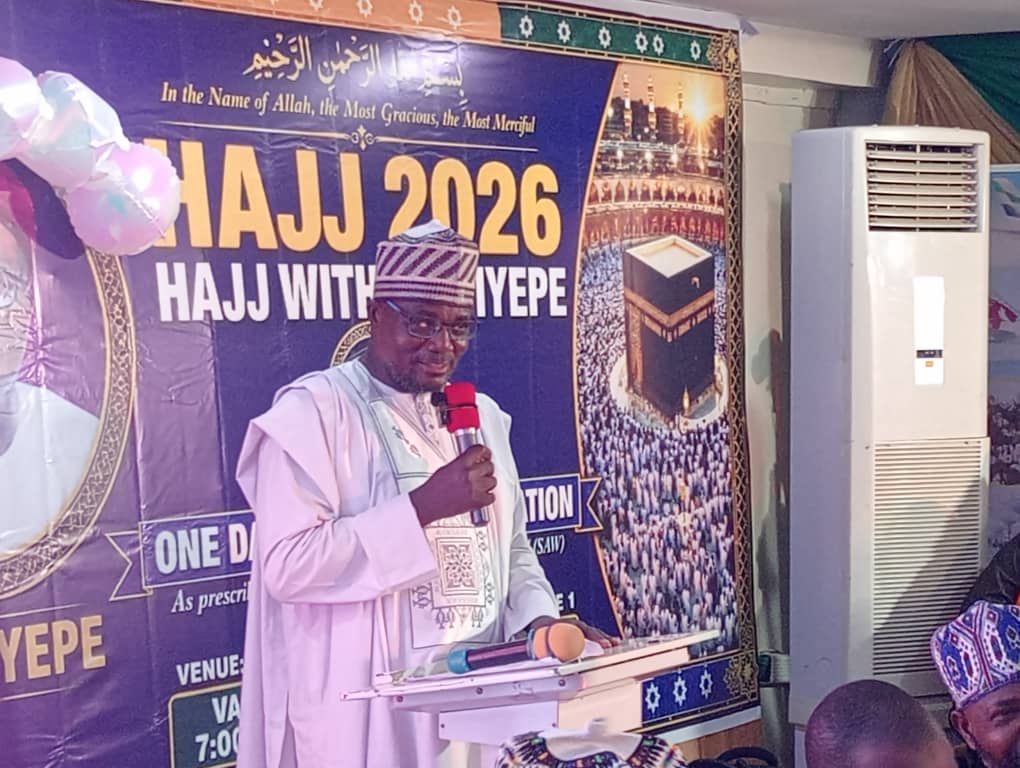
He explained that pilgrims would subsequently proceed to Arafat for prayers, reflection, and supplication before moving to Muzdalifah after sunset for overnight stay and collection of pebbles used in the symbolic stoning ritual. Speaking further, he outlined the procedures for the symbolic throwing of pebbles at the Jamarat during the days of Dhul Hijjah.
“On the 10th of Dhul Hijjah, pilgrims are expected to throw seven pebbles at Jamrat al-Aqabah, the large pillar,” he explained. “On the 11th and 12th of Dhul Hijjah, pilgrims will throw 21 pebbles daily — seven each at the small, middle, and large pillars — while making supplications after the first and second pillars.” AbdulLateef disclosed that no fewer than 340 pilgrims are expected to travel through the Adulateef Hajj Travels platform this year, with 131 pilgrims scheduled for airlift on May 11. He urged all intending pilgrims to remain orderly, properly prepared, and spiritually focused ahead of departure.

Also speaking at the seminar, Islamic finance expert, Tajudeen Yusuf, warned against common mistakes committed by some pilgrims during Hajj, particularly acts capable of diminishing the spiritual essence of the exercise. He emphasised that Hajj should never be turned into a social activity or content-creation exercise for public display on social media.
“Hajj is an act of worship, not a platform for personal showmanship or social validation,” Yusuf cautioned. He advised pilgrims to remain guided strictly by Islamic principles and avoid all prohibited acts throughout the pilgrimage. Participants at the seminar described the orientation programme as timely and enlightening, noting that the detailed explanations provided would help intending pilgrims better understand the rites and responsibilities associated with the sacred journey.