


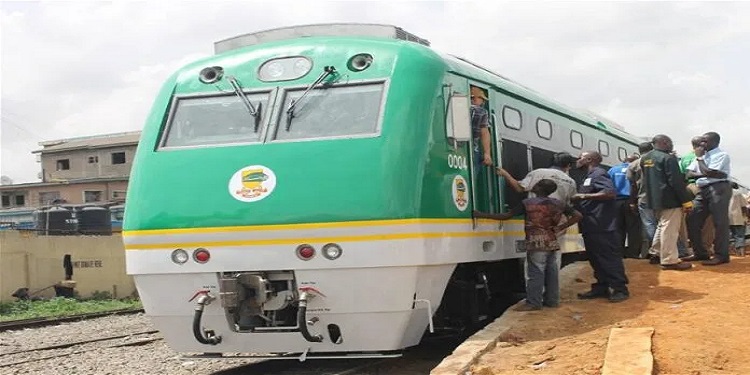
Fresh concerns have emerged among rail passengers and freight operators following indications that the Nigerian Railway Corporation (NRC) may be considering a review of fares across its passenger and cargo services in response to mounting operational costs and growing financial pressures.
The development comes barely hours after the expiration of the Federal Government’s 50 per cent Eid-el-Kabir train fare discount, a special intervention introduced to ease transportation costs for Nigerians during the festive period.
Investigations reveal that the Corporation is currently grappling with rising expenditure on fuel, maintenance, security, spare parts, personnel, and infrastructure management, a situation that has significantly increased the cost of running train services across the country.
The Nigerian Railway Corporation currently operates three standard gauge corridors — the Abuja-Kaduna Train Service (AKTS), Lagos-Ibadan Train Service (LITS), and Warri-Itakpe Train Service (WITS) — as well as narrow gauge mass transit operations on the Iddo-Ijoko, Iddo-Kajola and Port Harcourt-Aba routes.
Sources familiar with the Corporation’s finances disclosed that the cost of Automotive Gas Oil (diesel), which powers most of the Corporation’s locomotives and generators, has become a major burden. Findings indicate that diesel expenditure alone exceeded ₦1.2 billion in April 2026, accounting for a substantial percentage of operational costs.
Beyond fuel expenses, the Corporation is also contending with escalating maintenance costs for locomotives, coaches, tracks, signalling systems and station facilities. The increasing cost of imported spare parts, most of which are sourced with foreign exchange, has further compounded the situation.
A senior management official, who requested anonymity because she was not authorised to speak publicly on the matter, said the Corporation is facing difficult choices.
“Management is carefully reviewing the situation. The reality is that operational costs have continued to rise while fares have largely remained unchanged. We are left with limited options. Either we review our pricing structure to reflect current realities or scale down operations on some corridors,” the source said.
According to the official, the Corporation’s financial position has deteriorated significantly in recent months due to a combination of rising costs and operational disruptions.
“Several factors have affected our projections. Fuel costs have increased substantially. Security-related expenditures have also risen because of the need to protect railway assets against vandalism and theft. We have had to undertake emergency repairs on infrastructure and rolling stock, while inflation continues to impact virtually every aspect of our operations,” the source added.
Industry observers note that the railway sector has also been affected by the rising cost of electricity, insurance, logistics support services, and security deployments required to safeguard critical rail infrastructure across thousands of kilometres of track.
Recent incidents of vandalism and attacks on railway assets in different parts of the country have further increased maintenance and security expenditures, forcing the Corporation to divert resources to repairs and asset protection.
The Abuja-Kaduna route, despite remaining one of the most patronised rail services in the country, has also witnessed increased operating costs due to security requirements and maintenance demands.
Sources say that if a fare adjustment is eventually approved, it may affect both passenger and freight services nationwide, including the Lagos-Ibadan standard gauge corridor, the Abuja-Kaduna service, and narrow gauge mass transit operations.
Freight operators have expressed concerns that any significant increase in rail tariffs could affect logistics costs and ultimately impact the prices of goods transported through the rail network. Passenger groups have similarly appealed to the Federal Government to sustain support for rail transportation in order to keep fares affordable for ordinary Nigerians.
When contacted, the Managing Director of the Nigerian Railway Corporation, Dr. Kayode Opeifa, acknowledged the challenges posed by rising operational costs but assured Nigerians that the Corporation remains committed to supporting the Federal Government’s transportation agenda.
He emphasized that the NRC would continue to align with the Renewed Hope Agenda of President Bola Ahmed Tinubu by ensuring that rail transportation remains accessible and affordable while maintaining safety, efficiency and reliability.
“The Federal Government remains committed to making transportation affordable for Nigerians. While we are not oblivious to the realities of rising operational costs, we will continue to explore options that will ensure sustainability without undermining the public interest,” he stated.
Stakeholders say the coming weeks will be critical as the Corporation balances the need for financial sustainability with its mandate of providing affordable transportation services to millions of Nigerians.
