


By Daniel Oluwatobiloba Popoola
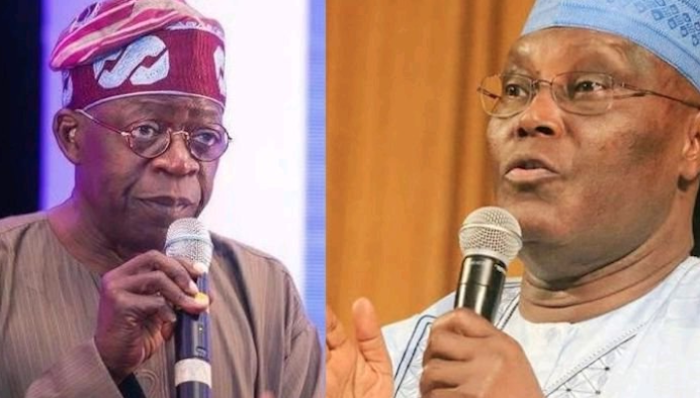
The Presidency has accused former Vice-President Atiku Abubakar of adopting inconsistent positions on petrol subsidy, saying his conflicting statements within one week suggest he is playing politics with the economic challenges facing Nigerians.
In a statement issued on Wednesday, 26 August, 2026, by the Special Adviser to the President on Information and Strategy, Bayo Onanuga, the Presidency said Atiku’s changing explanations had created confusion over what an administration led by him would do about petrol subsidy if elected.
The statement followed three different positions attributed to Atiku and his aides within one week, beginning with a declaration by his spokesperson, Paul Ibe, that the former vice-president would restore petrol subsidy if elected president and later phase it out.
According to the Presidency, Ibe had described the proposed subsidy as a temporary intervention intended to give Nigerians and businesses room to recover before its eventual removal.
However, another senior aide, Phrank Shaibu, subsequently rejected Ibe’s explanation, describing it as an “unauthorised and misleading characterisation” of Atiku’s position.
Shaibu, the Presidency said, explained that Atiku would not set a predetermined date for ending the subsidy. Instead, the policy would remain until domestic refining capacity expanded, fuel supply stabilised, competition deepened and market conditions could deliver affordable prices without government support.
The Presidency noted that Atiku himself intervened hours later and effectively overruled that clarification, insisting that his position had not changed and that he would restore what he described as a “targeted subsidy” if elected.
Atiku was quoted as saying, “I will restore targeted subsidy and put purchasing power back in the hands of Nigerians.”
Onanuga described the sequence of statements as more than a semantic disagreement, arguing that it exposed a serious contradiction in Atiku’s proposed petroleum policy.
He questioned why Ibe would describe the subsidy as temporary and subject to eventual phase-out, why Shaibu would publicly disown that explanation and introduce a framework based on market conditions, and why Atiku would subsequently intervene to reaffirm the original position.
The Presidency said Nigerians deserved clarity on the policy, rather than what it described as policy formulation by trial and error.
It also challenged Atiku’s argument that restoring subsidy would make petrol and, consequently, transportation and food more affordable, maintaining that petrol prices were influenced by several factors, including international crude oil prices, exchange rates, refining costs, transportation, distribution and other market costs.
According to Onanuga, increased competition could improve efficiency and margins but could not completely shield Nigeria from movements in global crude oil prices or other input costs.
He further rejected what he described as an oversimplification of the causes of food inflation, arguing that although energy and transportation costs affect food prices, petrol prices alone had never been responsible for rising food costs.
The Presidency listed agricultural productivity, insecurity, exchange rates, logistics, storage, flooding, input costs, money supply and supply constraints among other factors affecting food prices.
It maintained that a credible economic programme should therefore address the wider causes of the cost-of-living crisis rather than reduce the problem largely to petrol prices.
Onanuga consequently challenged Atiku to explain the details of his proposed “targeted subsidy”, including its cost, beneficiaries, funding mechanism and the economic conditions that would determine when the policy would end.
He warned that Nigerians could not afford another opaque and potentially expensive subsidy regime presented under a different name.
The Presidency further questioned whether Atiku had a coherent, costed and workable petroleum policy or was using the subsidy debate for political purposes.
It argued that the removal of petrol subsidy had restored fiscal capacity to the three tiers of government and contributed to the stabilisation of the macroeconomic environment.
Onanuga also challenged Atiku’s understanding of the economics of refining, particularly his suggestion that his proposed subsidy would follow the price of a barrel of crude oil.
He noted that petrol accounts for only about 45 per cent of the products obtained from a refined barrel of crude oil, while the remaining portion produces several other petroleum products.
According to the statement, diesel accounts for roughly 25 per cent of a barrel.
It noted that the Obasanjo-Atiku administration deregulated diesel in 2004.
Jet fuel and kerosene, which together account for about nine per cent of the barrel, were also deregulated, with kerosene and jet fuel subsidies removed in 2016, the statement said, adding that kerosene and jet fuel had been deregulated in 2009.
The Presidency further said about 10 to 15 per cent of a barrel produces base ingredients used in synthetic rubber, nylon, polyester and plastics found in everyday products such as toothbrushes, cups and packaging.
It added that asphalt accounts for about two to four per cent, while hydrocarbon gas liquids, including propane and butane, account for about four per cent.
Lubricants and waxes constitute about one to two per cent, while petroleum coke and sulphur form part of the solid residues left after refining, according to the statement.
Onanuga therefore questioned whether Atiku would subsidise all the by-products of crude oil if his proposed policy was to follow the barrel, particularly given the continued use of kerosene by low-income households for cooking and diesel by homes, factories, generators and delivery trucks.
He also questioned whether refineries supplied with discounted crude would be allowed to profit from the remaining 55 per cent of the barrel’s by-products while government support was concentrated on petrol.
The Presidency consequently described Atiku’s proposed policy as evidence of what it called a lack of basic understanding of the economics of petroleum refining.
Onanuga said the former vice-president should provide Nigerians with a clear and comprehensive explanation of his proposed subsidy policy rather than continue to issue what the Presidency described as conflicting positions.
