


By Daniel Oluwatobiloba Popoola
Nigeria’s First Lady, Senator Oluremi Tinubu, has inaugurated a TETFund/Renewed Hope Initiative-backed ICT Experience Centre at the Kwara State University, KWASU, Malete.
The university is one of six tertiary institutions selected for the pilot phase of the intervention, with one institution representing each of Nigeria’s six geopolitical zones.
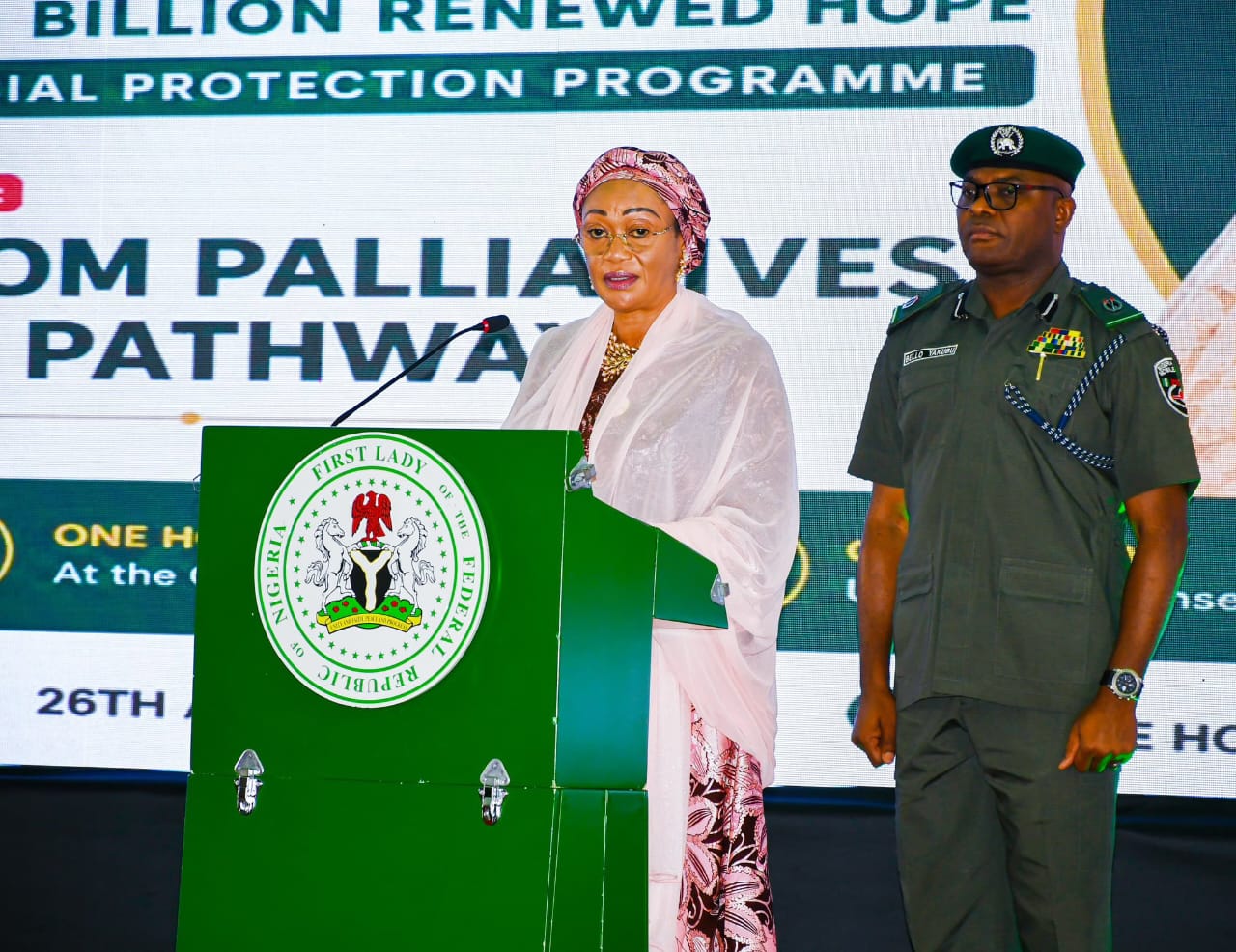
Represented at the event by the wife of the Vice President, Nana Shettima, Tinubu said the project reflected the Federal Government’s commitment to advancing education, digital inclusion and graduate employability.
“The TETFund/Renewed Hope Initiative ICT Experience Centre we are commissioning today represents opportunity, innovation, knowledge and the future of young people in Kwara State and beyond,” she said.
She noted that the initiative aligned with the Renewed Hope Agenda of President Bola Tinubu’s administration, which places emphasis on youth empowerment, education, innovation and economic transformation.
“Mr President is committed to creating opportunities that will equip Nigerian youths with the knowledge and skills required to thrive in a modern and competitive world,” she said.
The First Lady described the facility as a modern technology centre equipped with an ICT laboratory, interactive digital display, conference facility and exhibition spaces, designed as an environment for learning, creativity, research and technology advancement.
She disclosed that similar ICT centres had already been commissioned at Ekiti State University, the University of Cross River State and Anambra State Polytechnic. Centres at Kaduna State University and Taraba State University would be commissioned soon, she said.
Also speaking, the Executive Secretary of TETFund, Sonny Echono, said the centres were being established across selected universities, polytechnics and colleges of education, with KWASU hosting the facility for the North Central zone.
“Through practical training and digital skills acquisition, TETFund seeks to enhance graduate employability, foster innovation and position Nigeria to participate more effectively in the global technology-driven economy,” Echono said.
He said the centre was designed to equip students and lecturers with critical digital skills in artificial intelligence, cybersecurity, robotics and software development.
Earlier, the Vice Chancellor of KWASU, Prof Shaykh-Luqman Jimoh, described the facility as an investment in human capital, innovation, entrepreneurship and, most importantly, “an investment in the future of Nigeria.”
“This centre will provide opportunities for our students to develop practical digital skills and engage with contemporary technologies. Importantly, it is our hub for interdisciplinary engagement,” Jimoh said.
He described it as a timely, critical and strategic infrastructure that would enhance research, teaching, learning, entrepreneurship and community service.
“This intervention is at the core of what this university seeks from partners and donors: synergies that add value and impact today and in the future,” he said.
