


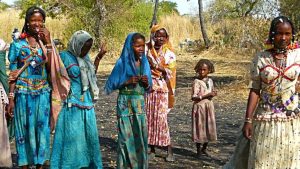
A group identified as the Concerned Fulani People of Nigeria has raised concerns over what it described as contradictions in the United States’ evolving narrative regarding insecurity in Nigeria, particularly on issues relating to Fulani herders and allegations of “Fulani militancy.”
In a rejoinder signed by Ibrahim Barkindo Chubado and made available to journalists on Thursday, 28 May, 2026, the group questioned what it called the repeated “back-and-forth posture” of the United States on Nigeria’s security challenges.
According to the statement, earlier assessments reportedly linked to the United States government had cautioned against portraying the Fulani ethnic group as either the singular source of insecurity in Nigeria or enemy of the country.
The group claimed that previous US reports rejected sweeping accusations against Fulani communities, describing such narratives as politically motivated and lacking factual balance. It added that those reports also warned against ethnic profiling and generalisations capable of escalating communal tensions.
The statement recalled that those earlier assessments emerged during the administration of former President Muhammadu Buhari, when public narratives around insecurity frequently linked incidents of kidnapping, banditry, and violent crimes to Fulani identity or Islam.
According to the group, this trend contributed to widespread hostility toward innocent Fulani communities in parts of Southern Nigeria and the North Central region.
The statement alleged that several Fulani settlements were attacked during that period, while businesses were destroyed and cattle killed because of ethnic profiling and misdirected retaliatory sentiments.
It further argued that conflicts involving herders and farmers were often oversimplified in public discourse, despite security experts repeatedly pointing to underlying causes such as land disputes, environmental pressures, grazing routes, and local political tensions.
The group particularly referenced recurring crises in Benue, Plateau, and Taraba states, insisting that many Fulani families in those areas had lived there for generations and should not be treated as outsiders.
According to the statement, previous US assessments had reportedly concluded that the herder-farmer crisis in Nigeria was fundamentally economic and environmental rather than purely ethnic or religious.
The rejoinder noted that the reports allegedly recommended ranching reforms, fair land-use policies, stronger law enforcement, and conflict-resolution mechanisms as long-term solutions.
However, the group claimed such perspectives were often rejected by ethnic activists and separatist elements, especially in parts of Southern Nigeria and the Middle Belt.
The statement also cited several criminal incidents in states including Ekiti, Ondo, and Edo, where early accusations against Fulani groups were later contradicted by findings from security agencies.
Referencing the 2022 attack on St. Francis Catholic Church in Owo, Ondo State, the group argued that public reactions to the incident demonstrated the dangers of premature ethnic conclusions.
It noted that Nigeria’s Defence Head quarters later linked the attack to criminal elements associated with an Ebira subgroup and not Fulani communities.
Despite those findings, the group alleged that some Fulani residents in Ondo State were arrested and profiled following public accusations that the attack represented a coordinated assault on Yoruba communities.
The rejoinder further expressed concern over recent reports allegedly linked to the United States Commission on International Religious Freedom (USCIRF), which reportedly claimed that about 30,000 armed Fulani militants were responsible for widespread insecurity in Nigeria.
According to the group, such claims unfairly stereotype millions of law-abiding Fulani citizens and risk worsening ethnic tensions across the country.
The statement argued that international reports sometimes focus disproportionately on alleged Fulani-related violence while paying less attention to other armed non-state actors operating in Nigeria.
Among the groups mentioned were Yoruba Nation agitators in the South-West and the Indigenous People of Biafra (IPOB) and its armed wing, the Eastern Security Network (ESN), in the South-East.
The group noted that Nigerian authorities had repeatedly accused IPOB and ESN of attacks on security personnel and violent enforcement of sit-at-home orders, while Nigerian courts had designated IPOB a terrorist organisation.
It added that perceived imbalances in international reporting had fueled suspicions among some Nigerians that foreign powers may not be entirely neutral in their interpretation of Nigeria’s security challenges.
The statement also linked such concerns to broader geopolitical developments across Africa, including rising anti-Western sentiments in countries such as Mali, Burkina Faso, and the Republic of Niger.
While acknowledging the severity of insecurity in Nigeria, the group maintained that the crisis could not be reduced to one ethnic group, religion, or region.
It stated that banditry, terrorism, separatist violence, organised kidnapping, and communal conflicts involved actors from diverse backgrounds.
The group therefore called for balanced reporting, responsible political rhetoric, and evidence-based security assessments that avoid ethnic profiling.
It also urged Nigerian authorities and international actors to promote justice, fairness, and national unity in addressing the country’s security challenges.
“Nigeria’s future cannot be built on ethnic scapegoating, mutual suspicion, or divisive narratives,” the statement added.
