


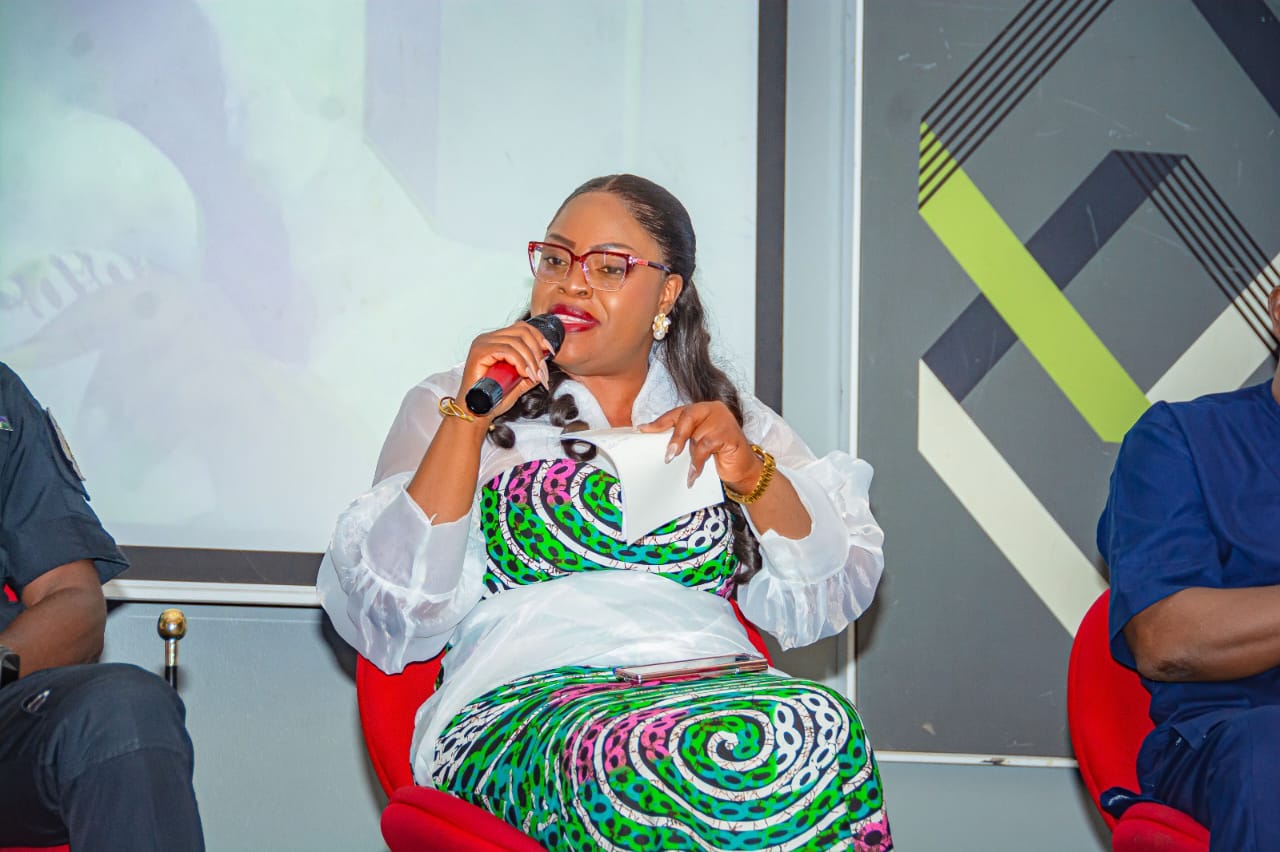
Gender equality advocate and the Creative Director, Gender Agenda, Dr. Adaora Onyechere Sydney-Jack, has made a strong case for a significant increase in the inclusion of women into Nigeria’s-male dominated electoral process from what she described as ‘performative inclusion’.
Adaora Onyechere Sydney-Jack, who doubles as the Founder of the WEWE Network Afrique spoke during the panel session of the 10th Annual Conference of the Guild of Corporate Online Publishers GOCOP, held at the Radisson Blu Hotel, GRA, Ikeja, Lagos, October 7-8, 2026, with the theme: “2027 Elections: Trust, Transparency and Shared Responsibilities”.
While speaking generally on elections preparation in the country, she noted that elections do not hold in one day; rather, elections begin with institutional processes, which also begin with the relevant institutions being inclusive and intentional from the onset.
The gender equality advocate, however expressed worries over dwindling level of participation of women in the country’s electoral processes, which, she observed, remains a far-cry from what was recorded in 2019 and 2023 election cycles respectively.
“On June 8, 2026 after the primaries of the various political parties in the country, we saw that only three female senatorial candidates emerged from across at the 22 political parties in the country. This represents a drastic decline from what we saw in 2019.
“In 2023, there was no female presidential candidate on the ballot papers and in 2026, what we are seeing is the emergence of only two women among the 22 political parties. We also have four female Vice Presidential candidates across four political parties comprising the NNPP, the Labour Party, YPP and YP.
“It does not in any way mean or suggest that these women, who have emerged on the ballot papers will emerge at the final elections. We want to grow from this current performative inclusion to real-time inclusion for women”, she noted.
She decried the non-transparent consensus option for party primaries as it has resulted in the exclusion of women at the very first stage of the process even as as some of the political parties’ candidates are merely selected without much involvement of the women in the name of consensus.
She said: “At the moment, the issue of opaque consensus method seems intentional to exclude women other, how can you say that out of 22 political parties, only 20 per cent of women are seen as aspirants and even among the leading parties including the ruling All Progressives Congress APC, which has only about 10.8per cent of women as candidates, which is a huge tragedy.
“Secondly, this means that when we go into the real elections, with the 50 per cent increase in the number of voters, of which women are more, we will not see this representation of women on the ballot papers, which means that women will be voting mostly for the men.
“What that also means is that in 2027, we will have less number of women in the Parliament. Right now we have just about four per cent of women and with the turn out that we saw at the primaries and on the ballot, we are looking at having just about 2.7per cent of won at the Senate in 2027.
“We had observed this earlier and that is why we started having conversations around reserving seats for women, which was a bill for intentionally increasing women participation in the country’s electoral processes.”
While speaking on credibility of the electoral processes and the electoral umpire; the Independent National Electoral Commission INEC, she noted that while it is right to acquire modern tools to improve the system, she argued that technological credibility cannot replace the institutional credibility of the INEC.
She insists that INEC must by itself enhance the believability and accountability of its processes by ensuring credible, free and fair elections to earn the trust of the electorates and also by ensuring that violations are adequately punished.
She also disagreed with the school of thought that believes that the outcome of the Osun State governorship election was an indication of what will be replicated in the 2027 general elections, arguing that Osun was just one out of 36 states and the FCT.
“Even with the seeming openness in the Osun election, the citizens are still not convinced that the INEC has that assuring trust and accountability as you heard talks like: “They gave us Osun State so that they will take the 2027 election”, which is a barometer to measure the level of trust the citizens have on INEC”, she argued.
